MAGAZINES: “Mobius Blvd No. #27, January 2026” – Hobb’s End Press

We’re heading into a new year. That means one more literary acceptance to celebrate 2026. And what better way than with a new magazine issue from Hobb’s End Press. A magazine available in print and Amazon Kindle formats. This time, with “science fiction.” Science fiction with a murder mystery plot attached to it. A story I wrote back in 2000. Yes, I wrote this next tale 25 years ago. I was young. Even a quarter-century later you can get short stories accepted and published. Never throw them away. It appears in the January 2026 issue of Mobius Blvd, and I decided to revisit it, flesh it out extensively, enhance it, and polish it. What I’m saying is what didn’t work for Boomer editors back at the turn of the century might work for a Gen-Z editor in this day and age. Just apply new technology, give it a fresh coat of paint to justify the plot in the “here and now,” and you’re good to go. My story is called, “Six Seconds to Starfire.” It’s set aboard a Victorian starliner within the confines of the Carina Nebula. Links and pics will be below. Enjoy.

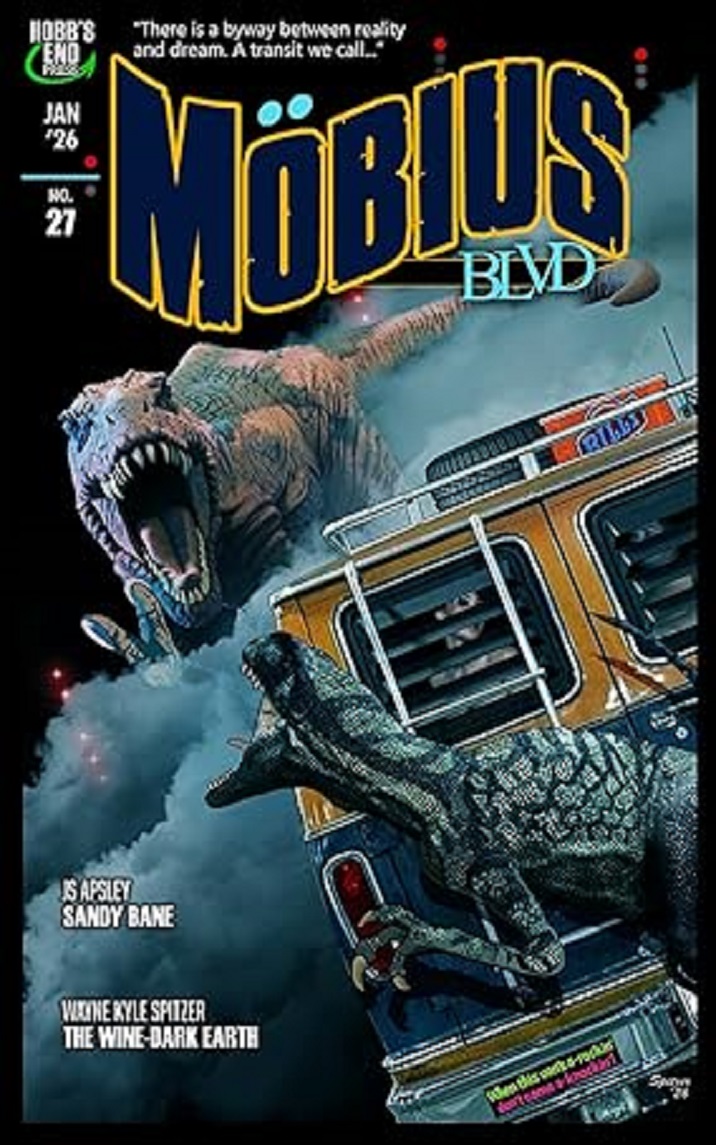
Mobius Blvd. Magazine No. #27 – January 2026 Issue

Published by Hobb’s End Press – Edited by Wayne Kyle Spitzer

Featuring Dagstine story: “Six Seconds to Starfire”

***Sample Mobius Blvd #27 on Amazon Kindle now. Only $3.99***

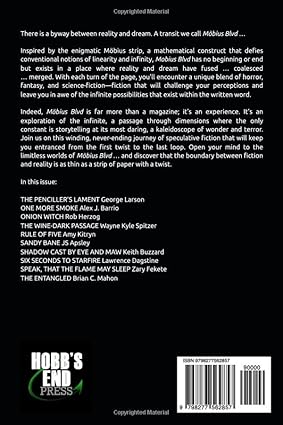
DESCRIPTION FROM AMAZON (and Author Lineup): There is a byway between reality and dream. A transit we call Möbius Blvd …

Inspired by the enigmatic Möbius strip, a mathematical construct that defies conventional notions of linearity and infinity, Möbius Blvd has no beginning or end but exists in a place where reality and dream have fused … coalesced … merged. With each turn of the page, you’ll encounter a unique blend of horror, fantasy, and science-fiction—fiction that will challenge your perceptions and leave you in awe of the infinite possibilities that exist within the written word.

Indeed, Möbius Blvd is far more than a magazine; it’s an experience. It’s an exploration of the infinite, a passage through dimensions where the only constant is storytelling at its most daring, a kaleidoscope of wonder and terror. Join us on this winding, never-ending journey of speculative fiction that will keep you entranced from the first twist to the last loop. Open your mind to the limitless worlds of Möbius Blvd … and discover that the boundary between fiction and reality is as thin as a strip of paper with a twist.


In this issue:

THE PENCILLER’S LAMENT
George Larson

ONE MORE SMOKE
Alex J. Barrio

ONION WITCH
Rob Herzog

THE WINE-DARK PASSAGE
Wayne Kyle Spitzer

RULE OF FIVE
Amy Kitryn

SANDY BANE
JS Apsley

SHADOW CAST BY EYE AND MAW
Keith Buzzard

SIX SECONDS TO STARFIRE
Lawrence Dagstine

SPEAK, THAT THE FLAME MAY SLEEP
Zary Fekete

THE ENTANGLED
Brian C. Mahon

Hobb’s End Books – Click Link Below, Be Redirected

(All their magazines/available products):

https://darkhorsesmagazine.mystrikingly.com/

Other New Entries: “Magazines”

The Triumvirate: A Journal of Fantasy, Science Fiction, and Horror Vol. 6…

Pleased to announce I have a brand new speculative fiction story about afterlife science and “where do we go from here” when, as senior citizens, our time is up. And you can find this exclusive tale in David Oliver Kling’s The Triumvirate Volume #6. This would be my third outing with Mr. Kling’s fiction digest, which he started in the name of fandom as a teenager back in the 1980s. I’m also appearing beside Joshua Vise, who I’ve shared a handful of TOCs with these past two years. It’s available in a paperback format, just like the pulp journals of yesteryear. Or for convenience, you can get it on Kindle for the low price of $2.99. The name of my story is: “Where All Souls Eventually Go.”

The Triumvirate: A Journal of Fantasy, Science Fiction, and Horror Vol. 6

Edited and compiled by David Oliver Kling

Featuring Dagstine story: “Where All Souls Eventually Go”

Sample or buy on Amazon below (Kindle or print):

Details about The Triumvirate:

Four stories. Three genres. One unforgettable journey into the strange, the haunted, and the transcendent.
In this sixth volume of The Triumvirate, the boundaries of imagination stretch and shatter. Step into a near-future where souls are collected like family heirlooms. Descend into a haunted mansion that opens its doors straight into Hell. Witness the slow unraveling of civilization through the eyes of a historian in a broken world. And follow a grieving girl’s perilous quest to a cursed temple where legends are born and blood remembers.

Featuring:

  • Where All Souls Eventually Go by Lawrence Dagstine. A daughter keeps vigil in a hospice that preserves the essence of the dying, contemplating what we carry beyond the veil.
  • House Sitting in the Satan House by Mark Mackey. When two sisters take a last-minute job in the wrong house, a night of glamor turns into a descent through damnation.
  • The End of a Lineage by Joshua Vise. A chilling chronicle of humanity’s fall, told from the ruins of reason, where an everyday miracle becomes the seed of apocalypse.
  • The Dagger and The Wish by David Oliver Kling. A sorrowful girl. A sacred blade. A temple steeped in ancient power. Witness the origin of the legendary warrior known only as the Blue Devil.

The Triumvirate: Volume 6 is your portal to the darkly beautiful, the eerily prophetic, and the mythically charged. Open its pages, if you dare.

Other New Entries: “Magazines”

MAGAZINES: “Mobius Blvd No. #19, May 2025” – Hobb’s End Press

Pleased to announce I have a scifi tale in the current issue of Hobb’s End Press’s genre magazine, Mobius Blvd. They put out a couple of these science fiction, fantasy, horror publications. Other magazines include Black Sheep and Dark Horses, and it’s edited by Wayne Kyle Spitzer, who I also believe is an artist. I can be found in the May 2025 edition. Mobius Blvd #No. 19. I’ll copy-paste all info from Amazon, put it down below. Such as cover pics, ordering links, stuff like that. And author lineup. If you like off-world tales about dinosaurs, be sure to check out my story: “Dinotopia.” There is a Kindle version and print version.

Mobius Blvd, May 2025 Issue – Hobb’s End Press

Edited and published by Dark Horses and Wayne Kyle Spitzer

Featuring Dagstine scifi tale: “Dinotopia”

MOBIUS BLVD MAY 2025 AUTHOR LINE-UP (in order):

QUINTESSENTIAL GRANDMA
Olaf Baumann

MANDIBLE MUSICKE
Ryan Lee

WE TEND THE STAIN
J. Boyett

DINOTOPIA
Lawrence Dagstine

CRASH DIVE
Wayne Kyle Spitzer

POLAROID
Anthony Ferguson

TENTACLE PENS
Robert Pettus

THE BLACK ZIGGURAT
Damir Salkovic

VANITY
Marvin Reif

RULES MUST BE OBEYED
Mary Jo Rabe

SAMPLE ON AMAZON (click below):

About Mobius Blvd:

There is a byway between reality and dream. A transit we call Möbius Blvd …

Inspired by the enigmatic Möbius strip, a mathematical construct that defies conventional notions of linearity and infinity, Möbius Blvd has no beginning or end but exists in a place where reality and dream have fused … coalesced … merged. With each turn of the page, you’ll encounter a unique blend of horror, fantasy, and science-fiction—fiction that will challenge your perceptions and leave you in awe of the infinite possibilities that exist within the written word.

Indeed, Möbius Blvd is far more than a magazine; it’s an experience. It’s an exploration of the infinite, a passage through dimensions where the only constant is storytelling at its most daring, a kaleidoscope of wonder and terror. Join us on this winding, never-ending journey of speculative fiction that will keep you entranced from the first twist to the last loop. Open your mind to the limitless worlds of Möbius Blvd … and discover that the boundary between fiction and reality is as thin as a strip of paper with a twist.

Other New Entries: “Magazines”

Alien Dimensions #27: 100,000 Years of Intergalactic Peace – The Final Edition

I’m pleased to announce that I have a novelette in the final edition of the long-running anthology-magazine from Neil Hogan at Space Fiction Books, Alien Dimensions No. #27. This would be my fourth acceptance to the publication over the years, and this one is for the scifi fanatics out there. But this issue of Alien Dimensions has a theme to it: 100,000 Years of Intergalactic Peace. So the tales have to have some element of promoting or ensuring peace for a civilization. My story is about a solar engineer who attempts to save his own people and another race from across the stars. With permission, of course, from his council. There is world building and conflict. There is hard science and a great plot. What started out as a short story draft back in the 2000s with no direction, ended up close to 8500 words in length in 2025. I’m sharing a TOC with some familiar names, such as David Castlewitz and Mord McGhee (I must know Mord at least 20 years). I’ll leave pics and Amazon info below. Read my story about a solar engineer attempting the impossible, through hard science and cooperation: “The Fireball Effect”

Alien Dimensions #27 – 100,000 Years of Intergalactic Peace

The Final Edition – Edited by Neil Hogan, Space Fiction Books

Featuring new Dagstine novelette: “The Fireball Effect”

Sample or order your copy now on Amazon. In print paperback, or via Kindle.

TABLE OF CONTENTS, IN ORDER:

The Garden at the Edge of the Universe by E. S. Foster

The Vicarious by David Castlewitz

The Fireball Effect by Lawrence Dagstine

Rivers Run Deep by Margaret Karmazin

Exploring the Rogue Planet by Geoffrey Hugh Lindop

The Star Child by Hana Elizabeth Rose

Poltergeist 2.0 by Mord McGhee

Hyperspace by Kyle Walker

The Batties of Argamatis by Geoffrey Hugh Lindop

Stapledon by Humphrey Price

The Frozen Galaxy by Neil A. Hogan

EDITED TO ADD: It is with pleasure to announce that, within a few days after release, Alien Dimensions #27 jumped to NUMBER ONE on Amazon Kindle under Science Fiction Anthologies.

Other New Entries: “Books & Anthos, Digital Credits, and Magazines”

SCIENCE FICTION BOOKS: “Quaternary Realms, Short Stories of SF & Fantasy Vol. 2” – Edited by C.M. Bratton

I’m pleased to announce that I’m back in one of the San Antonio SF & Fantasy Authors’ association’s print anthologies. Last time it was a book on science fiction and fantasy poetry. This time, it’s an anthology of brand new and exclusive short stories, and edited by C.M. Bratton again. The name of the book (now up on Amazon, and I will provide links and a TOC below): Quaternary Realms Volume #2. My piece could best be described as a tale of somewhat forbidden dinosaur science on a distant Jurassic world. It delves into the realm of “Cretaceous-style hunting and cloning” for sport, and the responsibilities of a veterinarian who has to coexist with giant reptiles. Read my new science fiction tale now: “Dinotopia.”

QUATERNARY REALMS ANTHOLOGY: Volume 2 – Edited by C.M. Bratton

Published/put out by The San Antonio SF & Fantasy Author’s Association

Featuring Lawrence Dagstine story: “Dinotopia”

Available on Amazon in paperback. Also available on the convention circuit.

Click and sample below:

AUTHOR LINE-UP:

Science Fiction & Fantasy story titles:

Other New Entries: “Books & Anthos”

Other New Stuff in Addition: “Lawrence Dagstine Newsletter”

https://lawrencedagstinewrites.substack.com/

Lawrence Dagstine: “2024 was my most productive year…but wait, there’s MORE…

2024 will arguably go down as my best year in writing and submitting; 2023 wasn’t so bad either (The Nightmare Cycle was published and I got an advance for it). I wrote a record sixty-five short stories between November 2023 and December 2024—all new. During that time, I also received the most book, anthology, and magazine acceptances (some yet to be released) for a single calendar year, surpassing my previous record year of 2008. I received acceptances from a variety of markets—mainly genre, as that is my specialty—in science fiction, fantasy, horror, and even humor. These markets ranged from pro-identifying to token, including small press and micro press. I also appeared in two anthology-magazines that went to number one on Amazon; another Kindle Anthology broke the Top 100 in World Literature, and a handful of my other offerings made it into the Top 100 or Top 500 sales rank-wise. That’s never happened to me before. Additionally, I have a couple of new books out right now (see right-hand column, scroll down).

My rejection ratio was fifteen turn-downs for every acceptance, if you’re curious about the odds. Yes, where there are acceptances, there are rejections. It comes with the territory. But I’m not here to toot my horn. This was a personal goal I wanted to achieve, and I did. I wanted to see if I still possessed that 2000s-era magic.

At fifty years old, you stop measuring press levels—Pro, Semi-Pro, Hobby, Indie—and accept whatever comes your way, especially if it’s available physically (paperback or hardback), and you know how to hustle and sell it. Believe it or not, most of my readers are not from the United States. Many Americans are too dependent on technology, staring at their smartphones all day, or engaging in activities that don’t involve literature. If they do read, it’s usually the “obligatory” twelve books per year—one per month. I’m guilty of this myself. I used to read a hundred books per year, but as you get older, there are only so many hours in a day. Most of my readers hail from places like India, Japan, and, oddly enough, Belgium. Earlier this year, readers from India wrote to tell me how much they liked my horror stories. I appreciate that; I’ve never received such feedback from US readers. Obviously, I was flattered. I joined two writing groups in Manhattan, got the necessary certifications, and became a writing teacher, which is relatively easy in New York State compared to other places.

As we get older, we often become adjunct professors, tutors, instructors, substitute or assistant teachers. We take up residencies, shepherd online MFA programs, hold online and in-person workshops, and add experience to our curriculum vitae. The revenue from these workshops helps fill our fridges. We may teach English as a second language if we move overseas or teach the short story form, novel writing, story analysis, and linguistics. We show younger writers our techniques and formulas, paving the way for them and enlightening them on how we did it. We pass our knowledge to the next generation of aspiring writers. We take on protégés. Other jobs we take on include writing advertising copy, technical writing/business writing, expository essay writing, things like that.

I can’t believe I’ve been doing this for thirty years. Sometimes I wonder if I wasted my life. Should I have pursued another field? Should I have become a full-time artist and taken up comic illustration, which was my passion in the early ‘90s? Despite my love for science fiction, I would have preferred seeing the art through. I lost my love for drawing in late 1994 and turned to writing instead. Applying for art jobs thirty years ago, where prospective employers said comic art and graffiti art weren’t “real art” didn’t help. So I ended up in writing. I appeared in a couple of magazines, made some cash, and bought nice things. Picking up every genre magazine I could get a hold of in Borders and meeting Kurt Vonnegut regularly while working as a delivery boy for a pharmacy further fueled my enthusiasm.

Author Mercedes Lackey once noted that 90% of the writers in the SFWA (Science Fiction Writers Association) have had or currently hold full-time jobs. The rest have spouses who work full-time, serving as the breadwinners, covering the overhead, and providing health insurance for the family. Alternatively, the full-time writer might be retired and living on a pension or 401K. I could join the SFWA tomorrow. But at my age? For what? Bragging rights? I’m ready for the grave. This isn’t to say I won’t produce an anthology in the future. I’m full of ideas, and I won’t accept anything less than outstanding. But hey, I’m old. Many of the books with my stories are published by presses that might not exist in five or ten years. Presses come and go; the same can be said about good books. Publications go on lengthy hiatuses. Economies rise and fall. Inflation affects spending habits. People’s reading preferences change. Advertising techniques and technology evolve. Not only that, over 10,000 books are self-published per day, so there’s no such thing as professional competition anymore. It’s a too-open field. Also, generational shifts happen, and what was popular with one generation might not be with the next. How many people do you know in 2025 who have a profound love for Philip K. Dick, Isaac Asimov, and John Brunner like I do?

I’m very much a socialite. I often go into the city, visit upscale places, penthouses, private parties, and get the VIP treatment. I network and get my books into these places. You have to network in this day and age. Word of mouth is still a very powerful tool, and you want to get non-genre readers interested in reading genre. When I sit down with a glass of wine and talk to affluent or corporate types about horror, they say, “Oh, Stephen King!” And that’s it. They don’t know anybody else. They think Stephen King is the only author there is when it comes to horror. I say, “You haven’t read the work of Paul Tremblay, Stephen Graham Jones, or Josh Malerman?” They give me a daft look. Who? What? They don’t even know that Stephen King has two sons who also write (Owen and Joe). They think Stephen King never had children. But we know. Because writers read each other. We are aware of each other. And it’s kind of depressing in a way. It’s like we’re trapped inside this shrinking genre bubble, and you’re not sure if it’s going to burst or when it’s going to burst. It’s disintegrating, for sure, it’s just a matter of when. You hope it pays your utilities for as long as it can, at least until you take up a teaching position or land an agent. Only 15% of writers ever land an agent and break into the Big Five. And that number shrinks with age. Some are luckier than others; your mileage may vary. What happens for most, whether traditionally published or indie-published, is we end up at genre conventions, gaming cons, comic cons, indie bookstores, or local fairs and fests, and our literature is available at vendor tables.

Nowadays, many people publish each other in a quid pro quo fashion (tit-for-tat), which is fine, but simply reading each other’s work isn’t sustainable in the long term. It seems we’re just passing time until we reach the end. If we’ve chosen writing as our forte, we must have a lot of time to spare. Some of the biggest names, award-nominated genre writers, are suddenly submitting to semi-pro and token markets. This used to be a no-no. Yesterday’s professional paying magazines now depend on Patreons or annual crowdfunding just to survive. And then there’s Artificial Intelligence, which will inevitably replace us in the next 20 years. I’ve seen some of these young tech kids at conferences, and what they can do with Python and Stable Diffusion; they’re smart.

Publishing was a very different animal in the first ten years of the Internet. You could actually make an income from freelancing regularly, and web content was big! Webzines were especially big. They were new, they paid fair money, and there wasn’t much of an editorial filter, but you got your byline and content out to the world. A handful of these sites were built with Dreamweaver, Frontpage (Microsoft), or typical HTML coding. Some were even hosted by GeoCities. Plus, the cost of living was cheaper back then (my rent was only $650 to $750 per month during this era, utilities included). You could stay home, take care of the kids, and have paper checks coming to your mailbox. This was still before the age of PayPal, Venmo, Zelle, and other electronic payment methods. So it was paper checks. If you were a freelancer of genre fiction and creative non-fiction, and you were a quick writer and productive, you got paid $20 to $50 per piece consistently! Sometimes more, sometimes less. One on top of the other. Some of the webzines that appeared in the first ten years of the Internet were Atomjack Magazine, Whispering Spirits, Midnight Times, Dawnsky, The Random Eye, Gotta Write Network Litmag, and hundreds of others! I appeared in many of these places, scouring market sites like Ralan and Spicy Green Iguana on a daily basis. The Boomers never went near these little zines, but I did. And I got my name out there. And I was paid. And I bought clothes. And I bought food. And I paid bills. At one point, I even had a $6000 bank account put aside for my infant son—from writing. There was a time when I had 200 different stories in a folder on a Windows XP laptop, and I would submit to any paying market, even those offering $5.00 compensation. Acceptance here, acceptance there. You do the math. You might find these webzines on the Wayback Machine, but if you’ve heard of the ones I just mentioned, you’re old and gray now, just like me.

To this day, I think the periodical I was paid the most for a single story or article was in either 1999 or 2000, and this was in a queer publication called GENRE Magazine. Or just Genre. And it had nothing to do with genre. They didn’t even publish science fiction. That was just the name. It was primarily a New York-based gay lifestyle magazine with a modest circulation for its time period. It was distributed to LGBTQ-identifying establishments before LGBTQ was even a term. Before ebooks, before Amazon, when physical publications still had modest circulations. When people still relied on the Writer’s Market. I was paid $750 for two, maybe three hours worth of work. The editor said he would take care of the grammatical errors. I kept my mouth shut, let him handle it. Nowadays, twenty-five years later, that same $750 is your paycheck for a horror novel to a rising indie press.

Still, I’m thankful I didn’t become a full-timer in this day and age. I own nice things. Call me materialistic, but I enjoy my little luxuries: designer clothes, nice electronics, video games. I can buy my family birthday and Christmas presents. I can wine and dine on occasion. Some writers who went all-in don’t have that luxury. Imagine not having health insurance, unable to run to an emergency room or urgent care. A vast majority of writers don’t have insurance. Sure, some scored two or three-book deals with the big houses, only to not sell to expectations and never be heard from again. So when people ask me what advice I would give an aspiring writer in 2025, I say, “Don’t quit your day job. Do this strictly for passive income. Do this because you love it. For the sake of art. Do this because you like to tell stories. And read!”

Listen, H.P. Lovecraft died extremely poor. He couldn’t afford treatment for his small intestine cancer, compounded by his fear of doctors. So, he wrote and lived in daily pain—not a pot to piss in. Some of his finest works weren’t noticed until decades later. John Wyndham, a prominent British science fiction writer, was often overlooked in his lifetime. He didn’t receive the recognition he deserved, even as the author of “The Day of the Triffids.” It’s only now, in the 21st century, that his shorter works are being sought out and reprinted. John Brunner, author of mega-hits like “Stand on Zanzibar” and “The Crucible of Time,” feared failure. He wrote under a pen name in his later years and worked as an underpaid proofreader. But regardless of success, they were storytellers. And there’s nothing wrong with being a storyteller. If you get paid for it, that’s like the cherry on top of a hot fudge sundae.

Looking back, I’d say I’m privileged. I’m not a New York Times or USA Today Bestseller by any means. I see myself as a semi-pro of the short form, one of those one-to-three cent jobbers. Apparently, I’m a jobber who makes it into the TOP 100 often; I probably would’ve really crushed it during John W. Campbell’s era. Many writers don’t get to do this for three decades, non-stop. Today, many people self-publish books that are mediocre at best, invest in Amazon Ads, and suddenly they call themselves bestselling authors. They don’t know what it’s like to have spent time in the trenches. Otherwise, a handful of the younger kids coming up don’t know how to read, write, spell their names, or pick up a book after high school. I definitely didn’t think I’d become a teacher. Like I said, I feel privileged. I came to this earth and got to do it. And I’ll try to continue doing it for as long as I have the desire.

This is Lawrence Dagstine, prolific writer for the past thirty years.

Storyteller. Jobber. Future anthologist? I could live with that.

Edited to Add: This essay, which I write from firsthand experience, will be reprinted in a newsletter, currently under development. Stay tuned for news of that.

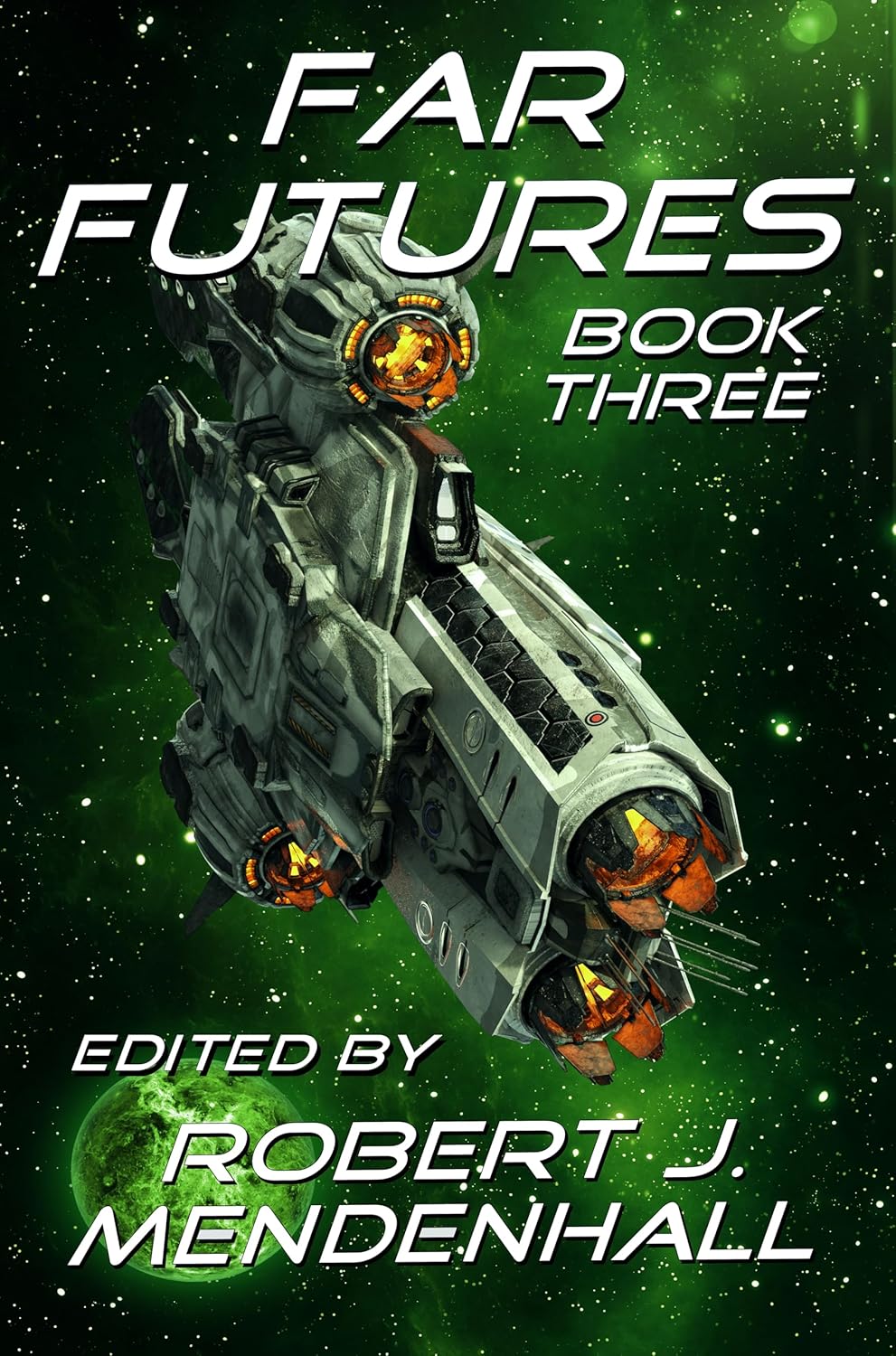
SCIENCE FICTION ANTHOLOGIES: “Far Futures, Book Three…” – Edited by Robert Mendenhall

Pleased to announce I have a brand new science fiction short story in the latest anthology in the Far Futures Book Series from Blue Planet Press. Edited and compiled by Robert Mendenhall, Far Futures is an on-going series of “space stories” or “interplanetary tales” set on far off worlds, or in faraway universes. The kind of stuff that made science fiction great back in the 1960s and 70s. Only for a modern audience. I highly recommend this book, a lot of thought was put into my tale. It’s one of FOUR new tales within the science fiction genre I have coming out between Fall/Winter 2024-2025. As of October 8th it’ll be available in paperback and ebook formats on places such as Amazon, Barnes & Nobles, even Apple. I’ll put all links, pictures, details below (and off to the right-hand side). And check out my story, “Round Trip.”

FAR FUTURES BOOK THREE – Science Fiction Anthologies

Published by Blue Planet Press – Edited by Robert J. Mendenhall

Featuring brand new Dagstine story: “Round Trip”

Author Line-Up and Details (copy-pasted):

Tales of broken generation ships and malfunctioning holograms. AI enhanced humans fleeing the solar system. Alien abductees taken light-years away. A NASA spacecraft highjacked in a perilous first contact scenario. Pirates and scavengers and more. These stories are all different, yet all answer the same fundamental question “What… or who is out there?”

The latest edition in the Far Futures anthology series is now available for order. Far Futures Book Three is scheduled for an Oct. 8, 2024 release in both eBook and paperback at Amazon, Barnes & Noble, Apple Books, and more.

With stories from talented and rising authors in science fiction representing the US, Canada, UK, and Australia, including: Glynn Owen Barrass, Stephanie Bedwell-Grime, Lawrence Dagstine, Caroline Misner, Charles Nadolski, Barend Nieuwstraten III, Robin Pond, and James Pyles.

BLUE PLANET PRESS WEBSITE (click link):

https://blueplanetpress.net/

BARNES & NOBLES/NOOK VERSION (click link):

https://www.barnesandnoble.com/w/far-futures-book-three-robert-j-mendenhall/1146336393

AMAZON PURCHASE (click below for Kindle):

Other New Entries: “Books & Anthos” and “Digital Credits”

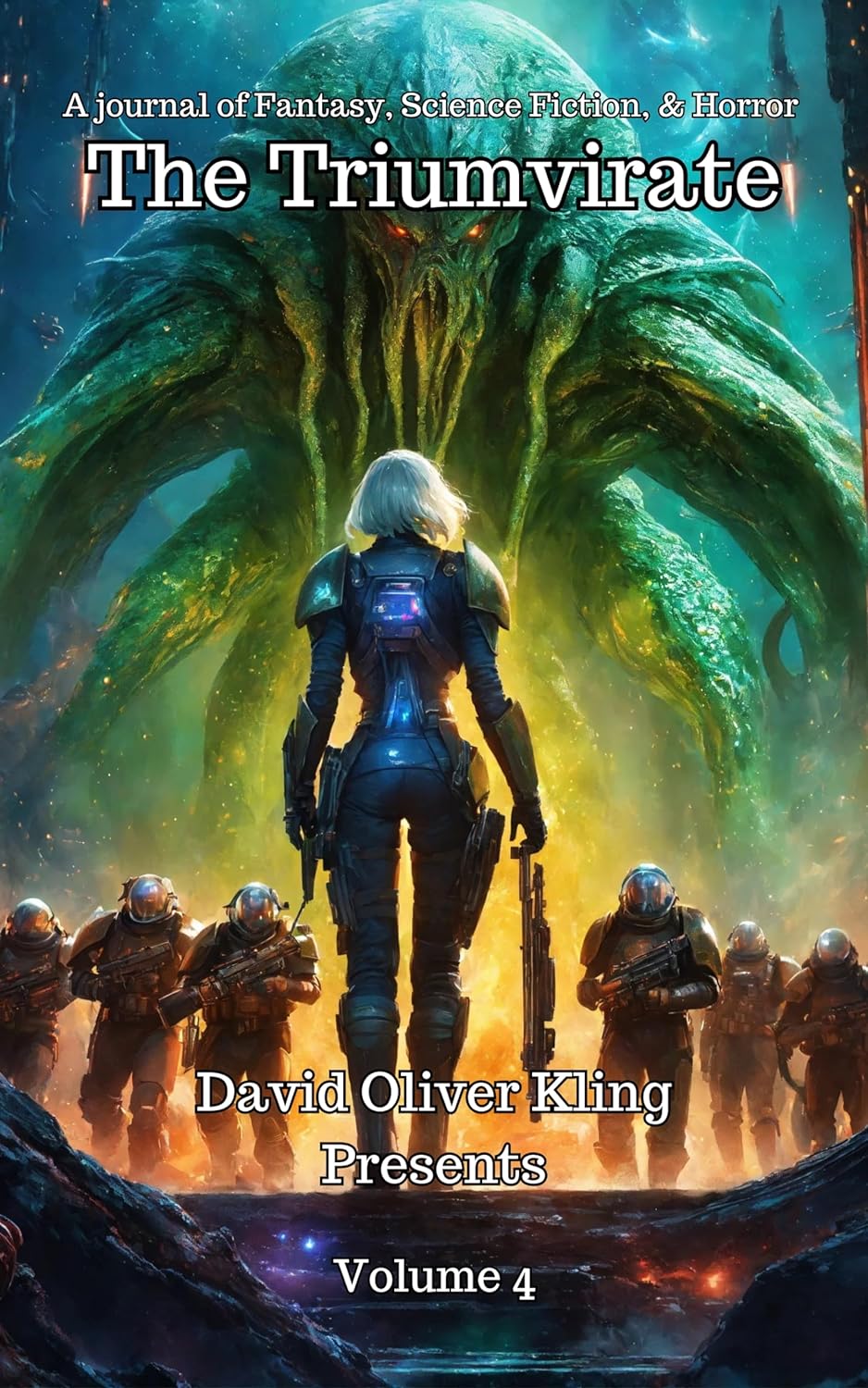
SCIENCE FICTION MAGAZINES: “The Triumvirate, Vol. #4” – Journal of Fantasy, Science Fiction, and Horror

I have an obscure science fiction story (entitled, My Own Private Earth) in the latest edition of David Oliver Kling’s speculative fiction journal, The Triumvirate. Volume Four. The Triumvirate features tales of science ficiton, fantasy, horror, even a little bit of poetry. It is available for your Amazon Kindle (digitally), or as a very affordable paperback in the $7.00 range. It is one part anthology-magazine, one part journal. This is Mr. Kling’s labor of love, which I highly recommend if you are enthusiastic about old school genre. Kling started the magazine back in 1985 at the tender age of fifteen, a teenage lover of spec-fic like myself, and he has revived it in the 21st century. Links and cover pic below (and off to the side). We seriously need more journals like this!

THE TRIUMVIRATE Volume #4 – Journal of Fantasy, Science Fiction, and Horror

Edited and compiled by David Oliver Kling

AUTHOR LINE-UP for VOLUME #4: David O’Mahony, Lawrence Dagstine, Nicholas Hurst, Mark Mackey, Robert Henry, Ann Ross, David Oliver Kling. Poetry by Joy Yin. 127 pages.

New Entries: “Magazines”

NEW SCIFI ANTHOLOGY: “Cosmic Contact” – Culture Cult Press

For late January-Early February 2023 I have yet another science fiction tale, this time a brand new short about alien parenting, entitled: Forgotten Species. It comes to you within the very well laid out, well designed pages of COSMIC CONTACT. This is a science fiction & fantasy anthology on the subject of aliens making “first contact” with humans and other species. It is a rather big beefy book put out by the folks at Pulp Cult/Culture Cult Press. They’re the same people who did the exorcism anthology I CAST YOU OUT and the haunted house anthology HAUS in 2022.

Cosmic Contact has some interesting interior design, fonts, layouts, and even features a lot of familiar short story authors from out of the 2000s era, names such as Ken Goldman, Elana Gomel, Matt Shaw, Thomas Stewart, and DJ Camden. I’ll leave ordering info down below, links and pics, and also to the right-hand side.

Edited by Jay Chakravarti

Paperback copy of COSMIC CONTACT from Lulu: https://www.lulu.com/shop/jay-chakravarti/cosmic-contact-first-contact-stories/paperback/product-pp7vz9.html

Epub copy of COSMIC CONTACT from Lulu: https://www.lulu.com/shop/jay-chakravarti/cosmic-contact-first-contact-stories/ebook/product-77e7gg.html

———-

COSMIC CONTACT is coming soon on Pothi.com (To be sold in India)

Follow us at
Facebook: www.facebook.com/CultureCultPress
Instagram: https://instagram.com/culturecultpress
Twitter: https://twitter.com/CultureCultPub
Tumblr: http://culturecultpress.tumblr.com

Visit us at https://CultureCult.co.in

Other New Entries: “Books & Anthos”

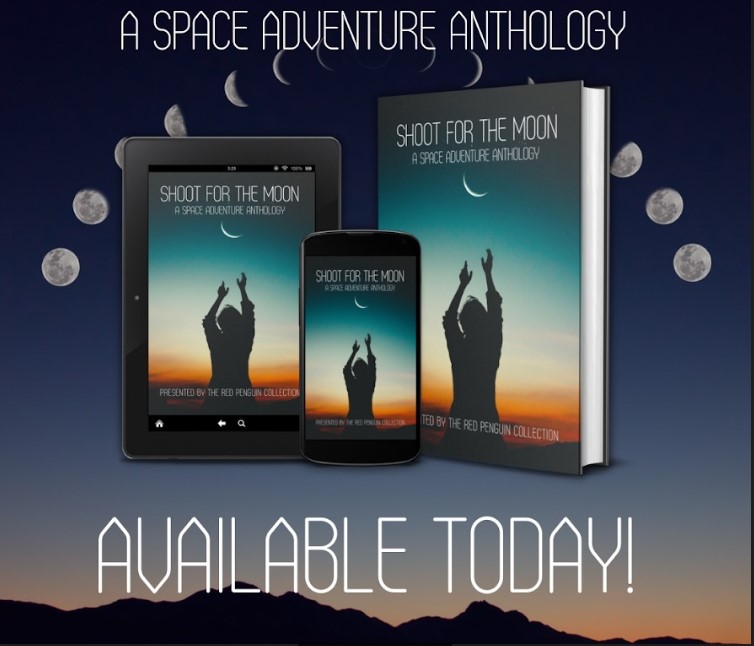
Red Penguin Books: “Shoot for the Moon” Space Adventure Anthology…!

It is with great pleasure to announce that yet another anthology featuring one of my tales has been released this month, this time a science fiction adventure story featuring a team of old school astronauts (think the days of Apollo & Sputnik, that style). So it has a pulp bent to it, but with an unexpected finish. Red Penguin Books presents, SHOOT FOR THE MOON. I’m not sure if it is available on Amazon, but it IS available in select Barnes&Nobles locations (check the scifi section), and as an Ebook (probably Nook). I’ll leave any links and pictures down below, as well as to the right-hand side. And I’ll be seeing you on the next one.

Buy it now from B&N. In Print or for your NOOK eReader (click below):

https://www.barnesandnoble.com/w/shoot-for-the-moon-jk-larkin/1142957462

Other New Entries: “Books & Anthos”

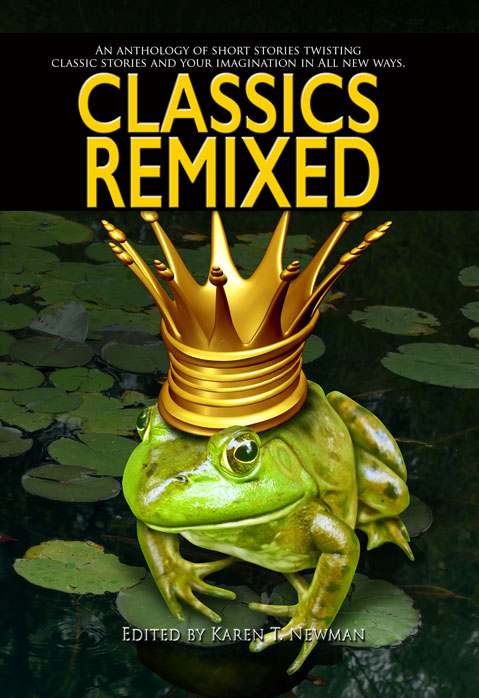
New Anthologies: “Classics Remixed” – Left Hand Publishers

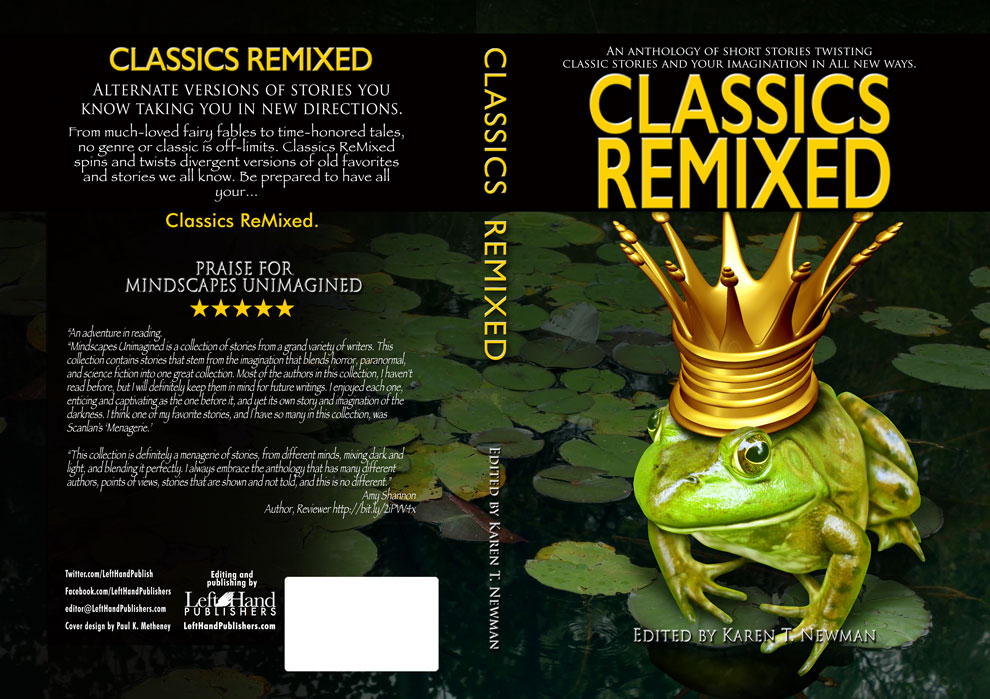
I have a science fiction story in Left Hand Publishers speculative fiction anthology, titled: CLASSICS REMIXED. Edited by Karen T. Newman. This is a big beefy book, chock full of imaginative stories of characters we know from past fairy tales, novels, and folklore. What happens when you take famous story characters and put them in different scenarios, speculative situations, or twist around a fairy tale? You get Classics Remixed. An anthology of classic characters REMIXED and REIMAGINED into something new and different. It has beautiful cover art, and as always when I update my website, I will leave pictures of book covers, a lineup of the author talent (Table of Contents), and links to the publisher’s website and places like Amazon, where you can order this book in trade paperback form.

CLASSICS REMIXED

An Anthology: Edited by Karen T. Newman

ClassicReMix_Cover-SMALL-FRONT

Left Hand Publisher’s Online Store (order book):

https://lefthandpublishers.com/shop/

Classics Remixed – Order from Amazon:

https://www.amazon.com/Classics-ReMixed-anthology-classic-tales/dp/1949241114/ref=sr_1_2?keywords=classics+remixed&qid=1560065576&s=gateway&sr=8-2

ClassicReMix_Cover-SMALL-WHOLE

Table of Contents for Classics Remixed:

Cinderella’s Fairy Godmother Tells All by Jill Hand
The inside story behind one of our favorite fables
Sailor’s Saga by Steve Rouse
Old Man and the Sea meets Moby Dick meet 20,000 Leagues
Not a Single Soul by Tom Howard
A good witch, a wicked witch, but which witch is which?
The Maze Under the Clouds by Blake Jessop
A sci-fi spin on the myth of Theseus and the Minotaur
The Upper Hand by A.P. Sessler
In a spin on “The Monkey’s Paw,” be careful what you wish for…
Of House and Home by Eric Andrews-Katz
Were Hansel and Gretel the victims? Not so much.
Solomon’s Moon by Kevin M. Folliard
Not all invisible men are created equal. Some are just bad.
A Taste of Wonderland by Gregory L. Norris
Starvation twists Alice, Wonderland, and all its inhabitants
Gluttony by Henry Herz
What happens below decks, stays below decks in this biblical misadventure.
Moby n’ Queegs by William Ade
This ain’t your daddy’s Moby Dick
Follicles, Fables & Follies by Paul K. Metheney
Rapunzel, Rapunzel, let down … never mind
Jane, Designed to Love by Brandon L. Summers
Jane Eyre or A.I.? Do androids dream of electric love?
Ding Dong the Pitch is Deadly by Jonathan Shipley
There’s no place like home plate
Catcher in the Crawlspace by Jay Seate
Catcher in the Rye or Stalker in the Crawlspace?
Curse of Avalon by Anthony Regolino
That’s no Lady of the Lake…
Treasure Moon by Robert Allen Lupton
Treasure Island with a sci-fi twisted sense of humor
Noah from Mars by Lawrence Dagstine
Science fictions versus one family’s faith
Strike the Match by Robert Petyo
The Three Musketeers go bowling. Seriously.
Handsome and Greedy by Katherine Brown
Hansel and Gretel like you’ve never seen them before
Copper County Fair by Cheryl Stevens Clark
The story of the Minotaur comes to Copper County
Mermaid by Karen Janowsky
The Little Mermaid in modern day prose
A Novel Gathering by Neil Childs
A band of fictional rogues who attempt to rob the poor to feather their own nests


Other New Entries: “Books & Anthos”

NEW ANTHOLOGIES: “Re-Launch: Science Fiction Stories of New Beginnings…”

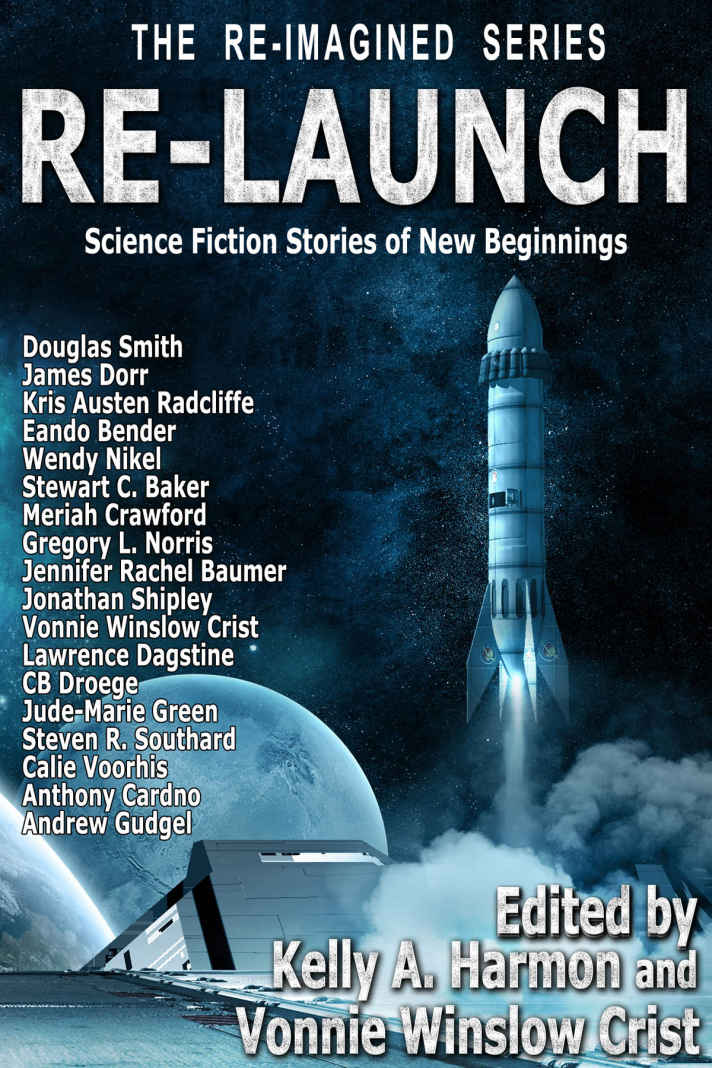
You can now find a story of mine in the reprint anthology, RE-LAUNCH: Science Fiction Stories of New Beginnings. Available in ebook form, for Kindle. And edited by Kelly A. Harmon and Vonnie Winslow Crist. Re-Launch is just one of many genre titles in the Re-Imagined Series. This particular one being my forte, pulp science fiction. If you like pulp-stylized stories of astronauts and cosmonauts and space travel and interplanetary landings, this might be up your alley. I’m not sure if a print version exists but I will provide an Amazon link down below along with the author line-up.

ANTHOLOGY APPEARANCES:

RE-LAUNCH

Science Fiction Stories of New Beginnings

Re-Launch

BUY EBOOK VERSION NOW:

https://www.amazon.com/Re-Launch-Science-Fiction-Beginnings-Re-Imagined-ebook/dp/B07G9N45SN/ref=sr_1_1?ie=UTF8&qid=1536058557&sr=8-1&keywords=re-launch

Edited by Kelly A. Harmon & Vonnie Winslow Crist

AUTHOR LINE-UP: Douglas Smith, James Dorr, Kris Austin Radcliffe, Eando Bender, Wendy Nikel, Stewart C. Baker, Meriah Crawford, Gregory L. Norris, Jennifer Rachel Baumer, Jonathan Shipley, Vonnie Winslow Crist, Lawrence Dagstine, CB Droege, Jude-Marie Green, Steven R. Southard, Calie Voorhis, Anthony Cardno, Andrew Gudgel.


Other New Entries: “Books & Anthos”

Proofreading and Writing Services – Satisfaction Guaranteed!

Hi, my name is Lawrence, and I’m a writer of fiction and non-fiction.  If you clicked on this page, then you are probably interested in my proofreading services, or at the very least, wondering what I can do in regards to the written word.  Let me first tell you a little bit about myself and this website.  Many people know me as an author of speculative fiction (science fiction, fantasy and horror), and my name is pretty synonymous within the small press.  I’ve been writing for well over fifteen years, and I have an extensive publishing history.  Think of this site as a sort of virtual resume of some of my previous work, upcoming work, and publications.  Not just the services I provide, since I consider myself a working writer.  I’ve been called prolific when it comes to writing short stories and informative when it comes to magazine articles.  Wherever I go, any social media platform I visit, people tend to say, “Oh, Lawrence Dagstine, he’s that Scifi/Horror writer.  Sure, I’ve heard of him.”

This is me, hard at work for you.

Unfortunately, it’s a label I’m stuck with—because I chose to enter that field and write in that form.  You see, as a child I grew up to movies like Star Wars and Aliens, TV shows like Doctor Who and The Incredible Hulk, and I read Marvel comic books and digested good science fiction literature (no, great!).  Isaac Asimov, Arthur C. Clarke, Robert Heinlein, George Orwell, Ray Bradbury, you name it.  I read voraciously! I lived around the corner from a Forbidden Planet and was practically there every day.  I did book reports on lengthy Stephen King novels in 2nd and 3rd grade, and was the head of the boys in reading and writing in my school district at the time (the 1980s).  Years back my IQ was tested and I got a score of 150 (teachers called me gifted).  I even delivered prescriptions to the late Kurt Vonnegut and, for a brief period, became friends with him and he a sort of mentor to me.  So reading and writing, especially genre, has always been in my blood.  But I prefer to be called a Freelance Writer because I work with words in general.  It’s what I studied.  Not just fiction.  Genre fiction is pretty much the “fandom” side.  And it is very hard to make a full-time income writing fiction, as most genre writers are paid a pittance.  I’ve known writers who got their BA or MA, thinking they were going to write the next literary masterpiece or appear in The Paris Review, only to become editors or teachers.  They weren’t delusional, they had the confidence, their hearts were in it, they just dreamed a little too high is all.  Even I dreamed high once, then my first client base involved writing and proofing pamphlets and instruction manuals.  So you really need to expand your writing skills to other areas, other venues.

Now if you’ve written something that you feel needs improvement, but don’t know how to go about fixing it, ask yourself a few questions… Have you ever had trouble with words like ‘further’ and ‘farther?’ Perhaps verb usage? Do you know the difference between their/there/they’re? Did you know that words like ‘never mind’, or ‘any more’, or ‘all together’ are not compound words? They’re all two words! Does your story have a beginning, a middle, and an end? Plenty of conflict? Because something has to happen in your story, and something has to be resolved.  The first sentence means more than you know, because it’s the first thing the reader sees after the title and byline.  It’s what immediately draws the reader in.  What about non-fiction, or product placement, or a cool advertisement? Maybe you have an idea and want somebody to word that idea a certain way, where it can potentially become a moneymaking vehicle.  Maybe you need help creating or formatting a resume or cover letter, want to stand out from the rest of the crowd when it comes time to apply for that killer job.  Need a catalog done, or a brochure, or a catchy slogan? Need some minor ghostwriting (query)? Textbook writing or editing? Essays or proposals? Striking web content for a business or organization? Help with a novelette or novella? What’s that? Want me to write you a Western Romance? Okay, I’ll write you a Western Romance.  You’re the boss.

No matter what it is, if it involves words, I can probably help you.  My publishing history consists of over 400 fiction credits in print magazines, webzines, anthologies, and miscellaneous periodicals.  My non-fiction consists of 150 credits, online and offline, for small and medium circulation newspapers, trade journals, regionals, and everyday magazines in need of good filler.  I’ve penned video game reviews in the past for Nintendo Power and written greeting card jingles for Hallmark’s competitors.  I’ve written articles on the paranormal, pharmaceuticals, beach erosion, Native American spirituality, theology, historical subjects, marriage, divorce, pets, vacation spots, real estate, wrestling and more.  I’ve shared tables of contents with two Hugo Award winners and two Bram Stoker winners.  I can do just about 75% of what’s out there.

Still in doubt? Well, ask yourself these 12 sample questions.

Do you know how to assemble a story arc? Do you know what character development is? Do you know what a three-act and five-act narrative is? Are you familiar with the Chicago Manual of Style? Have you ever referenced the work of John Gardner (On Becoming a Novelist, The Forms of Fiction, The Art of Fiction)? Do you know the difference between literary and mainstream? Do you know what structural analysis is? Have you ever studied English Literature—authors like Graham Greene, Truman Capote, EM Forster, D.H. Lawrence, Joseph Conrad, Scott Fitzgerald, Hemingway, and the like? Do you know what proper manuscript format is? Do you know the difference between filler and feature article? Do you know how to write a pitch? Do you know the difference between a plot formula and a plot device? Heck, do you even know what I’m talking about?

If you answered no to five or more of the above, then it wouldn’t hurt to have me or some other qualified individual as your proofreader/editor.  Because I will only improve your fiction or non-fiction project, and only to your liking.  That is what I do.  I work with words.  Think of me as a sort of literary engineer.  I check for errors, make corrections, do any necessary research, and make your prose more persuasive.  I assist you in getting it the attention it deserves.  I develop fresh, innovative, and compelling work.  I drive constant voice, grammar, format, and diction across all text.  I know that your project is your baby.  It was birthed from your imagination.  But you must be able to take criticism and suggestions.  It will only help your project stand out from the rest, and help you get better.  What I am not is a copy editor.  A copy editor is an entirely different animal.  Copy editors usually work, or have worked, for publishing houses.  And good ones (not the kind you see for these run-of-the-mill small presses, who also publish their own books with the same company).  They do what’s called line edits.  They review your manuscript and send it to you with revisions in a program like Microsoft Word.  I do NOT do line edits.  Yes, I am certified in editing, but there is a great difference between a workshop certificate and a staff editor with more than 10 years experience at one of the big houses.  Yes, I have a background and education in journalism, creative writing, technical writing, and the business side of writing that could very well meet your needs.  Yes, as a proofreader I will go over your manuscript a minimum of three times, acquiring your voice and style.  Yes, I will print out your story or article, take a red pen to it, highlight certain areas I feel should be highlighted, and tell you what I think.  Yes, as your proofreader I will pay attention to the usual stuff like grammar, punctuation, spelling, consistency and sentence structure.  But I am not a copy editor.  I’m being honest here.  Even I use an outside editor for lengthy projects.  Because everybody needs a qualified editorial eye.  After all, how can you successfully edit a work that came from your own subconscious mind?

Difference between copyediting and proofreading:

http://www.dailywritingtips.com/the-difference-between-copyediting-and-proofreading/

Difference between copyediting and line editing:

http://publicizeyourbook.blogspot.com/2007/04/difference-between-copy-and-line.html

A copy editor will usually charge you by the word or line (I charge a flat fee).  They often do book manuscripts, and make up what’s called a style sheet.  If you’re looking for one, personally, I suggest looking for someone with at least three years experience.  Also, be careful of line editors posing as copy editors, as they can really screw up the flow of your manuscript if they don’t know what they’re doing.  This has happened to me.

Once again, I charge a very affordable flat fee.  Satisfaction guaranteed.  On a budget? I understand we’re still in a recession, the economy may very well not be good for years to come, and because of that, I am willing to work with you.  I expect at least half the cost of the project at the beginning of our agreement.  You are to pay me the other half after the project is finished.  Our email acts as a sort of electronic contract, if you will.  Research or additional time spent on projects (like staying up all night and losing sleep to meet a deadline on your behalf), costs extra.  And no, not an arm and a leg.  You are responsible for the cost of things like encyclopedias, visual aids, books purchased on Amazon, transportation places, or other reference materials.  I fact-check well, and I give citations where instructed or needed.  I do great copy—print copy! I’m not the kind of lazy individual who just looks something up on Google or Wikipedia.  Google is one of the worst reference tools you can turn to.  That’s because you usually find more than one answer to a particular question.  A long time ago I was commissioned to do a short article on Planned Parenthood in the new millennium.  I needed abortion statistics.  I found eleven well-rounded, informative sites by using Google.  The only problem is I found eleven different statistics.  So which was the right answer? For your project, if I have to go to a library, then so be it.  To the library it is.

I put in the time and effort to make your project as professional as possible.  I am proficient in Microsoft Word and Open Office (sorry, no crappy programs like WordPerfect).  I can give your project the treatment it deserves, and if you feel it needs work or you are not fully satisfied, I will tailor it to suit your needs at no additional cost.  I want you to be happy with my work.  I want you to succeed.  You retain all rights.  My name does not go on your written material.  I merely spruce it up.  So do you have something that involves the written word? Send me an email today for a free evaluation or price quote.  Give me an outline of your project and what you’re looking for.  Tell me about yourself and the work you do in three to six paragraphs; small businesses and companies most welcome.  If you want, I’ll even give you a freebie.  Three double-spaced pages for fiction (or 1,000 words); a half-a-page for non-fiction (150 words)—absolutely free! Have a fax machine? Want more proof emailed to you? Press clips always available upon request.  And I do simple typing too!

So contact me today, tell a friend, because no project is too large.  All material should be sent as an attachment.  I look forward to our partnership and any questions you may have.  Contact: ldagstine @ hotmail.com

Sincerely Yours,

Lawrence Dagstine

Speculative Fiction Author/Freelance Writer & Editor

Proofreading and Writing Services

Also be sure to follow me on Facebook, Twitter, and Linkedin

Other New Entries: “Proofreading Services”

OG’s Speculative Fiction #25, Summer 2010… (appearances)

You can now find my 400th publishing credit in the webzine/free PDF Download/Lulu Magazine… OG’s Speculative Fiction, edited on a monthly to bimonthly basis by Seth Crossman.  Issue #25.  It wasn’t that long ago that I graced the pages of Issue #23.  This issue has wonderful artwork, a supernova or planet burning up, I believe.  You can download the issue in PDF format direct to your computers.  Other fiction and poetry in this issue includes a story by Desmond Warzel.  This is my third time at the long-running “Opinion Guy.”

OG’s SPECULATIVE FICTION #25 – The Opinion Guy

Lawrence Dagstine – PDF Download – 3rd Appearance

Also check out my last issue…


Main Homepage:

www.theopinionguy.com

http://theopinionguy.com/2010/07/ogs-speculative-fiction-issue-25/

Previous Issues w. Lawrence Dagstine:

https://lawrencedagstine.com/2010/03/25/ogs-speculative-fiction-march-2010-2nd-acceptances/


Other New Entries: “Magazines”

OG’s Speculative Fiction, Mid-Late 2010… (3rd Acceptance!)

A couple of weeks ago I grabbed my third acceptance to the long running speculative fiction/science fiction magazine on the Web — available as a free PDF Download to read and eventually purchase on LULU as a magazine for cons — The Opinion Guy (aka OG’s Speculative Fiction).  This would be my second acceptance in one year to them, and they’ve featured some very talented and familiar names in the science fiction arena.  Both short stories and poetry.  Matter of fact, this third credit comes right after my 2nd, and bolstered me up to the 400 credit mark.  Editor is Seth Crossman, and he also provides an Internet site full of informative articles.


Lawrence Dagstine RETURNS to OG’s Speculative Fiction

Third Acceptance – Click on the link(s) for some free reading in PDF format

MAIN HOMEPAGE:

www.theopinionguy.com

Previous Dagstine Stories:

https://lawrencedagstine.com/2010/03/25/ogs-speculative-fiction-march-2010-2nd-acceptances/

Other New Entries: “Magazines”

M-Brane SF #17, June-July 2010… (Now Available!)

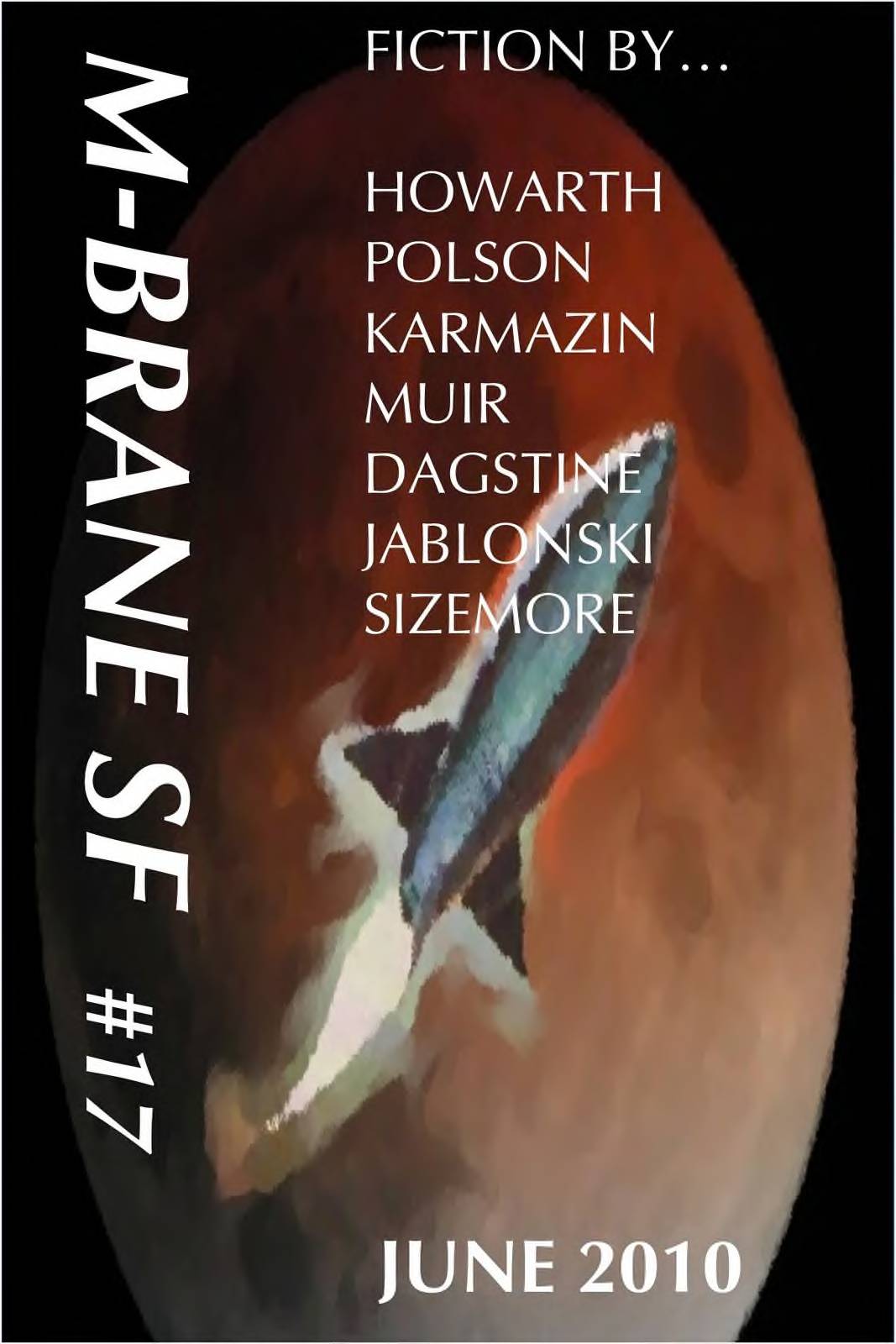
It’s finally summer, folks, and I’m back for what is my third appearance with a weird SF/alternate history tale of sorts to M-BRANE SF.  Edited by Christopher Fletcher, M-Brane Scifi is not just an electronic monthly, a speculative magazine dedicated to the pulps. It’s available in PDF format for  only $1.00 per issue ($12.00 annually); you can download it to your Amazon Kindles and other e-readers.  Christopher Fletcher also provides a daily blog site, complete with news, reviews, and insight on subjects of science fiction and science fact.  Hard SF, Sociological SF, Space Opera, Cyberpunk, Alternate History, authors new and old can all be found at M-BRANE SF. 

M-BRANE SF – Third Appearance – Early Summer 2010

Issue #17 – Edited by Christopher Fletcher

featuring Lawrence R. Dagstine


ORDER THE PDF MAGAZINE w. LAWRENCE DAGSTINE – Only $1.00

www.mbranesf.blogspot.com

Issue Line-up: Edd Howarth, Aaron Polson, Lawrence Dagstine, Jason Sizemore, Joe Jablonski, Charles A. Muir, Margaret Karmazin.

Previous Issues available as compilation print mags on LULU (www.lulu.com)


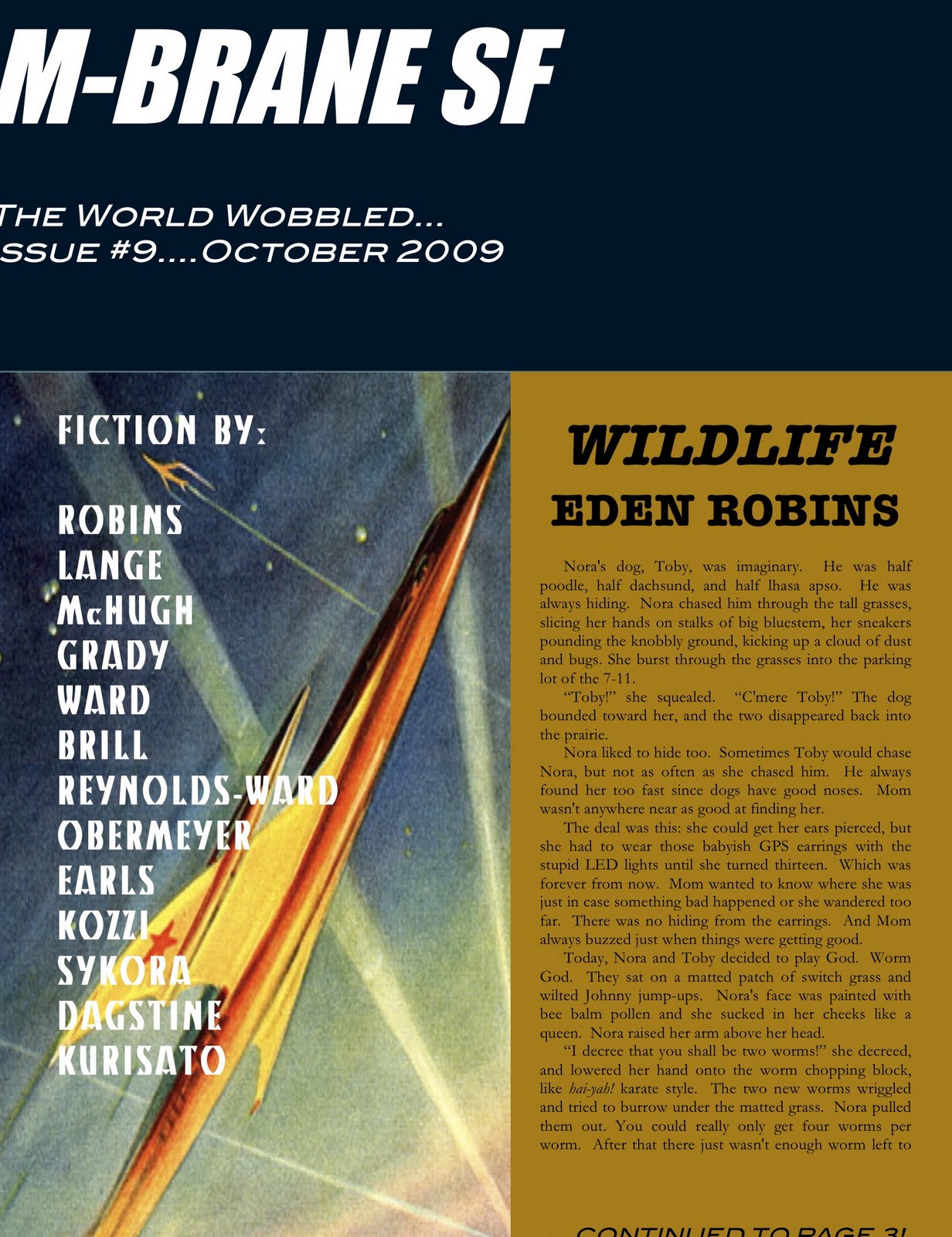
 M-Brane SF Issue #9 — October 2009

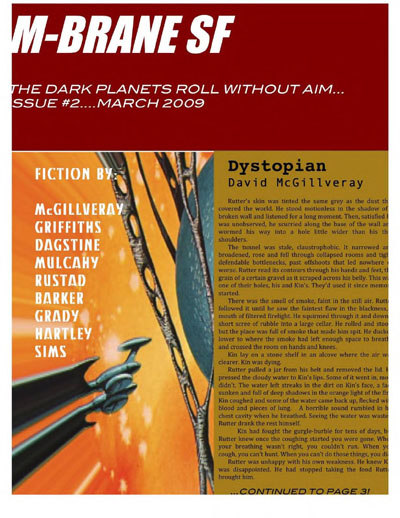
M-Brane SF – Issue #2 — March 2009


Other New Entries: “Magazines” – PDF Downloads

M-Brane Science Fiction, Summer 2010… (3rd Acceptance!)

In about a month or so I’ll be returning for a third time with a weird SF/alternate history tale of sorts to M-BRANE SF.  Edited by Christopher Fletcher, M-Brane Science Fiction is not just a monthly, speculative magazine dedicated to the pulps in PDF format.  It’s also only $1.00 per electronic issue ($12.00 per year), and you can download it to your Amazon Kindles and other digital readers.  Christopher Fletcher provides a daily blog site, complete with hardcore news, reviews, and insight on subjects of science fiction and science fact.  Hard SF, Sociological SF, Cyberpunk, Alternate History, authors new and old can all be found at M-BRANE SF.  A LULU version is also offered, I believe.

M-BRANE SF – Third Acceptance (summer 2010)

COMING SOON – SO STAY TUNED!

www.mbranesf.blogspot.com

Other New Entries: “Magazines”

Free SF Serial: “Orphan’s Prey pt. 1” – by Lawrence Dagstine

Science fiction meets interplanetary horror, in this 30th century survivalist’s fable about two orphans stranded on the most fantastic yet dangerous world, the benefits and perils of alien cultures meeting and clashing, being reunited with the past, and a most unique and dark breed of alien vampire. Lord of the Flies meets the movie Pitch Black meets Living Amongst the Lizards.  Welcome to Ragnarok, the largest planet in the Cat’s Eye Nebula, the largest world in the known universe.  Meet Chelsea and Blake (our protagonists), as we embark on a new bimonthly series of free serialized science fiction.  What are life servers? Who are the Vendragon? What are the Docengard? An adventure awaits you, in the first installment of Orphan’s Prey, here on… Ragnarok! First draft, first run.  A novella in entirety.  Enjoy!

ORPHAN’S PREY

Science Fiction Serial Part One

 by

Lawrence R. Dagstine

The planet was a phenomenon.  A livable, breathable phenomenon.  The jagged-edged terrain lay sedated to immobility by the heat of twin stars by day, and cold methane hails and monstrous storms by night.  From the vehicle looking glass, the land consisted of desert islands in a yellow sand-like mist that stretched to infinity.  The sky was radiant, directly overhead tangerine with purple, and although the air was chill, the primary sun was already beginning to warm the pre-dawn.

“Sometimes on mornings like this,” the driver said, “I pretend that I’m the only artificial intelligence on Ragnarok.  But”—he smiled with sudden brilliance—“I like it better like this, with a few other inhabitants, preferably young and small.  Oh, by the way, I’m Chandler.”

Suddenly, without warning, the overhead transceiver came to life.  A voice was speaking what sounded to Chelsea and Blake like gibberish, and Chandler smiled. “That’s Koral.  He’s a Vendragon.  You know, the people you were told about before coming here? Always erratic, that one.  He takes a little getting used to.” The children listened for a few moments. “The high pressure system—real high—moving hundreds of degrees faster than what you Earthlings are used to, that’s our direction from him and the colony.  We’ve got a fog cloud ahead of us, which is Koral’s way of saying we’ll be surrounded by irregular precipitation and possible danger.  Good old weather lizard that he is.  But we should be safe in here.  This baby stores double-solar oomph, and the alloy is wind-resistant.”

“Oomph? What’s that?” Blake asked.

Chandler nodded up. “The collector panels on the roof.”

“When do we stop?”

Chandler pointed to an overhead visual system. “Here.” He pressed a red circle on the touchpad.  Surrounding it, the lowest of the two suns lighted the mountaintops, glazed them, turning any visible snow to clear pink, accentuating the shadows of the canyons and valleys and whatever else reside beneath. “We want to be here.  You must understand, this planet is very big.  We go through four seasons every run; it takes more than eighteen seasons to get across the entire northern hemisphere.”

Blake dropped his bottom lip in surprise, then looked across at his sister, who had begun nodding off.

“The weather here is fierce and uncanny,” he continued, “but in the center of that brutality is a place filled with great sunshine, grassy knolls, colorful landscapes, and the most awesome valleys you can run and play in.”

“Did you hear that, Chelsea? Maybe things won’t be that bad after all.” The little boy crowed from his metal chair.

Chelsea was tired.  Her gaze was wandering vaguely, and after a few minutes she closed her eyes again as her lips curved in the faintest of smiles.  She found it hard to follow the A.I.’s rambling words about such a magnificent sphere, but there was still something in them which evoked a sense of unease.

Chandler rambled on.  Chelsea sat trying to think coherently, to feel any kind of enthusiasm, but nothing moved in her.  Eventually Blake stopped crooning and fell asleep himself.  Chelsea’s numbed brain began to come to life again, and she realized that what she had learned made no difference to the situation.  They were never returning to Earth.  They were never returning to the orphan ship, Juniper.  Perhaps it was stupid not to realize that it made a frightening difference.  After all, if it had, she might have been better prepared for the web of mystery, terror, and danger that was to entrap them.

By the time they exited the fog cloud it was almost midday.  The only moving thing was the large zyranium-shelled rover, churning in a cocoon of dust along the now weather-beaten track between the desert islands and the terminus from which they were picked up.  Mud and bacteria-bottomed channels filled the marshlike gaps in-between.  In the driver’s seat the A.I. was alert, optimistic, crossing territories and watching for signs of life.  In the back, seated amongst the luggage and other provisions, the children lay dozing, oblivious to their current surroundings.  The eight-year-old—bright, resourceful, full of energy—slept soundly.  Wisps of red hair covered one of his eyes.  As he breathed, a silky strand would fly up in the air and come back down upon his forehead lightly.  Like his sister, his nose turned up slightly at the end, a spray of freckles across it, his mouth thin, the cheeks half-plump and rosy.  His eyes were wide, a deep blue; his sister’s were hazel. 

Fourteen-year-old Chelsea Prittengayle’s facial gestures were more refined, however, more serious.  More brooding.  Other times they were exaggerated: surprise or puzzlement, pleasure or anxiety, the typical moody or unsatisfied-with-anything teenager.  Whatever emotion she felt, her face would either show it much too emphatically or much too hesitantly.  Compared to Blake’s ruddiness, her chin was smaller, the eyes and ears narrower, her body bonier, her tresses and bangs splayed purple and pink at the tips.  She was also more restless, dreaming.

Chelsea dreamed that she was standing again, as she had stood only three days ago, aboard the Juniper, holding her brother tightly by the hand and listening to her Sanctuary Keeper. “It’s a wonderful chance,” the nun figure said, “for you both, and you’ll be able to stay together.  No more foster planets, just a brave new world.  An exciting one.  Ragnarok is one of the biggest out-colony territories in the Cat’s Eye Nebula, and the Vendragon are a fine species.  Matter of fact, it might be the biggest planet in the known universe.  So much room to move around.  I’m sure you’ll be happy there.”

Chelsea faced the floor. “Yes, ma’am,” she said.

“But what if we don’t like it?” Blake stomped his feet and whined. “What if it’s just like the others? I don’t wanna go.  I don’t wanna leave my friends again!”

“Blake, calm down.” His sister knelt beside him. “Really, it’s all right.  You know the drill.”

The Keeper waved a soothing hand. “No, no.  He’s right.  Here”—she picked up two hexagonal-shaped chips from a servicing tray beside her, walked across the grated floor to a processing machine, then inserted them into place—“in the event you grow bored of your new home.” She brought up the two children’s molecular profiles on screen. “Now give me your hands.” She confirmed their print data.

“What are you doing?” Chelsea asked.

“You’ll see.” Seconds later she was finished.  She removed the two chips from the grooves in the console and attached titanium-alloyed ropes to them. “Wear these key drives as necklaces, but whatever you do don’t lose them.  They hold within them an embodiment of your memories, your metaphysical structure, who you are, and what you may eventually become capable of.  They hold your souls, your very essences.  If you are ever in danger, if you are ever bored, you need only crush them into fine grain, and you will cease to exist in this form and be free from a life unwanted.”

Chelsea held hers up in front of her eye; Blake quickly put his around his neck. “So this is us,” she muttered. “Everything about us is in this small chip.”

“The information on it can be accessed from any life server.  But, at the same time, I would be cautious.  It can be tampered with.”

“I still wish we didn’t have to go,” Blake said.

The Keeper nodded in agreement. “It’s a rush, I know.  The funding for your kind isn’t there either.  But the Vendragon want you right away, before the seasons on their side of the planet change again, and a special transport’s coming for you.”

Chelsea picked up her knapsack. “Why do they want us, and yet our own kind doesn’t?”

“Now, now.  That’s a silly way to think.” The Keeper was programmed to be sympathetic, but she realized she could not hold the truth from them. “Foster humans have become an expenditure for a very stressed and careworn Earth.  There are less than twenty-three thousand of you left, all within sanctuary care or already placed in homes many light years away.  Some siblings don’t have the luxury of being housed together.  Hopefully, both of your journeys will finally end here.  You are an asset to these other races because of your youth, your empathic ways.  The knowledge and traits you possess can grow with you.  Creatures like the Vendragon see human children as role models.”

Blake cried. “Oh, Keeper,” he said, running to hug her. “I’m gonna miss you.  An awful lot!”

“And I will miss you, child.” She embraced them as if they were her own.  Then she led both of them down to the craft’s transmat. “Now before you leave, is there anything either of you would like to ask? Anything at all?”

Teary-eyed, Blake stepped back and shifted from foot to foot.  Chelsea, in a voice she hardly recognized as her own, said: “Our parents.  Our real ones.  Suppose they come back from Earth.  How will they find us?”

“My child”—the nun’s voice was gentle—“if your parents are indeed alive, and if they do ever come back, we’ll send a salvage team for you.”

“Promise?”

The Keeper parted a half-smile. “Promise.”

The dream blurred.  The one thing that stood out from the whirlwind of goodbyes with the other children was the nun’s last minute reminder—“Oh, and Chelsea! See that you look after your brother!” Then they were waving from behind the protective glass of the particle disseminator, just one section of missionary freighter which had been their home on and off for five years, since she was nine and Blake three.  The transmat beamed them down to the terminus.  From this steel transfer point the rover waited, then headed out on the extremely long drive to the Vendragon Township via the listless wastes.


“Yes, sir.  Ragnarok! No ball in the universe quite like it,” the A.I. boasted. “Lots and lots of room to run and play.” 

At first the children had been in awe of Chandler, the synthetic man who was driving.  He was the planet’s tour guide and taxi driver.  He was built tall and rangy, pleasurable and amusing, and he understood the many wonders of human behavior.  Juvenile behavior.  The only weird thing about him was that his body smelled of coolant. 

After getting to know him, the children were taking turns riding up front, and he was feeding them processed nuts and jerky.  He told them of the great herds of reptilian creatures that once drifted over the plains and the thousand-year-old walking cacti, which kept the Vendragon on the move in a never-ending battle for food and water.  He educated them on the Docengard—the gangling, clumsy predecessors to Ragnarok, and how, for centuries, they lived in the rocks alone, yet the earlier species regarded them as something of mystics.  By the end of the first day’s ride they were best friends, and the children loved the voyage through the tired yellow landscape old as time itself.  They saw spiky clumps of Yurga, a sweet white medicinal herb, smooth sculptured garnet trees, bloated potato patches and vegetated mist swamps, and smoke rings rising gray and black over the lime crystal bluffs.  It was a fantastic environment, one that was full of desolation yet color, different yet utterly surreal; surely gods must have shaped it.  It was all exciting and new, but in the bluffs an incident happened that Chelsea wanted to forget.

On the morning of the second day’s ride, when a breeze was blowing over the blazing desert sands, Chelsea had seen shadowy columns of air circling the vehicle.  The silhouetted tornadoes had no real substance to them, neither any real shape nor form.  At first, the dozen or so that were out there did not scare her.  Matter of fact, she didn’t think much of them.  For a brief moment she took her necklace out of her shirt.  Curiously, she held the key drive up.  Then, after a minute or two, she tucked it back in.  With some extra speed and a waving of hands from Chandler and Blake, they were now setting out on what seemed like the final stages of their journey.  For a while the girl sat very still, her eyes on the Yurga-plastered trail, her lips pressed tightly together.  The rover made a weird humming sound, and it vibrated to the point of nausea. 

At midday, when the children were asleep in the back of the vehicle, Chandler was tempted to pull over for a much-needed recharge, but he knew that if the fog clouds or other storm-ravaging elements returned, it would hold them up and transform the ground into a sea of impassable mud.  So he drove on through the heat, watching for rifts in the trail.  The temperature in the bluffs was well over a hundred degrees.  They were three-quarters of the way through the landscape, one of the deepest desert regions on the planet, made up of miles and miles of sand and crystalline escarpment.  The road, still rugged in some areas, was following a gully down through a crack in the plateau, twisting and turning between grotesque blocks of melted green granite—monolithic play-bricks scattered along a dried up riverbed or marsh.

It happened without warning.  One second they were skirting a boulder half the size of a building, the next, the shadowy tornado came swirling around a bend, a ten-foot column of viciously dark spinning air.  It hit the rover head on, knocked the vehicle into a skid, and smashed it against an outcrop of crystal. “What was that?” Chelsea’s heart rose out of her chest and into her throat. “What’s going on?” Her seatbelt snapped and, as the vehicle upended, she fell back into the luggage, causing two rows of holding canisters to collapse on her head. 

The tornado, seemingly alive, came back for seconds.

“Damn!” Chandler fiddled with the clutch, but it was bent and stuck.  He quickly glanced through the looking glass in front of him. “Such power! Don’t worry, I’ll get you kids out of here.”

Blake was frightened. “It’s one of those big reptile monsters,” he shouted, as one of the large jagged-edged crystals pierced the vehicle’s interior.

“Can’t be, son.  They’re extinct.”

Chelsea managed to pull herself out from under the baggage. “It was the wind,” she muttered, her forehead bleeding slightly. “The black things swirling in the wind caught us.”

Blake huddled up in a corner with his sister. “I wanna go home, Chelsea,” he cried, as the tornado came back for more. “I want the Keeper.  I want my Mommy!”

“Okay, both of you need to calm down.  Just stay in back of the vehicle.  I’ll get you out of here, now—”

The A.I. was shouting some miscellaneous warnings when a large spear-tipped crystal burst through the front looking glass and caught him on the base of the neck and cut off his vocal functions.  Silver paint and white oil splattered everywhere.  The children screamed hysterically, as manufacturing fluid sprayed across their faces and drenched their clothes.  Chandler’s eyes rolled in back of his head.  He lifted a weary hand and grabbed the area where his larynx used to be.  Outside, the tornado stopped moving.  The tall phantom-like creature stood atop the shadier part of the monolith closest to the rover, sniffing the air.  Seconds later it flew off, spun its way back to the paralyzed vehicle, tore through what was left of the front looking glass, and ripped the A.I.’s convulsing head off.  Fleshy upper body connector tubes and other plastics fluttered everywhere, leaking more white oil and fluids.  The tornado extended a claw-shaped appendage and tore out Chandler’s mechanical heart, then attempted to absorb the spraying juices.  Frustrated that the A.I. was not digestible, it gave off an ear-piercing howl, swirled in a backward motion, and disappeared from the rover with Chandler’s head.

Shaking uncontrollably, Chelsea hugged Blake.  She dare not let go, as a few more metal boxes fell.  There followed a significant period of silence; she did not even blink.  After what seemed like many hours, she finally whispered, “Stay still.”

“No, Chelsea.  Don’t!” Blake cried frantically but quietly.

“I’m not going anywhere.  I just want to look.” They continued to talk in short whispers. 

“But, but—”

“Shhh.” Chelsea lifted her head slowly and peeked out from the rover’s backend.  At first, everything looked quiet.  The same barren wastes, the same gargantuan stones, the same lime crystal formations, the same patches of Yurga root sprouting here and there.  But then her eyes moved to the far left.  There it was—the ravenous tornado creature.  It whirled playfully up the gully with Chandler’s head in tow, leaving the crushed rover on its side, its enormous tires spinning slowly to a halt.  Her eyes then focused on the other dozen or so monoliths in back of them.  Her heart leaped again.  Silhouettes with razor-sharp claws—not spinning, not moving—stood atop the shadowy parts of the high ledges.  Hauntingly, each one seemed to stare back at her, right through the vehicle’s shell, right through her very soul; she grabbed her necklace out of force of habit.  They reminded her of vultures, hungry and in wait for their next meal.  After a few more minutes, the dust settled and the suns beat down harder.  The tornado creatures vanished.  Everything was very quiet again. 

“Blake!” The girl’s voice was frightened. “You okay?”

The boy was matter-of-fact. “Uh-huh.  But my left arm is stuck under this darned metal crate.  And I can’t feel my fingers.”

“Anything broken?”

“I…I don’t think so,” Blake said. “What was it, sis?”

Chelsea shrugged her shoulders. “A whirling devil or something, I suppose.” She used her feet to push the heavy box of provisions aside.  Then she eased the other toppled luggage away from his fingers as gently as she could, and he pulled his bruised hand away from the piled up chaos. “Probably native to the region,” she went on, “and we just happened to shortcut through its habitat.”

“Do you think that was the Vendragon?”

“No.  It was something else, something far creepier.  More dangerous.”

“How do you know?” 

“The Keeper showed me learning disks.  The Vendragon have lizardy features, sort of like iguanas.  They’re a scaly, dry-skinned race.  Their bodies don’t give off perspiration like we do because of their arid surroundings and Ragnarok’s two suns.  She also said they’re humanoid in more ways than one, more than we think.  Can we continue this biology lesson elsewhere?”

Blake nodded, then pushed himself against the escape hatch. “It won’t budge,” he said, then looked back at his sister. “I’m scared, Chelsea.”

“Yeah, I know.  Me, too, brother.” She felt the impacted metal. “Let me have a go at it.”

She managed the door open and helped Blake down from the half-crushed vehicle, and they stood gazing at the wreckage.  The headless A.I. was sprawled halfway out of the driver’s seat, his flittering tubes and empty chest open to the hot-winded air. “Man, only a giant could have done this,” Blake said after inspecting the damage. “Poor Chandler.  He was cool.  Maybe we can use the spare power cells stored in the rover to reenergize him or somethin’, help guide us the rest of the way.”

“I don’t think that’s possible,” Chelsea explained.  She kept looking over her shoulder. “And I don’t think we should stay out here any longer than we have to.  It’s going to get dark soon.”

“Surely the Township isn’t too far now, huh, sis?”

“Yeah, surely…” Chelsea retrieved her knapsack and Blake’s in a hurry.  She looked for any lightweight supplies—digital nightspecs, perma-flares, laser cutters or first aid blocks—and pre-processed rations she could find.  Anything that might come in handy, anything that might aid in their survival. “Here, catch!”

Blake walked back to the front of the vehicle.  He didn’t understand much about artificial intelligences.  Even headless, he thought for a moment that Chandler was only injured or out of battery power; then he saw the remnants of fluid seeping from his shoulders, and the peculiar angle of his synthetic shape. “Chandler’s not growing another face, is he?” His eyes opened wide and, like his sister, his fingers moved to the key drive hanging low around his neck. “Does he at least have a soul?”

“Blake,” Chelsea whispered. “Chandler’s gone.”

Some time later they sat on a rocky cliff while the environment turned from yellow and green to a dusk brown and deep tangerine.  Chelsea had decided to get as far away from the wreck as possible, but she never left the trail.  Chandler had been in constant communication with Koral.  A scouting rover, she told herself, was bound to come sooner or later, and for the moment they had plenty of sunshine and plenty of food and water.  Blake was falling asleep; the boy was worn out, and his hand swelled something awful.  Every so often Chelsea got some irrational fear inside of her and steeled herself to kneel beside her brother, listening for a flutter of a heartbeat, making sure that he still had his soul on him.  Only when his body began to rest comfortably did she kiss his forehead and lay down beside him. 

“Mother and Father aren’t here,” she said, running her hand through his flimsy hair. “Neither is the Keeper.  It’s my job to look after you, little brother.”

Without realizing just how many hours of daylight Ragnarok was subject to, Chelsea too closed her eyes the moment her muscles stopped tensing and the tornado creature left her thoughts.  The first sun slid behind the rim of the gully, then eventually dissolved over the bluffs; the sky turned orange, with the occasional streak of red marking their spot in the universe.  Then the second, slightly larger sun disappeared over the tip of the escarpment.  The desert wastes, the misty, bubbly swamps that separated them like islands, and the crystalline plateau vanished under a blanket of purple and black, touched up with a satellite-tinged glow.  A breeze swirled the planet’s dusts and, in the face of the twilight, the girl shivered. 

Chelsea was awakened by the wind’s intensity; the monster from earlier played with her mind once more.  Afraid, she shook her brother out of slumber. “Blake.  Blake, get up.” She glanced around her. “It looks like we’re here for the night… However long that is.”

Blake barely opened one eye. “So?”

“So I think those whirling demons can’t take too much daylight.  When I saw them, they always seemed to stand in very little sun or take to the shadows.”

“Then we’ll build a fire.” Blake was very self-possessed. “You took perma-flares from the rover, didn’t you?” Seconds later, he sat up.

“Yeah, but when was the last time you and I went camping?”

“Titan.” Blake smiled.

“How could you possibly remember that? You were only two.  You mean you actually have a vivid memory of Me, Mom and Dad on our trip to Saturn?”

“Yes.”

Chelsea pinched his cheek.  Then she went into her knapsack and handed him a flare. “Remember how to program a spark, too?”

A short while later the children sat close to the blazing fire, listening to the flip-flap-flip of the two-headed air marmot, the long sad wail of the desert dolphin, and the surreal pitter-patter of marsh insects.  They weren’t exactly frightened of these animals; but the front row seat was a far cry from the virtual zoos and jungles back on Earth.

“You think that wind creature was a pterodactyl?” Blake asked out of the blue. 

Huddled closely around the flames, Chelsea answered, “No, silly.  It definitely wasn’t a pterodactyl.  Pterodactyls are long extinct.  From all worlds.” A moment of silence followed. 

Then the boy began to fidget. “Chelsea, what’s this Ragnarok place really like?” He almost wanted to cry again. “Chandler had told me so much.  What do we do now? How are we gonna survive?”

“I don’t know, Blake.  But I reckon we’ll be OK.  So long as you stay with me at all times.  We must never split up, never lose sight of each other.  Not even for a second.”

The boy fiddled with the key drive around his neck. “If something bad happens to one of us, should we give each other permission now to—um, well, you know—”

“Crush the chips and let our souls go free?” Chelsea grasped her own necklace tightly. “Let’s hope we don’t have to.  And if Mom and Dad are still alive, if they’re still out there somewhere, they wouldn’t want us giving up without a fight.”

The boy picked up a garnet tree branch and stirred the fire. “Maybe if the Vendragon find us, they’ll let us use their life server.”

Chelsea grimaced. “Yeah, sure.  Maybe.”

The boy said, “Remember those smoke rings we saw on the way? You reckon they came from the Township?”

She shook her head. “Vendragons live in the grassier regions—probably further north.  They rely on our knowledge of agriculture.  Supposedly, they thrive off it.”

“Yeah, but couldn’t we still head in that direction? I mean, somethin’ made that smoke.”

“Oh, Blake! It’s much too far.  We should wait for a scouting vessel.” She started to undo the knots in her hair. “Go back to sleep.  I’ll take first watch.  Besides, the distance of these plains are farther than you think.  And who knows what manner of beast created those rings.  For all we know it might be the same kind of creature that attacked us, burning carcasses and picking on flesh.”

The boy went scared and silent.

She hoped she spoke with conviction, but after what they’d been through, it disturbed her to know that her brother’s thoughts had been running so close to hers. 

They settled down by the fire, and before long their breathing grew slower and deeper.  After a while, Chelsea couldn’t stay up any longer.  Eyelids falling, she reached for her brother’s swollen hand.  Normally he’d have snatched it away, but he didn’t now.  A veil of mist drifted over the moons that scattered the night sky, and the children slept.


TO BE CONTINUED…

OG’s Speculative Fiction, March 2010… (2nd Acceptances!)

You can find me for a second time in the long-running, speculative fiction magazine and PDF webzine: OG’s Speculative Fiction.  Issue #23, March to April 2010.  Previous issues include an appearance in Issue #9.  Edited by Seth Crossman, this particular issue not only features myself but stories by Wayne Helge, Poetry by Darrell Lindsey, and Cover Art by Jem French.  It’s a classic issue, in both free format and print format (eventual release through LULU)…  Online articles, too.  Enjoy!

“Still one of my favorite stories we have ever published. We hope you enjoy the issue.”

— Seth Crossman, editor of the Opinion Guy

OG’s SPECULATIVE FICTION Issue #23 – Feature Author

Available in print via LULU, or as a free PDF – THE OPINION GUY.

HOMEPAGE (with articles):

www.theopinionguy.com

FREE PDF DOWNLOADS (for most readers):

http://theopinionguy.com/2010/03/ogs-speculative-fiction-issue-23/

http://theopinionguy.com/ogs-speculative-fiction/

PURCHASE A PRINT ISSUE (Convention Copies):

‘Also featuring Lawrence R. Dagstine’

ORDER SAMPLE ISSUE BELOW:

Other New Entries: “Magazines”

The Martian Wave, Collector’s Issue… (Now Available!)

Welcome to 2010.  For a decade it started off as a small webzine within the confines of cyberspace, publishing many of today’s familiar SF poets and short story authors… Well, it’s finally here.  The premiere print issue of the highly anticipated Sam’s Dot Pub: THE MARTIAN WAVE.  I am honored to have a story in the premiere issue among such names.  Get it now.  This first issue has a superb cover by Laura Givens and is bound to sell out either online or at Sam’s Dot Publishing attended conventions.  Now a semi-annual magazine! Rejoice!

PREMIERE ISSUE! PREMIERE ISSUE!

THE MARTIAN WAVE Issue #1 – Collector’s Edition!

The Martian Wave - Premiere PRINT issue

ORDER YOUR COLLECTOR’S ISSUE HERE:

http://www.genremall.com/zinesr.htm#tmw

THE MARTIAN WAVE INFORMATION PAGE:

http://www.samsdotpublishing.com/tmw/main.htm

SAM’S DOT PUBLISHING HOMEPAGE:

www.samsdotpublishing.com

FEATURING: Steve De Beer, Tyree Campbell, Dan Thompson, Keith P. Graham, Patty Jansen, Bret Tallman, Rick Novy, Shelly Bryant, Justin Bohardt, s.c. Virtes, Marge Simon, and Lawrence Dagstine.  Edited by J. Alan Erwine.

Other New Entries: “Magazines”