FREE STORIES: “Visitation Rights” by Lawrence Dagstine

Welcome to Free Story Day! I have a chapbook tale to share called “Visitation Rights.” It’s a paranormal court story about a heated legal battle for a child transitioning into a ghost. The child’s father argues that his spirit should stay with him during this eerie transition, rather than remain in the realm of science. However, the judge believes he knows what’s best for the child’s welfare in his current state. There are science fiction elements to this story, as I predicted such court battles would take place long after Barack Obama left office. Originally published in 2009 by Damnation Books, it was part of their debut lineup of ebooks, when ebooks and the digital revolution were fairly new—Amazon Kindle, for example, was probably in its Second Generation. Lisa Jackson was my editor, and it sold extremely well for five years. Cinsearae Santiago created the cover. The story emerged during a time when I was writing a lot of sociological horror involving family dynamics, father-mother-child relationships, and how children can be more terrifying than adults in certain situations. Not too many authors were doing this kind of fiction back then. At least in a way that makes the idea of life after death seem totally plausible, kind of like it could just blend right in with the living and everything we deem real. At the time, I made a professional impression with it.

Anyway, without further ado…Visitation Rights (2009) by Lawrence Dagstine.

Jack Golden was magnificent, his wife Margery thought as she looked on from the front row. He was controlled, sincere, and candid, just as their lawyer had urged him to be. He was a tall, handsome figure of fifty-seven, barely even gray at the sides. He had dark brown hair and lively, intelligent green eyes like Margery, who had her own spark of confidence. She was petite, auburn-haired, and just as youthful-looking in her middle age.

Their naturally relaxed manners of speech were usually inclined to set a distance between themselves and those who existed outside the norm of modern society. Some in the courtroom found their cultured East Coast accents disquieting—after all, they were dragging this out in Jenny’s new hometown—especially when it came to these things. Still, wherever the legal battle might end up, Jack always regarded his family first and foremost and was ready to fight.

Margery, however, had felt awful on the stand. It had been a relief to discover that the lawyer had not chosen to make an issue of her visit to her daughter-in-law, Jenny Hathabee. She was as good as a wife could be to her son, who had been fatally wounded in Afghanistan. Of course, Jenny’s opening testimony was a real surprise; it almost felt like a custody battle. Cagey lady, Margery thought, wondering what other surprises the opposition had in store.

She watched now as Jenny’s lawyer slowly rose, like a bear moving in for the kill. Only this bear was rotund, his disposition stiff like the color of his suit, along with a short mustache and bulbous nose. Oh yes, and dark eyes. All lawyers had them. The odd image frightened her, but good ol’ Jack seemed to be reacting well, chin thrust out, hands on his knees.

“Mr. Golden.” The voice of the lawyer boomed in the cavernous courtroom. “What is your occupation?” He did not smile. His pose was unmistakably aggressive.

“I used to work in Washington during the Obama Administration. I was an inspector for a stem cell research facility. Just retired. Now I work part-time in a slightly similar platform, what the scientists-turned-corporatists call a nursery. The rest of my days are spent gardening, cooking, cleaning, hanging out about the house.”

“Are you enjoying your retirement?”

“I told you, I’m not that retired,” Jack said, smiling.

“All right. Since you’re familiar with stem cell research and nurseries, can you tell me why you chose that particular day to visit your daughter-in-law’s AV-36 at the camp?”

“I—I just couldn’t stand it any more. I’d looked at some pictures in an album, some frames on my mantelpiece. I missed him is all.”

“But why that particular day?”

“It was my birthday.”

“How old were you?”

“Fifty-seven.”

“What else did that day mark?”

Jack cleared his throat. “My retirement day, after twenty years.”

“Voluntary retirement?”

“No. They have this new program. Fifties are the new sixties. You hit fifty-five, you can retire.”

“In fact, it was an involuntary retirement, wasn’t it?” the lawyer pointed out.

Margery’s stomach knotted, afraid of where this would lead.

“Well, sort of,” Jack went on.

“And you felt, well, lousy. You needed a bit of comfort, a bit of remembrance. So you ran immediately to see your daughter-in-law’s AV-36?”

“Must we refer to him as AV-36?”

“Please just answer the question, Mr. Golden.”

“Well, yes.” Jack sounded confused. “Is there anything wrong with that?”

“From your point of view? Maybe not. From the point of view of an AV-36? That’s another question.” The lawyer began to pace in front of the chair, then suddenly shot Jack a query. “How did AV-36 react to your confrontation?”

Jack squirmed in his seat. “He seemed brain-dead at first, but otherwise he was glad to see me.”

“How glad?”

“Just glad.” He forced a laugh; it sounded hollow. “I brought him some clothes.”

“Where was he when you arrived?”

“In captivity.”

“And your visit interrupted this captivity?”

“Well, yes.”

“How did he express his happiness?”

“He sort of smiled.”

“Did he rush into your arms?”

“Well, no. He probably didn’t know to do that.”

“Did he say something like, ‘Gosh, I missed you,’ or did he show confusion and surprise?”

“I guess he was confused. No, wait! Maybe he was surprised.”

“Not confused?”

Jack scratched his head. “I can’t be sure.”

“In fact, for an AV-36, he was totally confused. Wasn’t he, Mr. Golden? We have it on good authority from the researchers that were present. AV-36’s transition was disrupted. He really didn’t know what was happening. You saw there was no military presence and you bullied your way in. You did not even use your real name.”

“I wanted to see him,” Jack said.

The lawyer sighed heavily. “Mr. Golden, the tragedy here is that you needed AV-36 for therapeutic reasons, to make you feel better about the things that happened to you on that day, to make you feel better about the things that happened to your son, Eric, in Afghanistan. Only AV-36 didn’t need you. He was doing just fine. He is doing fine.” A brief pause, and then, “Yes, I understand it’s hard losing an only child to war, but you intruded on this woman’s life”—with this, he gestured to Jenny—“the new one she has built and worked so hard at. AV-36 is a happy, adjusted, productive, normal… Well, you worked in stem cell research, Mr. Golden, and even now you’ve found part-time employment in a nursery or camp which fosters the same kind of thing. As much as I hate to say it, he either didn’t need, or want, your visit, did he, Mr. Golden?”

“If they let the transitioning period happen in a normal way—”

“We are dealing here with what is best for an AV-36. That is the only issue in this court, Mr. Golden.”

Jack clenched his hands into fists. “Oh, for God’s sake, stop with the scientific labels! He needed his family around him. Not Jenny shipping him off to be prodded and poked!”

As the cross-examination continued, Margery felt a sinking sensation in her heart. She knew her man. Just beneath the surface, he was at the breaking point. The opposing lawyer suddenly became ingratiating, leading Jack through a series of questions that focused on his early life; the things that he and Eric, of all things, had done together—baseball, football, hunting, fishing—the affection and interests that both father and son shared. How odd, Margery thought. She wondered where the lawyer was going with this and hoped Jack would be able to sustain himself from tears.

“It was a terrible blow to lose your only child, your cherished son?”

“Yes, it was,” Jack admitted sadly. “Many young men and women died for nothing.”

“It depressed you?”

Jack faced the bench. “Very much.”

“Then when you finally realized that stem cell research opened up doors to all sorts of other possibilities, there came the loss of your AV-36?”

“Yes. I never knew we could renew and harvest so much more through monoclonal antibodies and mitotic cells. I never knew we could reach that level.”

“This loss and these possibilities combined, bothered you, did they not?”

“Objection!” yelled the defense. “My client is clearly being psychologically baited now.”

The judge said, “Overruled. I want to hear this. Go on.”

Jack looked to Margery; she covered her eyes and sank in her seat.

“Thank you, Your Honor.” The lawyer cleared his throat. “And your job after twenty years? After witnessing such scientific breakthroughs firsthand? Come, Mr. Golden. No wonder then that you were depressed, that you exhibited odd behavior. Also, you have been known occasionally to lose your temper.”

Jack was rattled now. “Sometimes. But I never—”

“All the pressures of life suddenly coming together can wreak havoc on a man’s psyche.”

“I don’t know what you’re talking about,” Jack cried, his voice rising, his body taut. He looked over at Margery again; she gripped herself from standing and interjecting.

“I’m talking about—” The big lawyer paused, his gaze first roaming the room, first to the judge, then to his client, Jenny, then to Margery, and finally back to Jack. “I’m terribly sorry, Mr. Golden. But your suicidal tendencies have to be faced.”

Margery felt an invisible hand grab at her insides and squeeze. She nudged her attorney on the elbow to do something.

The defending lawyer stood up. “Objection, Your Honor! I reject this line of questioning,” she said. “This is outrageous and debased speculation.”

The judge thought for a long hard second, then waved two fingers and said, “Sit down.” He nodded at Jenny’s lawyer. “Go on. This better be relevant.”

Jack rose out of his chair, then fell back, looking bewildered, exhausted, and defeated. “My what?!”

“I’m sorry, Your Honor,” the opposition said, shaking his balding head as if the revelation were equally painful to him. He turned and looked toward Margery. “The state of Mr. Golden’s mental health, as will be shown, was reported by Mrs. Golden herself in a meeting with a nursery counselor only a few months ago.”

“Did this meeting happen because of the AV-36?” the judge asked, still trying to find relevance.

“I can discontinue this line and pick it up again with the counselor. But I assure you it cannot be swept under the rug.”

The judge looked at Jack with an expression that seemed like sympathy. He shook his head, then turned and looked across the courtroom at Margery. His eyes were sad and questioning. His disappointment seemed to drill through her; she wished she could disappear.

Margery turned toward Jenny. “How could you?” she asked in tears. “You were like a daughter to us. We treated you as family. We put a roof over your head while you were married to Eric. Why?” Jenny quickly turned away, keeping silent.

“Um… May I request a short recess, Your Honor?” the defense asked.

The judge nodded, raised his gavel, and brought it down. He looked behind him at the clock. “Go and have some lunch, people. Be back at two.” Those present rose as he left the courtroom.

For a moment, no one moved. Margery rushed forward to her husband. Feelings of sorrow cluttered her mind, along with much to answer for. But she couldn’t find the composure to speak.

“I’m sorry, Jack,” she eventually said, embracing him as he stepped down.

He looked down at her with moist eyes and a frown. “You really think I would have chosen the easy way out? You really think seeing him like that would have affected me where I would have just…just ended it?” There was a moment of silence, then: “I miss him, Margery. I miss him dearly. He’s the only thing our poor Eric left behind. Transitioning doesn’t last a lifetime, you know. All I want is what’s fair before it’s too late. I just want visitation rights.”

*

When the hearing reconvened, Jenny Hathabee rose and approached the stand. It was her second time recalled. Her lawyer followed. Despite the wickedness beneath all that makeup, Jenny looked more radiant than Margery had ever seen her. Her face had filled out and her skin glowed with health. Clear-eyed, neat in her starched blouse and dress ensemble, she looked the picture of confidence and contentment—a far cry from months before, when depression and despair filled her life. It had left her like a hollow shell. Now those around her could acknowledge the fact that the emptiness was gone. She had never appeared as strong as she did at this moment.

Notwithstanding the dispute, Margery felt admiration for her. She had come a long way. From them. Perhaps from Jenny’s point of view she and Jack were pariahs, reminders of sadder days, an unwanted, unnecessary, and negative influence on an AV-36 already lacking in substance.

Jenny’s lawyer gently led her through the questioning. Earlier, he had driven home a few key points to his arguments. It remained to put the frosting on the cake. “And your previous husband, Eric Golden, who is a major factor in all this, was, to say the least, unsatisfactory?” he asked.

The question made Jack shrink back in his seat.

“At first I was reasonably happy,” the woman of twenty-eight said. “At first we even lived in Connecticut with his parents, because we were still on the waiting list for a home on base. Then he went off to Afghanistan, the war became fierce, and the military rarely let him home. After that, there came AV-36.”

“I understand. But when the military did let him home, how did he act?”

“He was distant. He was different.”

“Did you contemplate divorce?”

She lowered her eyes and clasped her hands across the expanse of the bench. “It was on my mind to run away. Yes.”

“Was the experience frightening?”

Very.”

“With respect to your former in-laws, how did they treat you during the marriage to their son?”

“We never had real words. They were never unkind, mind you. They acknowledged me as their daughter.”

“And are they sincere when they say they love AV-36 now?”

“I believe so.”

“Is it true that after your husband’s death, they were supportive?”

“Yes. I suppose so.”

“And when you learned about the importance of transitioning facilities, both morally and ethically, how did your father-in-law react?”

“He did not approve of them.”

“And he made these views known to you, yes?”

“Emphatically. Often angrily.” She stopped for a second. Then, facing Jack, she went on, “Of all people, I thought he would have understood.”

The lawyer paused. Turning, he looked at the Goldens. “Would you tell the court, Ms. Hathabee, in your own words, exactly why you feel that it would be better if Mr. and Mrs. Golden stayed away from your AV-36?”

“Where does he come off saying that it’s her AV-36?” he whispered to Margery.

“Shush!” his wife pinched him.

The judge tilted his head toward Jenny for her reply, then looked over at Margery; she reached out and took Jack’s hand. It was cold and clammy.

“AV-36 is a happy, well-adjusted manifestation. He has a new life awaiting him in every respect. All that stands in the way is the transitioning process and the constant interference of Jack Golden. Thanks to the good people at the camp, he has a new form. One which he loves and, as I’ve said to this court in previous days, another on the way. I know my former in-laws think me cruel and heartless for taking this action, but I have to make decisions that are best for my AV-36. The past for him is a dim memory, as is the case with much of his kind. Why should he be disrupted? Why should he be treated differently than the rest? It is not necessary for him to visit with Margery and Jack. In fact, with all this emotional debris and refusal to let go, it will undoubtedly be bad for him—”

“What makes you say that?” the lawyer interrupted.

“His reaction to Jack’s visit to the camp was upsetting,” Jenny answered. “It upset the others like him. It was an unneeded intrusion on a perfectly good harvest.”

“This must have aggravated you.”

“Yes, well so.”

“And how did this affect you?”

“Badly. I began having migraines and terrible thoughts. I woke up with nightmares almost every night thereafter. I felt haunted by something. Like I was surrounded by negative energy. Like—”

“Like something was molesting your conscience and the environment in which you resided?” the lawyer asked.

“I can only assume it was because of that.”

“Some researchers call that kind of invasive energy an entity.” Then the lawyer said, “Do you believe in the supernatural, Ms. Hathabee?”

Jenny vested a short laugh. “This is the twenty-first century,” she said.

He pushed some more. “Did this whole ordeal leave you with any regrets, any second thoughts about your decision on visitation?”

“None.”

“Regardless of contemplating divorce, did you still love Eric?”

“Yes. I’d be lying if I said otherwise.”

The lawyer nodded and looked up at the judge. “No further questions, Your Honor.”

He doesn’t have to go much further, Margery thought, watching him closely. She looked up at the judge, then back at her husband. Jack’s eyes were burning with intensity. Then the defense attorney moved forward, long-legged, lean and spare, indicating a singleness of purpose that almost made Margery wince with fear for Jenny’s sake.

The female lawyer, brown-haired and bright-eyed, started abruptly. There were no introductions or preliminaries on this day. “If you had not stayed married to Eric, Ms. Hathabee, would you have allowed your former in-laws to have access to AV-36?”

“I object, Your Honor,” the opposition said, rising. “That question is completely hypothetical.”

“I understand.” She reconsidered. “I’ll put it another way then. Ms. Hathabee, you did not have any objection to living with your former in-laws or their support—psychological, financial, whatever—during the brief period following your widowhood. Am I correct?”

“Well, I was no longer an army wife. I had to leave the base. I had no choice.”

“Did you detest it? Were those extra few months so terrible?”

“I did not feel comfortable being dependent on them again. But I did get back on my feet and start a new life for myself.”

“Did you think that they were a bad influence once the AV-36 revealed itself?”

“I wasn’t overjoyed.”

“Why?”

Jenny hesitated, her eyes searching the courtroom. “They couldn’t offer a positive atmosphere for him in this new state.”

“Are you blaming them for the hauntings?”

“The bad energy? In a way, I suppose. You have to understand. Even though Eric and I were distant at times, and the marriage quite rocky, we took vows. If we had divorced, mentally, it still would have been ‘til death do us part. For me, at least. There were always hauntings, but not really in the paranormal sense of the word. Eric’s father just possessed him, instead of the other way around.”

“Possession unwarranted and through influence, an influence you perceived as negative. Is that what you mean?”

“In some ways, yes.”

“In what ways?”

“They were together a lot.”

“Meaning you were left out. That seems very vague, Ms. Hathabee.”

Jenny’s lawyer stood up. “I object, Your Honor. Now she’s badgering my client.”

“I’m almost inclined to agree,” the judge said. “Go on, but gently, please. This is not a murder trial.”

The defense turned back to Jenny. “So you felt that your father-in-law was a bad influence on your AV-36. Perhaps there is vindictiveness lying just beneath the surface, Ms. Hathabee.” She paused. “What do you think?”

“No, I don’t,” Jenny said calmly. “You’re making it sound like I’m deliberately hurting my in-laws. That’s just not the case.”

The attorney was relentless. “So if it had not been for Eric Golden, you might never ever have prohibited your former in-laws from seeing the AV-36?”

“Maybe not.”

“But the spirit didn’t want to be reminded of its own life, what had happened to it, as if it somehow diminished him. It wanted to move on in the most comfortable way possible, surrounded by loved ones. It didn’t want to be brainwashed or tagged. It didn’t want to be harvested or converted. Transformation was the last thing on its mind. Or at least what was left of it. Isn’t that right, Ms. Hathabee?”

“This line of questioning is ridiculous, Your Honor,” the bulbous-nosed lawyer said as he rose to his feet once again.

“I’m simply trying to show, Your Honor, that none of the motivations for barring my clients from visiting their son’s ghost have anything to do with the welfare of the soul per se,” the defense explained, “that an adult woman’s concerns have clearly interfered with what is a perfectly natural, helpful, and enhancing way of moving on to the afterlife uninhibited. It is both moral and ethical, and I see no reason for an objection to that line of questioning.”

“In cases of spectral phenomena, that does not mean the right to automatically grant visitation rights,” the judge interjected. “There are new laws in this day and age. There are reasons for these camps. One minute you’re letting ghosts roam freely around living rooms and graveyards, the next, religious fanatics are hiding in church basements. Or protestors are blocking the White House lawn in droves.”

On the witness stand, Jenny looked wilted, and for a brief moment Margery was afraid her attorney had pushed a little too far. She glanced at Jack, who merely shook his head.

“It’s way out of control, honey,” he whispered. “We should have just said our goodbyes. Besides, there’ll always be the memories.”

“Poor Jenny,” Margery said. “Poor Eric.”

The judge banged the gavel. He was visibly angry and the creases in his forehead stood out. “You may step down, Ms. Hathabee.”

Shaken, Jenny walked back to her seat.

The judge, calming, looked down at all of them. “It would seem that the presentation of both sides of this case is missing a very important element.” In the long pause that followed, Margery felt her stomach drop. “You will see to it that Eric Golden’s ghost is present in this courtroom tomorrow at nine.”

“No,” Jenny cried. “I will not have that!”

“Sir, I hate the idea of putting my beloved, but deceased, child through this,” Margery said.

“He’s only dead seven months,” Jack agreed.

The judge did not respond.

“You know, the man is right,” the Goldens’ attorney said to both sides. “Nobody wanted it this way. Now it’s our only chance.”

“But it’s wrong,” Margery said, her eyes welling up. “He’s barely recognizable.”

“It’s also his soul at stake.”

“Can they refuse to bring him?” Jack asked.

“No. Not while he’s in the custody of that facility. Not while he’s tagged.”

The whole courtroom seemed upset.

Finally Jenny’s lawyer, who was just as concerned, stood up and sucked in a deep breath. “Tomorrow at nine, Your Honor.”

*

The next morning, the courthouse was quiet, all but closed down, mortally wounded by the previous day’s events. It surprised Jack to see it this empty, except for the clerk and the stenographer.

“I won’t say that I’m not scared,” Jack admitted.

“I’m petrified,” Margery swallowed. “You think in this state he’ll know me?”

“You’re his mother. Nobody forgets their mother.” They took their seats, and soon Jenny arrived with her lawyer. The two of them had probably had breakfast together, Jack thought with disgust. Conspiring to manipulate our lives. What did it matter to them?

Despite all his valiant efforts to hold back the gloom, depressing thoughts still consumed him. This thing with AV-36—Eric being called to court—had jolted him. Why was all this happening? Time was when you could go to sleep and get up in the morning and society would be the same as it was back in 2010. A man went to work and provided for his family. A mother watched over the house and helped with her share during a struggling economy. Parents stood lovingly, proudly by their sons and daughters who served in the military. Back then there were no such things as hauntings or the spirits of the dead wandering the earth. At least not outside the movies or comic books. There were no such connections between stem cell research and the paranormal. There was no such thing as life after death in modified forms. Even outside religious circles, the soul was a questionable invention. Had times changed that much? Was this really the future? Where were the honor and dignity in mothers and fathers having to sit in court and secure the right to visit their own offspring and say farewell? Jack was sorry he had turned down the open coffin at the funeral now. Anything was better than having to go through this.

He tried to remember why he had put those shells in the shotgun the day Margery had found him in the study. He could barely remember doing it, just as he had barely remembered the time he placed the razor blade and bottle of scotch along the side of the bathtub. Was he consciously seeking to check out of life, put an end to the frustration and pain and join his son in this wisp-like form? Never! Could he have done something so cowardly and unworthy? Of course not; impossible was a better word. It must have been some of that negative energy like they mentioned in court. Yeah, that was it. Bad energy.

Margery gripped his hand. They heard movement behind them and turned. A smoke-like figure with grayish-blue crystals surrounding it materialized at the door. It slowly moved in, looking like the former embodiment of a man, but now something else. The ethereal image of Eric. Jack felt his heart leap to his throat as their son hovered up the aisle. Everybody hurried to their places, frightened. The ghost stood at the head of the courtroom, busy exploring the high ceilings.

“He didn’t see me,” Margery whispered.

“Of course he can’t,” Jack said with some trepidation. “But he will.”

The clock read fifteen minutes after nine. There was no sign of the judge’s arrival. No one said a word. Margery cleared her throat and the ghost looked toward where they were sitting. Jack lifted his hand and waved. Eric waved back and smiled. Jack noticed a metal bracelet around his wrist. It was made out of a strange metal and read AV-36. Jack whispered to Margery, “Honey, focus!”

“M…Mom?” the ghost said.

“Hello, dear,” Margery cried, her eyes quickly filling with tears.

“See. He recognized you. Nothing to cry about.” Jack did all he could to blink away his own tears. “He just needed a bit of instruction.”

The door leading to the judge’s chambers opened. “All rise,” the clerk said, and they stood up. The judge breezed through the door, lips pursed, unsmiling, and tight-faced like the day before. Jack looked for signs of sympathy; he got no such vibes. Matter of fact, the judge seemed terrified by Eric. Eric, on the other hand, was busily absorbed in assessing this phenomenon of a room and the mysteriously black-robed man who sat high above him in it.

“Will counsel for both parties approach the bench?” the judge said after the ritual of his entrance. Both lawyers rose and stepped forward. Jack strained to hear what they were so fervently whispering about. Eventually, the two lawyers returned to their seats.

“It’s the best deal we could work out,” the Goldens’ attorney said. “The judge will talk with the apparition alone in his chambers. He’ll seek what’s best.”

The judge looked up from his papers. “This trial has been based on one party’s yearning to hold on while the other has wanted to let go,” he began. “It’s been about trying to stay in touch with something far beyond the scope of the living, to either pay tribute or say final goodbyes, and to do what is merely in the best interest of the deceased. Today we will come to a decision.” There was hesitation in his voice. “There will be no court reporter present and no lawyers. Just the ghost and myself.” He paused and looked at Eric. “AV-36,” he said gently.

Everyone in the courtroom looked at the spirit who, surprised to hear his tag called, looked down at his bracelet then up at the bench. When he started hovering, the judge turned to everyone in the courtroom. “Court is adjourned for one hour,” he said, standing up. The ghost gravitated toward the door of his chambers.

Jack felt something give way inside of him. An image, like a developing Polaroid picture, began to appear in his mind. The judge and Eric moving inexorably away from him, levitating, space and time disintegrating. In the image, he could see his own trembling hands, reaching, trying to stop the movement of Eric and the judge. Then they disappeared and he heard the sound of the door closing. The image dissolved.

In the end, all the legal research, all the petitions, all the printed words meant less than this court had realized. The answers could only be found in that most vulnerable place of all, the human heart and soul.

“What is it, Jack?” Margery asked. There was no hiding anything from her.

“It’s no good,” he said. “Either way.”

“You mean the transitioning?”

“Eric will leave this form at some point or another.”

She nodded. He knew what he must do.

An hour had passed. No word from the judge’s chambers.

Jack was watching Jenny. He felt so insignificant in the baroque vastness, not at all the formidable figure he once was. He moved toward her now and struggled to smile.

“I’ll only be a minute, Jenny,” he said, leaning toward her. “I don’t like this business of Eric being in there with him.”

Jenny turned a cheek. “I know that, Jack,” she said gently. “I’m not too crazy about it myself.”

Jack shook his head. “I tell you, Jenny, I never wanted this. I swear it! You were a good wife to my boy, and an even greater daughter.”

Jenny looked up. “Really, Jack?”

“Yes, absolutely. I know you’ll treat my son’s ghost just fine, you know just what’s right for him. He needs to move on.” He inhaled a deep breath. “So what I’m saying is that it’s your say all the way. We’re the outsiders now. We’ve had enough time to say our farewells and make our peace. And if you don’t want us around—it doesn’t matter why—you’ve earned that right as far as we’re concerned. Only what’s best for Eric’s soul counts here, and we’re not going to barge in. Let science handle it. It’s just no good any other way. No good at all.”

“I—I don’t know what to say,” Jenny stammered.

“You don’t have to say anything. We’re just not going to interfere in your life any more. What we want”—he took in some deep breaths—“is not to give Eric’s soul a minute’s worth of pain. Let the professionals go on handling his transition. We’re going to ask our lawyer to withdraw our petition, to stop this whole rotten business.”

Meanwhile, another hour had gone by. Still no word from the judge’s chambers.

“I appreciate that,” Jenny said. “Oh, and don’t think I am oblivious to the pain of it for you and Margery.”

“So that’s it, I guess,” Jack said, bending over and hugging her. Before turning away, he added, “Take care of yourself, you hear?”

When he sat back down, Margery kissed him. “It’s all right, darling,” she said. “Who knows, this might work out in everybody’s favor after all.”

Finally, the chamber doors opened. The voice of the clerk boomed, “Court is now in session!”

“I have reached my decision in this case,” the judge said, avoiding the faces of those in the courtroom. The ghost was not with him. Jack noticed Margery glance at him, but he remained rigid, eyes focused straight ahead. He shrugged his shoulders; he also sensed something wrong.

“As you are all well aware,” the judge began, “the law in this country is not explicit on the point being argued in this courtroom. Yes, morals and ethics must be considered. The issue here is clearly the best interests of the ghost who, when he was a card-carrying member of the living, went under the name Eric Golden.” He paused. “We had a nice lengthy chat in my chambers. Now, it is difficult to assess the state of anyone’s mind and spirit in the brief space of an hour, or two, or even three. Certainly, it is doubly difficult in the case of the dead.” He raised his head and looked toward Jack. He flashed him a broad smile.

Jack recognized those blue eyes and that smirk anywhere.

“But since I am charged with such judgment, I have concluded that this particular ghost is well-adjusted, bright, cheerful, and has much more to look forward to in the next life. He is obviously loved and cherished by his mother and father, as I’m sure is the case with his former wife. The inclination of the case law is to leave well enough alone.”

Jack leaned forward now. He was about to say something when Margery put a finger on his lips and he quieted.

“The question then is, does this well-adjusted, happy ghost need the visits of any family to enhance the quality of his afterlife? It seems to me that in all human endeavors there is not exactly an overabundance of love, genuine and unselfish, honest and caring. When you find it, you should never deprive it of its natural outlet. The dead, in my opinion, need as much of it as they can get. Put aside your grievances. All of you.” He banged the gavel. “This case is closed.”

Jenny’s lawyer now stood up. “That was a very moving verdict, Your Honor. But if I may be so bold, where is the AV-36?”

“Where he belongs,” the judge said. “Free. After our discussion, I let him out the window. It was his choice and his alone. I did not coerce him whatsoever.”

The entire court was shocked; murmurs of disbelief followed.

“Well, that’s that,” Jack said, getting up. “No point in staying.” Margery rose with him as the judge continued to speak. They moved down the aisle, ignoring Jenny’s upturned face. Nor did they pause for one last look at the judge, although Jack could feel his eyes watching them.

“Don’t feel so bad, Jack. Wasn’t really your fault. He did his best,” Margery said as they walked hand in hand out the courtroom.

“Seems he forgot who the victim was.”

“Say what you want. I still think we won the case.”

“Perhaps we did.” He brooded for a moment, pausing in the stairwell. “How can he judge what’s best for a ghost?”

“That’s his job,” Margery responded. “And it was an enlightening speech. I’ll give him that. Turned out he had a lot more feeling than I thought.”

“Hmm, seems he had a little bit more than that.” He paused for a moment. “They took awfully long in those chambers. I want to know why.”

Across the lobby, the couple saw Jenny and her lawyer watching them from above in confusion and slight disgust. The judge, all changed now, headed for the courthouse exit. Jack and Margery took a step forward, hesitant. The judge stopped moving the moment he saw Margery. Through a mist of tears, she moved toward him, equally hesitant. They went to meet one another, middle-aged woman and middle-aged man. When they embraced, Margery was certain it was not only a contact of bodies, but of spirits as well, and what passed between them was beyond words. Then they parted. Jack moved in and the three exchanged brief glances. What they shared needed no articulation. Not any more. The ordeal was finally over.

“Mom, Dad…” the judge said, smirking again.

“We’ve missed you, Eric. We’ve missed you something awful.”

“I’ve missed you, too. And I’m coming home.”

Jack extended a hand and the judge took it. Underneath his cuff there was a bracelet made out of a strange metal. It read AV-36.

THE END
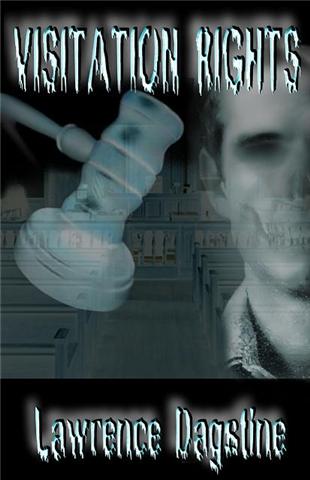
Visitation Rights, Amazon Kindle… (Reminder Post!)

Many of you have probably been wondering where the heck I’ve been, blogging two, three times per month.  Well, lately I’m going through a very hectic divorce.  Yes, I’ve split up and moved away from my now ex-significant other.  We shared four wonderful years together as a couple, gave birth to a scifi nut for a toddler, but with a 70% divorce rate in the United States, hey, sometimes these things are not meant to last.  On June 10th (and maybe beyond), it’s all about who gets the custody and visitation and when and where (I’ll probably get the kid on the weekends).  But New York Court can be a dragging process when it comes to this.  I’d like to thank all of my friends I grew up with in Manhattan, my friends in Brooklyn, all of my very supportive friends–all 2,500 of you–on Facebook, for cheering me up, for being there for me.  Even though there is more legal stuff ahead, a lot of you took the teary moments and depression away.  I’d like to also thank you for your privacy concerning all these family matters at this time.  Sometimes love is not meant forever.  What this does mean, however, is I need to get my ass writing more when all this is over.  I have a roof over my head.  It’s a room… cozy… $500 a month with utilities (I know peeps), and for a Native New Yorker and Bohemian like myself it will suit me just fine.  I feel as if I’ll get more work done now.  Perhaps better work, as I’ll be able to concentrate.  Oddly enough though, the way the visitation proceedings are playing out—minus the paranormal elements, of course—they’re roughly 70% similar to my first Amazon Kindle title: Visitation Rights. 

VISITATION RIGHTS: by Lawrence Dagstine

for Amazon Kindle and most other Digital Readers/Platforms

Sometimes very small fragments of art imitate life…

…and sometimes very small fragments of life imitate art.

Damnation Books – Direct Link:

http://www.damnationbooks.com/book.php?isbn=9781615720088

Other Amazon Kindle & eBook Titles by Dagstine:

https://lawrencedagstine.com/ebooks-kindle-dagstine/

ISBN 13: 978-1-61572-008-1
ISBN 10: 1-61572-008-1

Welcome to my life…

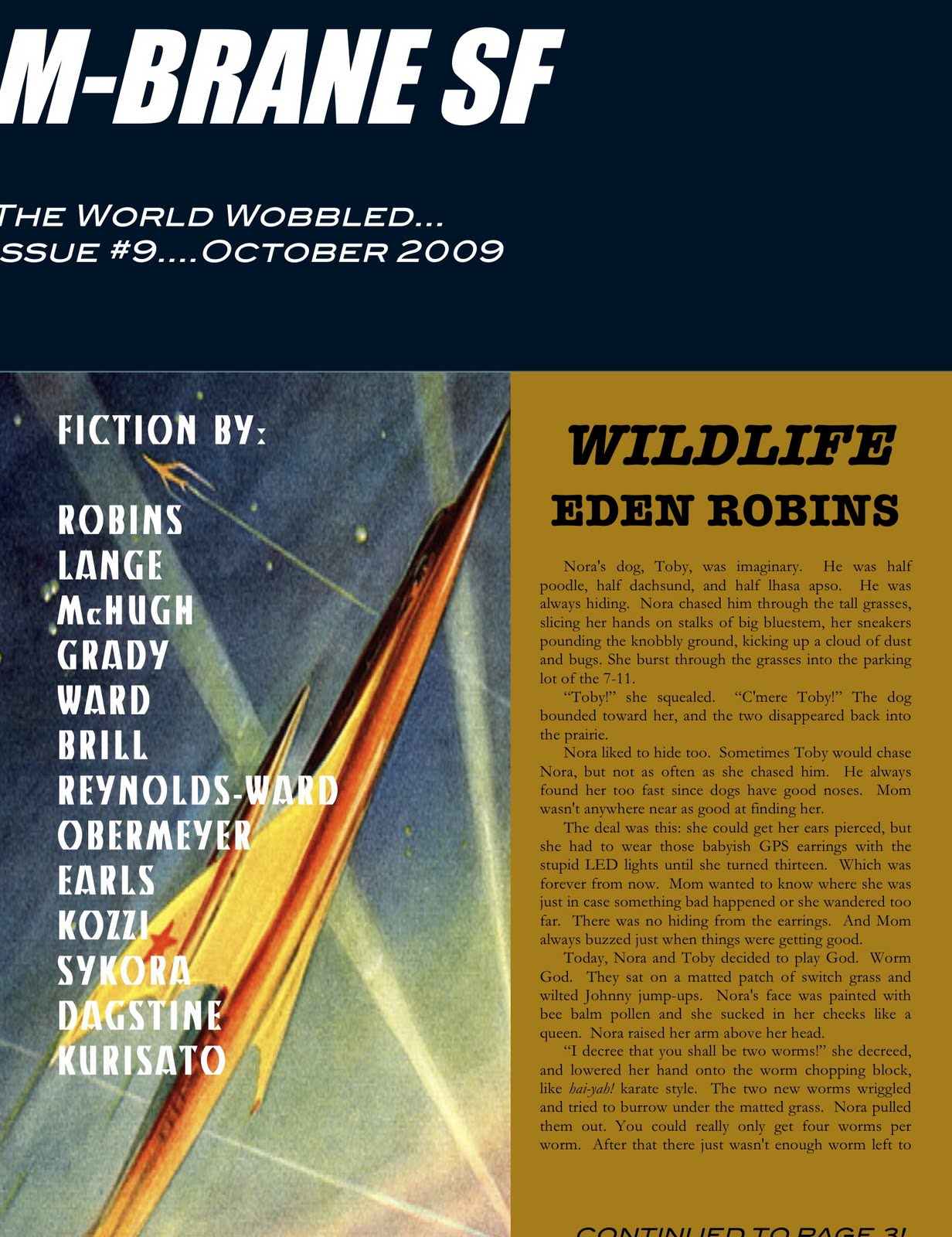
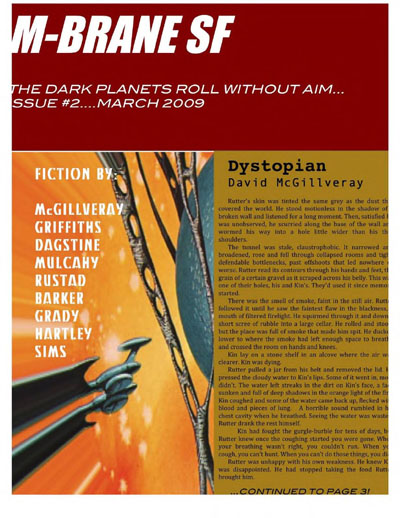
M-Brane Science Fiction, Summer 2010… (3rd Acceptance!)

In about a month or so I’ll be returning for a third time with a weird SF/alternate history tale of sorts to M-BRANE SF.  Edited by Christopher Fletcher, M-Brane Science Fiction is not just a monthly, speculative magazine dedicated to the pulps in PDF format.  It’s also only $1.00 per electronic issue ($12.00 per year), and you can download it to your Amazon Kindles and other digital readers.  Christopher Fletcher provides a daily blog site, complete with hardcore news, reviews, and insight on subjects of science fiction and science fact.  Hard SF, Sociological SF, Cyberpunk, Alternate History, authors new and old can all be found at M-BRANE SF.  A LULU version is also offered, I believe.

M-BRANE SF – Third Acceptance (summer 2010)

COMING SOON – SO STAY TUNED!

www.mbranesf.blogspot.com

Other New Entries: “Magazines”

Lawrence Dagstine: “A Day at the Brooklyn Museum…”

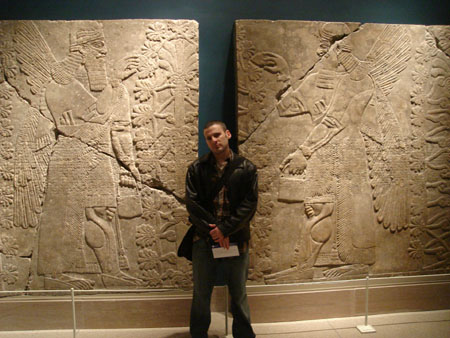
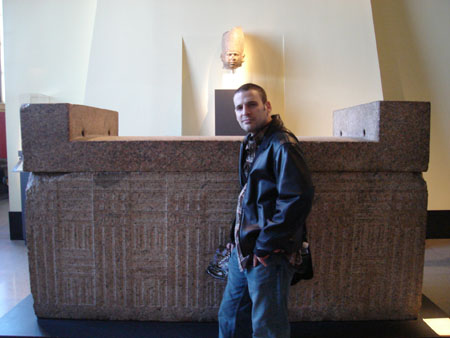
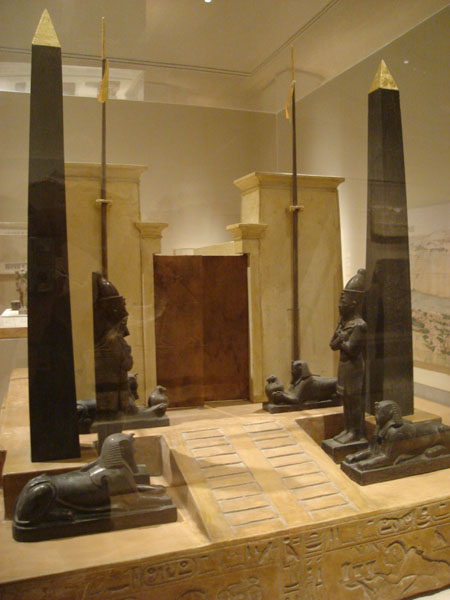
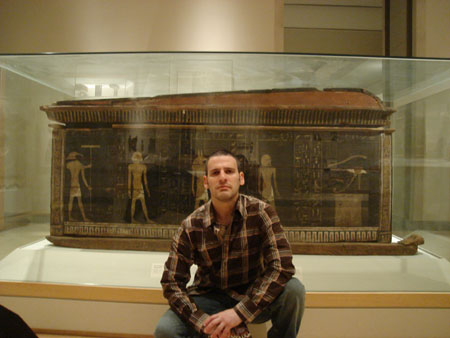
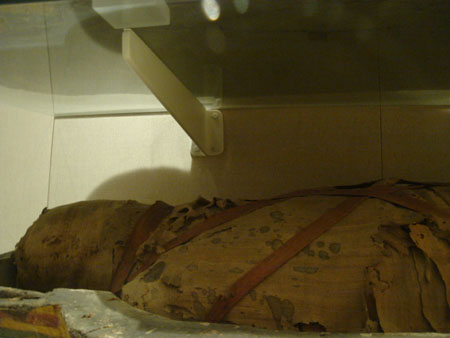
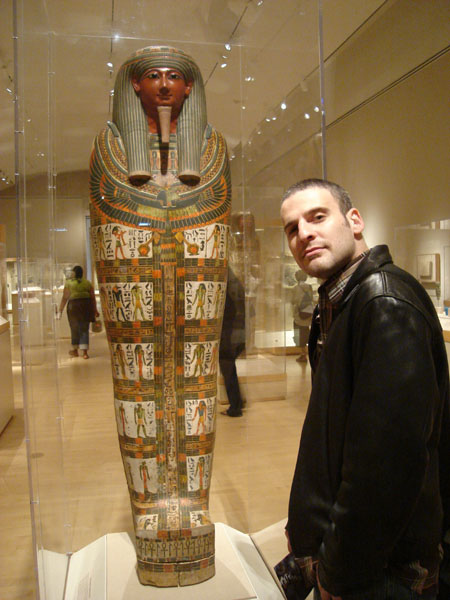
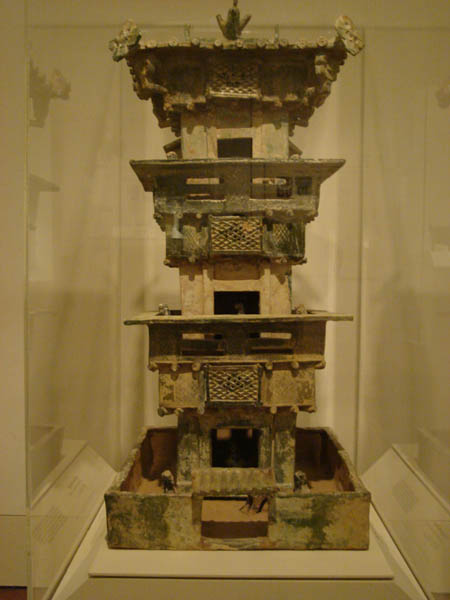
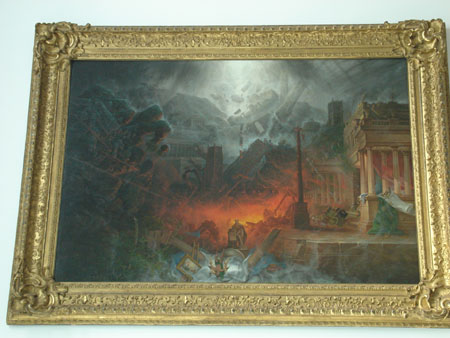
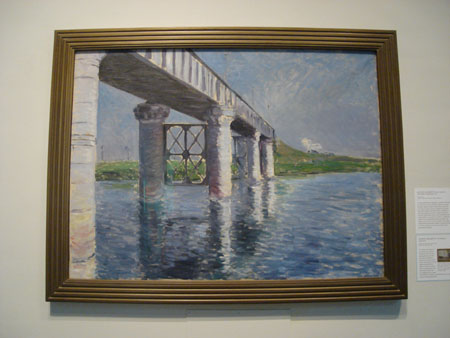
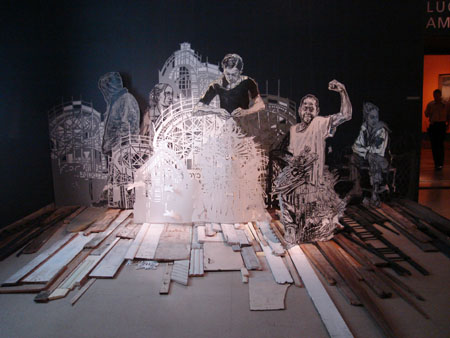
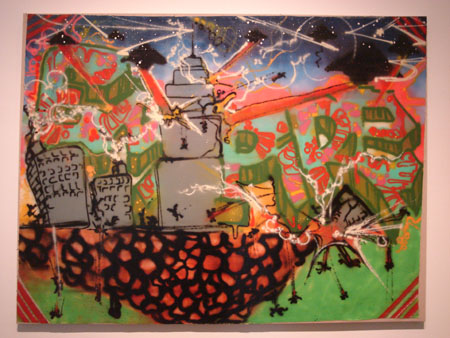
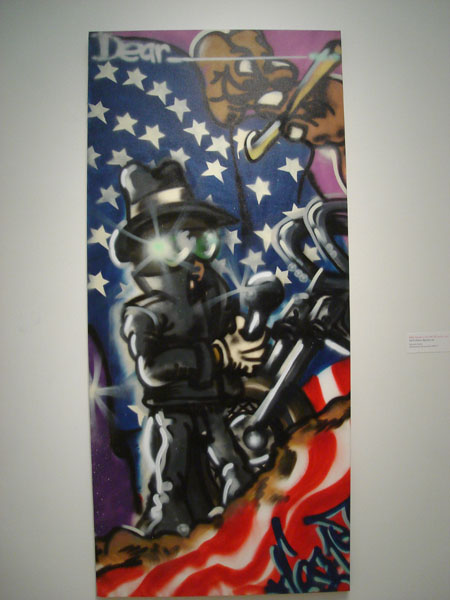
The following series of pictures were taken a little over a year ago, when I went on a research trip to The Brooklyn Museum of New York.  During that time, between 2008 and early 2009, there was an Ancient Egyptian/Assyrian Exhibit.  They also had an “Old School” Graffiti Art exhibit on the 5th Floor.  It was a lot of fun.  I got to see some real mummies (which you’ll see below), tombs, statues, canvases, masks, and a whole lot of other interesting stuff from the days before Christ.  I finally got around to resizing some of those other photographs.  The results of this visit would be a short article for an archeological magazine and an alternate history tale featuring Cleopatra (novelette-length).  Here they are, finally, in all their glory.  Historical and artistic pics.

Assyria * Ancient Egypt * Mummies * Tombs

The mummies were the freakiest…

(There were more pics for this exhibit, but those were sold along with the article)

Asian Artifacts * Age-Old Trinkets * Masks * Molds


Paintings * Canvases * Stained-Glass Works

Graffiti Art Exhibit * Urban Art Canvases * Retro Works

As you can tell, you could even participate…


For more information about the Brooklyn Museum of New York:

www.brooklynmuseum.org

200 Eastern Parkway
Brooklyn, NY 11238-6099
(718) 638-5000

Lawrence Dagstine: “How to make $5000.00 from writing…”

*HOW TO MAKE FIVE-GRAND IN YOUR SPARE TIME FROM WRITING*
An Essay by Lawrence Dagstine

This conversation always seems to come up whenever my name is made in passing in certain industry circles, regarding that “Prolific Hack” Lawrence R. Dagstine.  This time it came via Facebook a few days ago by a person we’ll call Chubbs.  Congratulations, Chubbs, you are now a character in my upcoming, racially provocative, cyberpunk novella, MAURICE AND THE URBANITES.  All with good intentions, Chubbs; I won’t kill your character off.  If there’s one thing I’m known for, it’s helping other writers find markets for their work.  However, I think it is important that all housewives or househusbands, part-time tutors, teachers or students looking for extra cash, has-beens, wannabes, bohemians, panderers, starving artists, prose-driven lushes, pain-killer popping poet laureates, and yes, even young technical writers who need reminding pay heed.  Or if you’re smart, can program yourself to type methodically, but find yourself currently unemployed.  So let’s start this off right…

Publishing Clip/Magazine Tupperware No. 2 of 4 - Yes, I own four.

Hi, my name is Lawrence.  I’m a hack writer who made roughly $5000.00 in 2009 from the written word.  Cash.  Mojo.  Bling.  And I’m going to show you too how to make this kind of money over a 365-day period; have checks and payments coming in regularly in this tough economy; samples on how to get writing gigs and become a fiction writing machine in your spare time, and the difference between quantity and quality (in my opinion).  As a trench-writer since the late 90’s, with close to 400 magazine and webzine credits, and in this current market, this is how I perceive Quantity and Quality.

QUANTITY = The Possibility of Fast Money and Brief Popularity.

QUALITY = The Possibility of Immortality and Elegance of Prose.

Author’s Note: With the above, your mileage may vary.  But both can exhibit a certain level of professionalism.  I’ll also get to the novelist a bit more later on.  Everything I put down here in the meantime is from firsthand experience, acceptances, years of observation, and generally whatever else worked for me concerning the written word.

I think everybody pretty much knows by now that I submit to a LOT of half-cent to three-cent per word paying markets.  I often have a minimum of 20 to 40 different short stories and novelettes floating out there at any given time, and so should you; with reprints, once rights have reverted back to me, sometimes as many as 60 fiction markets.  There’s one short that I’ve sold over seven, eight times already.  These are often called “Trunk Stories”, stories which have already been published and are just sitting on your laptop, can be dusted off, and sold again after many years.  And I’m not including small non-fiction gigs, which rely mainly on published clips, actual “print” periodicals, or through connections/recommendations one might have through freelancing or journalism.  That’s a whole other ballgame.  If you want to make some kind of extra cash with short stories, you need to write plenty of them! Like one or two per week, then build up a hefty folder over time.  This is a must! It won’t be an overnight thing.  Oh yeah, and expect to get a boatload of rejections.  But I think every writer and his or her grandmother is aware that it comes with the territory.

At the same time, I truly believe that while the written word is the written word – by that, I mean whatever you manufacture from your keyboard – within short story writing and novel writing there exists two very different breeds of writer.  Two very different thought process patterns between both of them.  Even though, over time, it is essentially the hardworking novelist who will round up the most funds.  One is taught to submit to nothing but the highest paying markets, because there is this invisible rule, and everybody should adhere to it.  Because we should better ourselves.  Start at the top, work your way down.  Maybe go to Clarions or Borderlands or a similar writing workshop, and attend seminars where you can sit down with actual New York Times Bestselling Authors.  Excellent philosophy.  I’m for it one hundred percent! I’ve been told to submit to nothing but five-cent per word markets, otherwise throw your story away.  I’ve had writers tell me five cents is an insult and submit to only seven-to-ten-cent per word paying markets.  And there was the one old-schooler who said submit to only ten-cent markets (yeah, and out of the thousands upon thousands of genre writers, statistically we all know there’s a ton of those out there).  I wouldn’t dare say keep that piece sitting in a drawer, especially if you believe in it.  Submit it! Still, at the same time we can’t forget that some levels of writers do it for the sake of paying other bills, no matter how big or small that earning from writing may be: it might help you fill up your gas tank, it might help you afford air conditioning this summer, or even pay your mortgage or credit card.  For some the opportunity is out there (on both levels); for some, not in a million years because they might not know what to do or how to go about freelancing or how to utilize reprints or how to get into the “Writing Habit”.  Personally, I could give a damn about immortality.  I live in the Here and Now, therefore I must eat, think, and survive in the Here and Now.  That’s my philosophy.

Basically, have a secondary income coming in on a fairly repetitive basis.  Checks and Paypal payments flying in every week to two weeks.  The same way prolific novelists receive royalties by the quarter.  Two very different breeds of writer, in my opinion.

Example 1:

On one particular day in September 2009, I opened up my email to find seven paying acceptances in ONE DAY – nothing big, nothing exorbitant – and I’m not a full-time writer.  That’s my current record, by the way.  In December 2009 I had another four paying acceptances in ONE DAY.  That’s eleven paying short story acceptances right there.  In only two days out of 365.  Now, out of those eleven acceptances, who am I to say no to $25.00 checks, $50.00 checks, $75.00 checks, or even a $100.00 check, which might turn out to be a 2-cent per word story which just happens to equal a Benjamin Franklin? Especially if they’re rolling in constantly! Unless you’re already established, you never say no to Benjamin Franklin.  Benjamin is your friend; Grant ain’t so bad either.  A 2,000-word short story to a professional market equals the SAME hundred dollars.  Not to mention I can probably name three or four other prolific short story writers who have me beat with the numbers above.  And while Benjamin and Grant are your best friends, they can do more than just get your name and work out there.  In this current market and economy it can pay for things.

Here’s another example from December 2009.  The publication in the link below, which has been around eleven years, I often get acceptances from.  I’ve even helped improve their exposure and circulation a bit.  They pay me 1-cent per word for material.  The two accepted stories in this particular entry, to be released this year, are 6,000 words in length each.  That equals $120.00.  Over a period of twelve months, it adds up.

CLICK HERE: https://lawrencedagstine.com/2009/12/21/nova-science-fiction-spring-2010-eight-acceptances/

This recent story acceptance below is fairly long.  It took me one day to write this story.  The creative juices were flowing.  The check from it will pay for one gas bill.  Still, if you want to pay more than one bill, you need to have at least 40 different short stories floating out there for you.  When rejections come in, send the stories right back out.

CLICK HERE: https://lawrencedagstine.com/2010/02/10/aoifes-kiss-35-december-2010-12th-acceptance/

Once again, that $5000.00 was from part-time writing, not full-time.  This came from short fiction, short non-fiction, selling Dagstine mags and wares in Coney Island, small leads and gigs on places like Craigs List to resume writing (www.craigslist.com).  Let’s throw in a little off the books proofreading for people advertising simple jobs from foreign-speaking countries (e.g., gigs I had for Denmark and The Philippines).  You can charge these people a fee in the low hundreds just to edit their manuscripts or fill their technical and business writing needs.  Always charge less than what the Writer’s Market suggests for these jobs; work with your clients, they’ll use you again or recommend you to others.  That’s how resume writing fell into my lap.  It doesn’t matter where you come from: if you understand English, have Internet access, and enjoy typing, anybody can do this… ANYBODY CAN DO THIS! So what if it isn’t entirely fiction? Now I’m building up an entirely different kind of portfolio in the process, something I would never have done or thought of, say, five years ago.  I’ve written under such names as Lawrence Davis, Lawrence Roberts, Lawrence Hewitt, and in the science fiction arena, Lawrence Dagstine.  The list goes on.  I even wrote a porn story once under the name Nabudi Sun (this was for kicks).  Plus, the freedom of this also gives me the time to write more genre fiction, which I enjoy and grew up on.

SAMPLE FOREIGN / FREELANCE LINK: http://manila.craigslist.com.ph/wri/

You ever see that show, DEAL OR NO DEAL? Hosted by Howie Mandel? He comes out on stage rocking his baldy, a woman with a silver briefcase hollering and screaming at his side.  The audience is cheering on.  The woman is given the option to pick briefcases and go for a six-figure win.  Let’s pretend that the contestant is a writer, and that this game show scenario applies to writing.  Very rarely do people get that six-figures; shit, some times they don’t even score five.  Howie Mandel will call upstairs and one of the producers or whatever will make an offer.  It might be $6,000, $8,000, or $10,000… Do yourself a favor, TAKE THE MONEY AND RUN! Don’t wait around for a half-million dollars.  Because, in traditional publishing, six-figures ain’t happening.  $10,000, sure, why not.  I can figure that.  Pay your bills and have fun with your peers.

Example 2:

You know, when you think about it, $5000.00 equals an advance on some novels, which might take you a year to write and then an additional 18 months to be released.  There’s no guarantee the book will sell, the agent you have will keep you or you will keep her, or that you’ll be the next big thing.  Your book may sit on a shelf for what seems like an eternity, or be sent back for a refund.  Or, in the end, have its cover torn off.

You have to remember, writing is a starving profession.  Freelancing is quick cash.  Thanks to it, I sell most of my works a minimum of three times each.  Thanks to it I have heat and hot water, a full refrigerator, electricity and gas, copays on prescriptions covered, clothes on my back, toilet paper to wipe my ass, diapers on my kid’s behind, and all other bills and necessities besides a rent firmly paid.

But, I understand.  Even though you realize that genre is a lottery, with one in every 10,000 to 20,000 truly making it BIG, you aspire to be that New York Times Bestselling writer.  There’s nothing wrong with that.  Dreaming big is a part of life.  Sometimes those workshops or classes, however, are pricey.  With round-trip airfare, hotel and food, you could be talking $2000 just to attend! Freelancing, in the fashion mentioned above, can PAY FOR THAT PROFESSIONAL WORKSHOP… It can help you afford these writing camps in what is a truly reserved economy.

In the end, it’s all about enjoying what you do.  The storytelling aspect, and of course, entertaining your readers.  Listen, you don’t have to stay in this little shell your whole life because some organization has it hammered out that way or because people have inferiority complexes (such as Chubbs).  What good is a writer who ends up worm food from lack of finances? I think that at a certain point, you have to come out and set up your career the way you feel most comfortable with it.  Remember, only you are responsible for your own destiny.  Only you can carve out a niche for yourself, thus turning it into your own reality.

Until Next Time,

Lawrence Dagstine

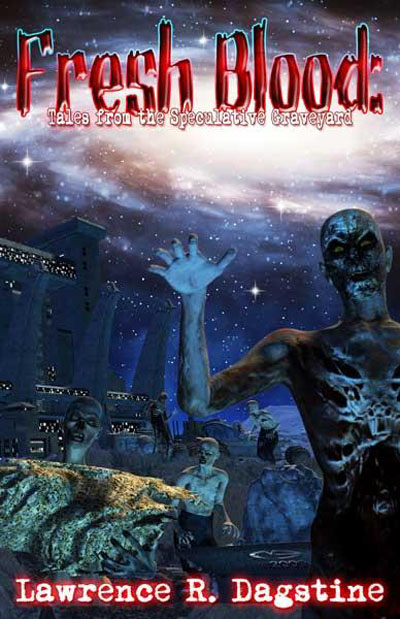
FRESH BLOOD by Lawrence Dagstine… (PDF and E-Format!)

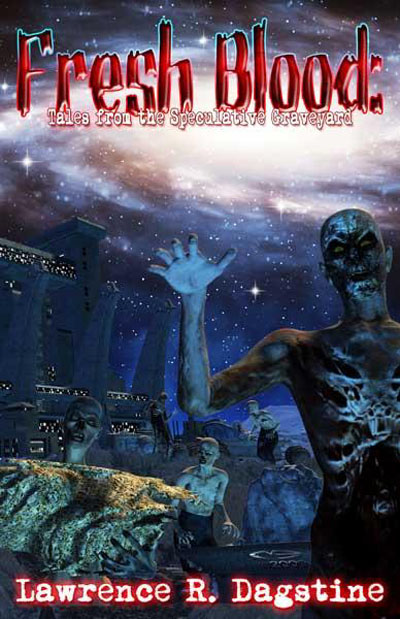
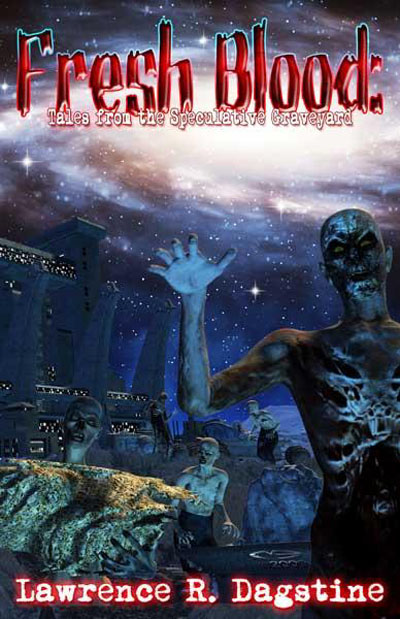
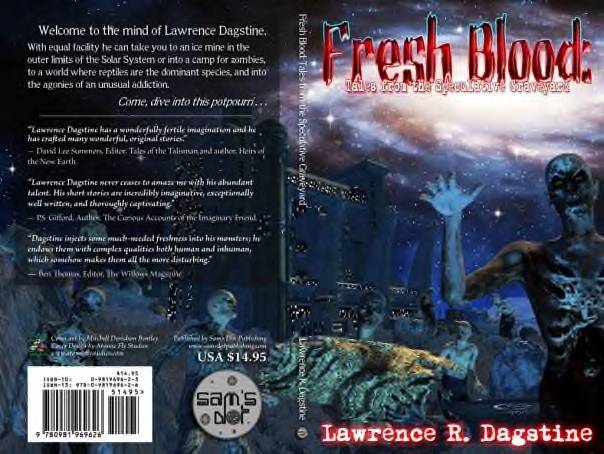
My 2009 debut short story collection, FRESH BLOOD, filled with 160 pages of dark science fiction stories and twisted horror tales is now coming to PDF/e-Format.  You can get it from one of the largest RPG retailers on the Web. DriveThruRPG.com! Or, for just a few dollars more, you can splurge for the print copy and see what all of last summer’s buzz was about. Just do a search for “Sam’s Dot Publishing”.  It might take a while for the publisher’s page to go up.

Vampires * Zombies * Ghosts * Giant Lizards * Alternate Universes

FRESH BLOOD: TALES FROM THE SPECULATIVE GRAVEYARD

Published by Sam’s Dot Publishing

Author: Lawrence R. Dagstine

FRESH BLOOD in PDF/E-Format - ISBN: 978-0-9819696-2-6

Order the PDF or e-Version for upload to your readers at… DriveThruRPG.com:

www.drivethrustuff.com

For a little more, the softcover version at The Genre Mall:

http://www.genremall.com/anthologiesr.htm#freshblood

Fresh Blood by Lawrence Dagstine - PRINT VERSION

Other New Entries: “Books & Anthos”

Lawrence Dagstine: “Christmas Time 2009…”

For the 2009 holiday season, I decided to update my blog homepage and fill my fans and followers in on some of my gifts and achievements of the last twelve months, along with what to look out for and what will be under the x-mas tree this yuletide season (for the little one).  Regardless of the last year-and-a-half of dying markets and a bad genre economy, 2009 still managed to be my best year in the “earning” department, where I doubt I will ever be able to rival 2007 in the quantity and material department.  Some of these achievements range from smaller press and semi-pro fiction acceptances, minor proofreading, non-fiction writing and essays, resumes, my first official short story collection being released, my first Kindle title being released, making over 2000 friends and followers on Facebook, and just a lot revolving around the written word and The Spirit of Christmas.

Isn’t that a beautiful Christmas tree? The lights flash blue and white.  Progress-wise, this year I had very little time to blog/plug but got a lot of acceptances (some straight through 2011), let go of a lot of reprints, wrote 26 BRAND NEW short stories, wrote 8 BRAND NEW novelettes, wrote four unfinished novellas between 15,000 and 30,000 words in length — which I may make available on my blog to read next year.  I mean, why let good stories go to waste.  Or maybe I will get around to editing and finishing those novellas.  I have future eBooks & Kindle titles on the horizon.  I realized that, money-wise, it doesn’t pay to release a second short story collection.  I can earn more individually.  I was shortlisted a couple of times by some decent pubs, made second readings, almost made it into 4 professional level magazines/venues.  And that’s just the fiction department.  Oh yeah, did I mention the steampunk and satire offers?

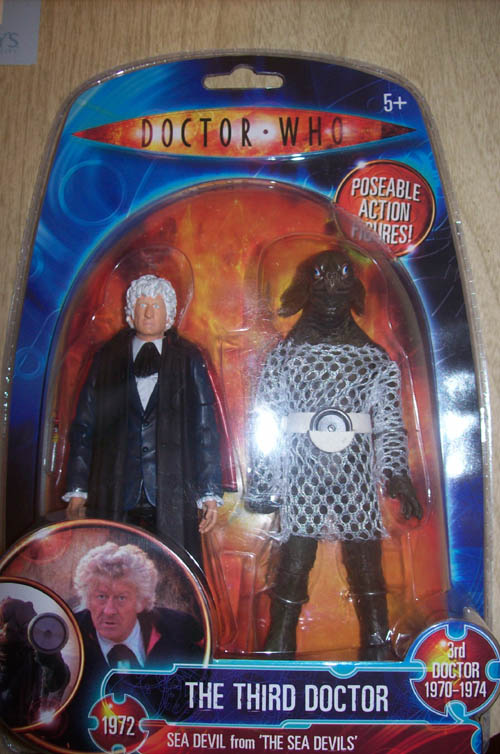
Below you will find pictures of just half of this year’s gifts.  It’s mainly a Cybermen-themed Christmas this year, with David Tennant regenerating into Matt Smith and all.  And my son is now a Dr. Who fan and absolutely adores The Cybermen (he’s scared of the Daleks).  Oddly enough, he’s also more a Christopher Eccleston fan.  One of the items I searched the UK high and low for was The Cybermen Age of Steel 4-figure collection.  Collect them all, open up the packages, and you can build a fifth figure.  The Cyber Controller.  I also picked up The Next Doctor on DVD and ordered a Cyber Leader Voice-Changing Helmet to seal the deal.

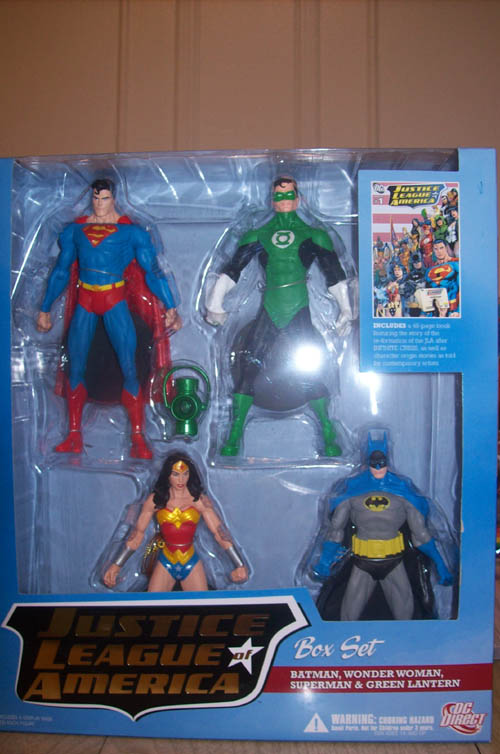
Some of the other gifts, which are already wrapped, consist of model kits with glues and paints from my old man, though they say ages 8+ and 12+ on the packages.  So I guess the little one will have to hold on to them until he’s old enough to understand them.  Those are made by Revell.  There are also Bob the Builder videos.  Believe me, Doctor Who wasn’t the only stocking stuffer.  There are some other wonderful toys and gifts ranging from Super Mario to Toddler Costumes to Spongebob Squarepants-themed games, and, like last year, play food items.  Like “make your own pizza.”  The Spongebob game in the picture below is actually Connect Four, but obviously for a slightly younger age group.  Then there’s the one last-minute gift I just couldn’t put down.  The paint job was so realistic.  It reminded me of the Super Powers Action Figures of the 80’s.  Remember those? The Justice League of America Boxed Set: Superman, Batman, Wonder Woman, and Green Lantern.  These figures are mint and pristine! And who doesn’t love the JLA?

Now that’s a big ass cup of coffee (by the way, that’s made of metal).  Just couldn’t resist.

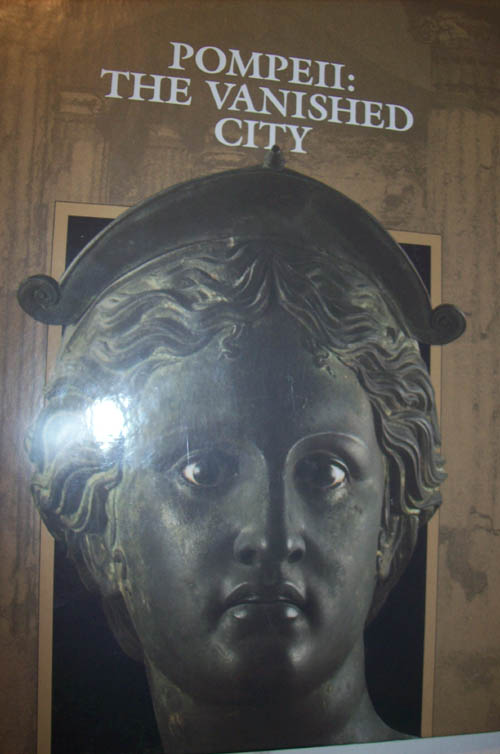
In a reduced and very affordable fashion, I also treated myself to a few early-season gifts.  First, notice the non-fiction book above on Pompeii.  You got it.  It’s research time.  Lawrence Dagstine will be coming your way sometime in 2010 with a story set in Pompeii.  It could be before Volcano Day, it could be after.  It could be Alternate History or not the story you’re expecting.  But you know me when it comes to Historical Weird Tales.

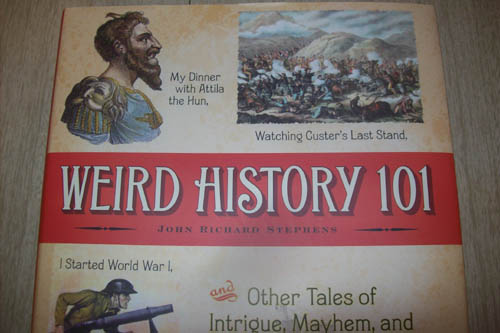
Also, I can’t recommend enough WEIRD HISTORY 101 — published by Falls River, and if you’re a B&N member, you might be able to get it reduced now for $4.00 — in hardcover.  This tome is sooo awesome.  It’s like a mini factbook and reference tool for the writer, and just all around interesting to own.  If you’re a writer of historical tales, alternate history, steampunk, or period pieces, trust me and go to Barnes & Nobles and get this book.  Doesn’t matter what genre.  Author is John Richard Stephens.  You won’t find these kind of facts on Google, or between the pages of traditional historical reference books.

And if you look up above, I finally have a new computer desk.  Nice to have shelving and a drawer, but still unsure of what to fill it up with yet.  Now that the little one has gotten older, the bookcase units pretty much belong to him and his toys.  Now that I have a Kindle, most of my print books will be donated.  Those I wish to keep will be locked away in storage between two households (yeah, there’s that many).  But that desk above is situated in a new corner, it’s my new workspace, and it’s where I’ll pen that Pompeii tale for you Dagstine readers when the time comes.

With that said, I’ll probably only update this blog four more times before the New Year.  Stay with me in 2010.  We have many adventures to go on together, and much awaits.  Won’t you join me? To all my fans and readers…

Merry Christmas and Happy New Year!

Lawrence R. Dagstine

Other New Entries: “About Me”

Aoife’s Kiss #31, December 2009… (Now Available!)

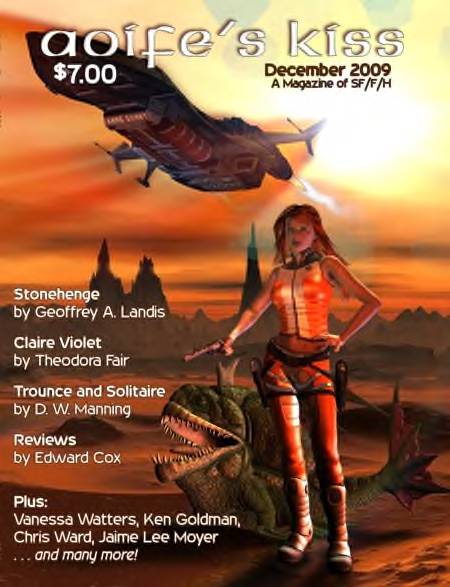
It’s my 11th story appearance within the folds of Sam’s Dot Publishing’s magazine, Aoife’s Kiss.  This would be the December 2009 issue, a pretty funky cover.  This issue also features Ken Goldman.  No. 31.  Interesting fact about the magazine: the title comes from Irish.  After all these years, I didn’t even know that.  However, if you love science fiction and adventure stories, you definitely can’t go wrong with a copy. 

AOIFE’S KISS, December 2009 – Issue No. 31

APPEARANCE No. 11 – Science Fiction Magazines

SUBSCRIBE/BUY NOW – JUST CLICK BELOW:

http://www.genremall.com/zinesr.htm#aoife

Submission Guidelines and MORE:

http://www.samsdotpublishing.com/aoife/cover.htm

Featuring Work by: Theodora Fair, D.W. Manning, Kate MacLeod, Ken Goldman, Marshall Payne, Kristin Noone, Kimberly Colley, Lawrence R. Dagstine, Jason Heller, Chris Ward, Curt Jeffreys, Geoffrey A. Landis, Julie Mark Cohen, Lenora Farrington-Sarrouf, Vanessa Waters, Justin Bohardt, Jonathan C. Holeman, Hillary Bartholomew, Shelly Bryant, William Beyer, Jamie Lee Moyer, Stephen Jarrell Williams, Michael Ceraolo, Jenna Kelly, Maggie Desmond O’Brien, Jene Erick Beardsley, Roberta Shepard, Carolyn Crow, and Edward Cox.

More Issues of Aoife’s Kiss featuring Lawrence Dagstine (click below):

https://lawrencedagstine.com/magazine-credits-dagstine/

Other New Entries: “Magazines”

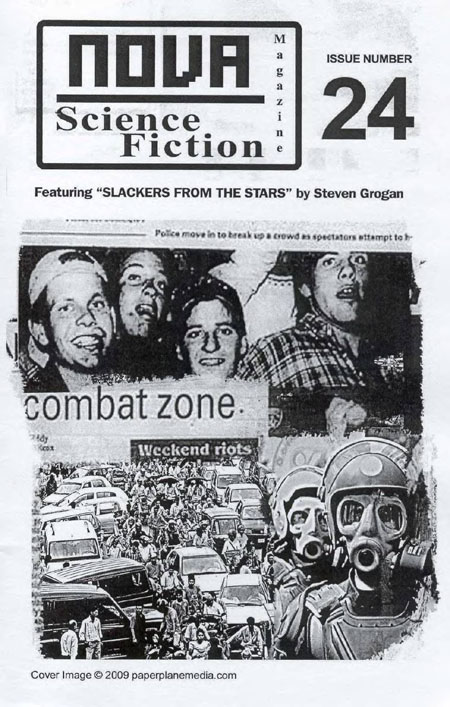
Nova Science Fiction #24, November 2009… (Now Available!)

I’m pleased to announce that the 24th issue of NOVA SF is now available.  Ten years publishing! This would mark my fifth appearance with the Hard SF and Christian SF publication.  I’ll have another story with them sometime in late spring 2010.  According to the recent Novel & Short Story Writer’s Market, the circulation has gone up a little.  Let’s see if we can increase that again this year.  You can also subscribe via Paypal.  Published semi-annually, NOVA SF is edited by Wesley Kawato.  It also appears he’ll have a dealer’s table at a very famous Doctor Who Convention in Los Angeles, CA in February.  GALLIFREY 2010/Gallifrey One: http://www.gallifreyone.com/

It’s the Biggest Dr. Who Convention in the United States and NOVA SF will be there!

DETAILS: http://www.gallifreyone.com/dealers.php

Fellow Satirica Author, Bill Housley, is also in this issue:

NOVA SCIENCE FICTION – Issue #24

Autumn 2009 – Ten Years Running!

NOVA_24_Big

SUBMISSION GUIDELINES or SUBSCRIBE:

www.novascifi.com

SNAIL MAIL SUBMISSIONS ONLY!

NOVA SF Banner

PREVIOUS ISSUES FEATURING LAWRENCE DAGSTINE:

NOVA_24_Small

Other New Entries: “Magazines”


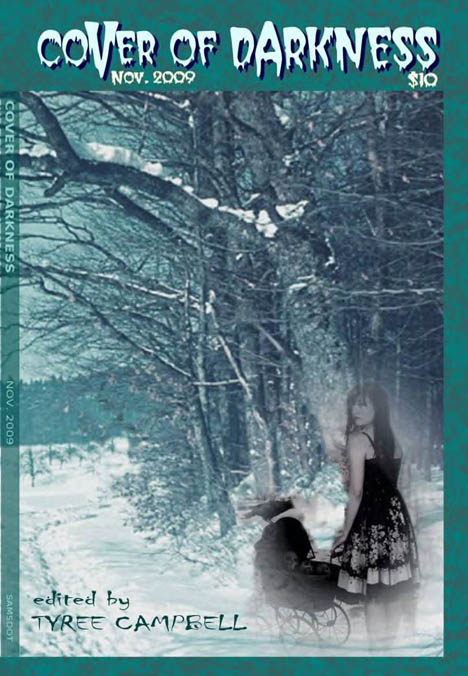
Cover of Darkness, November 2009… (Now Available!)

This is probably one of my favorite covers to anything I’ve ever been in.  You can find an almost novelette-length story of mine in the very popular COVER OF DARKNESS, November 2009.  Published twice a year, it’s a magazine-anthology of lengthy horror, urban fantasy, speculative fiction and other dark tales in-between.  Edited by Tyree Campbell and published by Sam’s Dot.  For this issue, an entire town is destroyed… Dagstine-style.  And that officially ends the Fall 2009 year on Vampires, Werewolves, and Zombies.  This magazine’s a thick one. 

COVER OF DARKNESS – November 2009

Anthology Magazine – edited by Tyree Campbell

CoverOfDarkness

SAM’S DOT PUBLISHING HOMEPAGE (updated monthly):

www.samsdotpublishing.com

ORDER COVER OF DARKNESS DIRECT FROM THE GENRE MALL:

 http://www.genremall.com/anthologiesr.htm#coverofdarkness1109

And while you’re at it, pick up the latest issue of HUNGUR:

https://lawrencedagstine.com/2009/11/03/hungur-magazine-9-november-2009-now-available/

Dark stories and poems by: Linda L. Donahue, Ferrel D. Moore, Michelle D. Sonnier, Tyree Campbell, Julie Serroul, Cathy Buburuz, Lawrence Dagstine, David Sullivan, Hillary Bartholomew, Holly Day, Jene Erick Beardsley, Thomas P. Feeny, Miguel de Leon, Stephen J. Williams, and Vanessa Watters.

Other New Entries: “Magazines”

Lawrence Dagstine: “How to Make Money at Signings…”

“HOW TO MAKE MONEY AT BOOK SIGNINGS”

dagstine-merch-1

AT OUTDOOR EVENTS & FOR THE INDEPENDENT/NEWBIE AUTHOR

by Lawrence R. Dagstine

A lot of people have been “hinting” recently on places such as Facebook and via email looking for advice.  They want to know how I did it.  They want to know how to make money selling books and magazines at functions and signings, especially if you’re an independent/newbie author.  As many people already know, I came out of a series of signings at Coney Island, New York this past summer with a decent intake on such titles as FRESH BLOOD (see Books & Anthos), and more.  Writing is pretty much an extra income field for a majority of us.  Once you learn to accept that, and not depend on fiction or look forward to fancy six-figure careers, you find your comfort zone.  The checks that come in repetitively or non-repetitively may pay for such things as utility bills, groceries, little odds and ends in places like Rite-Aid, CVS, or Walmart, co-pays on prescriptions, dinner and a movie, or something as simple as a gallon of milk or filling up your gas tank.  Of course, all of this might not come from fiction, but that’s okay.  After all, it’s a starving profession to begin with.  In this recession, every dime that comes out of the written word counts, because you never know how much your next electric bill or gas bill will be.  For example, right now I’m doing people’s resumes.  If you’re already an established, professional author with a couple of novels out, this information probably won’t help you, as you already make a nice income from being an upper midlist author or being able to relax on what royalties and advances you make from mass market paperbacks.  That, and some of your publishers may already foot the bill for some of your traveling expenses from signings.  But nowadays it’s very rare unless you’re a lead-lister.

However, if you’re an independent/micro-press author who lives in a big city or a pretty happening little town, whose been published in lots of print magazines, maybe a few anthologies, has a new book or collection available through a POD press, has access to a small newspaper (bonus points here), this information might help you better understand the kind of buyers that you want to attract, the places you want to sell, the performance you want to give when selling, how much to pay for dealers’ tables, number-crunching, and, what seems to work and not work “perception-wise” when selling to an audience outside of genre, because let’s be honest—that’s the consumer you’re gunning for, and they’re hard to reach.  At the end of the day they’re still a reader of Charlaine Harris, Dan Brown, or James Patterson.  You want to sell to both genre readers and non-genre readers alike.  Most likely, you work a day job, or maybe you’re on a fixed income.  You need to rely on a budget throughout, cut corners when necessary, because this article is recession-friendly.  People may perceive you as a hack, an amateur, people you know for years may perceive you as a pro, a super-pro, or even Superman! But no matter what kind of author you are, the moment you sat down at that table and sold a variety of stuff with your name on it, you were no longer just an author.  You also became a merchant and a bookseller, and you need to keep that mindset.

If you do live in a big city or a small town and haven’t been able to get signings in places such as Borders, Waldenbooks, or Barnes & Nobles, that’s okay.  In this economy, if you don’t expect family or friends to show up (or friends of those friends), chances are you’ll only sell less than twenty copies anyway and look like a schmuck at a table in the corner with a bowl of lollipops or cookies.  Somewhere away from the door if you’re not cozy with the store manager.  I chose Coney Island because it was a seasonal attraction—over five million visitors per summer—rather than a one-day gig, and I’d known about it almost a year in advance because I did some writing and research for one of their papers.  I knew people, and I made connections.  And if you can make connections, and you know the turnout is going to be big and profitable in advance, and it’s inexpensive to show up and conduct your little set-up, then what are you waiting for?

Fact: five-million people do not visit a Borders bookstore over the course of a summer — matter of fact, they’re closing stores, and I would be surprised at how many more survive — neither does that amount visit an independent bookstore, which I find to be a good way to do nothing, sell nothing, and just kill the day in a chair.  A world famous amusement park and tourist attraction is a whole other story.  Even little carnivals passing through town may attract more visitors.

Of course, there are always exceptions.

If you’re not selling in places like the chains, then you still want to add some diversity to your table, make it look pretty: business cards, flyers, postcards, magnets, or buttons made up cheap.  I recommend Vistaprint (www.vistaprint.com).  You can get stuff made up by them quite often for free.  All you have to do is pay the shipping & handling.  Some of the greatest places to sell books, and which attract crowds are book fairs, street fairs, flea markets (outdoor, indoor, churches and synagogues), carnivals, community centers, town halls, schools, festivals, bars… But mostly outdoor events in spring and summer.  Warm weather.

One writer asked me how much should he pay for tables (or, in some cases, booths).  I would say if you’re an independent author DO NOT pay more than a hundred bucks for a table (but that’s just me).  If you don’t come out of your signings making a minimum of 70 to 80% profit, don’t even bother reserving a spot.  Why? Because you need to first make the cost of the table back.  Then there’s the cost of gasoline, food and beverages (maybe even hotel and airfare).  Trust me, it adds up.  Make your signings LOCAL, and, if possible, try to split the table costs with fellow authors, too.  Oh yeah, you also want to hit up the smaller cons rather than the big cons.  Not that you shouldn’t attend the bigger cons, only that some of the smaller conventions are much easier on your pocket when it comes to the dealer’s area.  Sam’s Dot Publishing, one of my publishers, always seems to make a killing at these events.  They often sell out! Flea markets, churches, and festivals can go as low as $25 to $50.  I know this one church which holds a pretty popular flea market on Tuesdays and Fridays for twenty bucks, but you have to bring your own table.  Always packed.  Just sell a few used books, sports cards and comics on the side, you’ll make that back in no time flat.  Other genre wares should be meant to cover the cost of your table and traveling expenses.  This is a must!

When you go into a signing as an independent/newbie author, you need to go into it with the mind of a businessman or businesswoman.  You need to ask yourself: where do I expect to pick up the most sales and the best exposure.  The ice cream parlor, the town library, or the state fair (obviously the state fair).  If you need a license, get one.  They’re really not that expensive.  If you’re a newbie on a fixed income, you need to calculate all this in advance.  Don’t just sit at a table with your hands clasped, smiling and nodding at passersby.  Get up and be a regular PT Barnum.  Be jovial.  Prepare what’s called a pitch. For example: “Hello, Ma’am, you’re looking lovely today.  You must love to read.  Oh, don’t be shy.  I bet you have a soft spot for books reminiscent of Stephen King and JK Rowling!”—you get the gist (woman sees table filled to the rim with merch; friendly conversation is under way).  You need to stand up and introduce yourself.  You need to have confidence, charisma, personality, and a little humor doesn’t hurt either.  Books don’t sell themselves.  Hence why you need to be business-minded when you approach this, especially in these hard economic times, where the independent writer gets the short end of the stick.

Snail Mail

Let’s talk about Coney Island now.  My very first signing on that very first day in June was a disaster.  Why? Because I had only brought Fresh Blood with me and a few used books by pulp authors.  Luckily, that first day I covered the cost of the booth (it was only $30 at the time), but I’ll never forget this one guy who came up to me and said, “Wow, so you like write stuff.  Man, I remember books.” I was astonished! Let’s just say the guy was a caveman who’d taken one too many bong hits.  How does someone forget about reading and books? Another girl just wanted her photograph taken with me because she never met an author before, yet she didn’t buy anything.  Not to mention I looked like a big tool just sitting there with one Dagstine-related item to my name when, back home, I had hundreds of print periodicals I could have toted with me.  Duplicate copies, too.  Yes, variety, along with ‘public perception’ makes for a very nice recipe, which I’ll explain in more detail in a moment.

After that first day I learned my lesson.  Between June and August there were supposed to be seven signings, but there ended up to be six due to a one-day rainout.  There would have been a few more had it not rained constantly between June and July.  And Flea by the Sea (the name of Coney Island’s summer marketplace), though covered by tents, was an outdoor event.  It was on top of the beach.  At times, the winds were horrible.  The circus was there, too, and one day there was a big hoopla going on because Ringling Brothers were abusing the elephants, but believe it or not a few of the animal rights activists picked up some of my goods.  So I can’t complain there.  But what I’m trying to say here is that, make sure it’s not going to rain on your parade on the day that you sell.  Mother Nature has a funny way of defying writers when it comes to selling outdoors.  By July and early August I was paying $40.00 for the booth and then $10.00 to rent the table, which came out to $50.00 for an entire weekend.  How could you beat that price? This is the price area you should be looking into.  Once again, a hundred bucks should always be your cap, and hopefully, you have more than one book to offer.  Speaking of which…

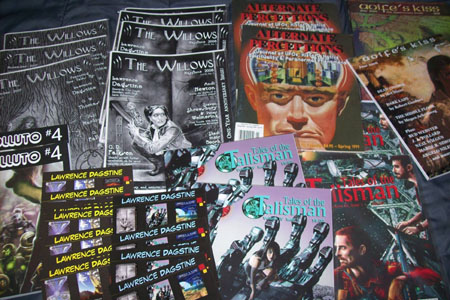
They say never judge a book by its cover.  Bullshit. When you’re selling in quantity to a non-genre and genre crowd, cover art I noticed makes all the difference.  In most cases it comes down to perception and appearances, or just the way people interpret merchandise.  I don’t care what anybody says.  They do judge a book by its cover.  And what people saw were stacks of magazines with extra copies, six different hardcovers and anthologies, and of course, a stack of Fresh Blood.  It was set up professionally and it looked pretty, like my own compact comic book shop.  All featuring something by ‘Dagstine.’

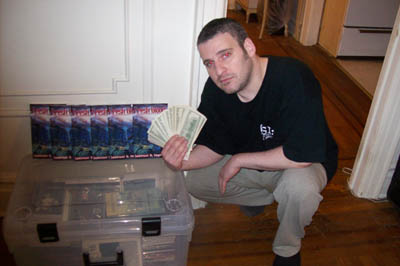
People were complimenting me because of the covers of the magazines.  Short lines and interested eyes gathered.  One person said, “So you must be Brooklyn’s SF Writer.”—I said, “Okay.” I just totally went with it.  Everything acted sort of like a cash cow.  One Dagstine publication led to the purchase or attraction of another.  Not only did one person spend $50.00 in one shot on me, but over the course of those signings I pushed $250.00 worth of old self-published hardcovers from The Year of the Flood, back when I didn’t know what the words ‘Vanity Press’ meant.  The point I’m trying to make here: I had a lot to choose from, my buyers had a lot to choose from, and so should you.  The cover art, the variety, the set-up, and “come one, come all” pitch made all the difference.  Even the shirt I wore! I got to autograph and sell my writing where, with only Fresh Blood, I probably wouldn’t have made what I did over the course of the summer: around $1200.00 – NET. And hey, I got my work and business cards out there.  Not bad for a hack, and my table investments had already been covered. 

If you’re a writer whose works have appeared in quite a few magazines, talk to the editor about getting extra issues at an author discount.  Always use media mail.  You might pay $4.00, $5.00, even $6.00 for those extra copies featuring your work in it.  You’re going to autograph them and sell them for $8.00 to $10.00… And don’t forget what I said, once you’ve included the cost of the table, food and beverages, gas or transportation to get to your selling destination, you need to make a minimum of 70 to 80% profit, otherwise it’s pointless.  Remember to invest in your work, invest in yourself, and before you attend that signing with more than one book or periodical, sit down with a calculator and crunch those numbers.  Make sure the location is going to be worth the time and effort.

In closing…

Whether you’re selling indoors in some chain, an artsy-fartsy independent that has velvet couches and serves Lattes and marble loaf in the back, or you’re giving the outdoor thing a whirl like I did, there is also another reason why you need to impress that passerby.  Besides cover art and quantity, nine out of ten times the general reading public will throw down cash on used books, non-fiction, children’s books, fast-paced thrillers, or romances before they will genres or subgenres known for killer slugs, planets with giant lizards, what the future would be like if everybody were pink, zombie stories, and heroic fantasy yarns.  If you’re a writer of genre fiction, you’re automatically at a disadvantage, so you need to think of ways to catch up.  That’s why the business model/bookseller mentality is so important.

Still, if I could do it with twelve hundred smackers, with a little initiative, so can you.

Until Next Time,

Lawrence R. Dagstine

Lawrence Dagstine: “The New York Yankees 2009…”

NEW YORK CITY

HOME OF CHAMPIONS!!!

yankeesCongratulations to the New York Yankees… Championship No. 27.
2009 MLB World Series – Bronx, New York.

Hungur Magazine #9, November 2009… (Now Available!)

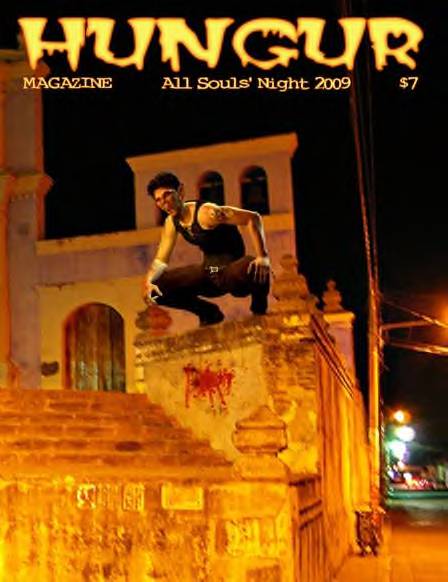
Vampires get your fangs ready! I’ve got a story in the latest issue of Hungur Magazine, No. #9.  Fall 2009.  Edited by Terrie Leigh Relf, and published by Sam’s Dot.  If you think the Obama Administration or any administration is safe from a vampire threat, think again! It’s an issue you won’t want to miss.  Because this issue… The Vampires are running the show.

HUNGUR MAGAZINE

Late Fall 2009 – Issue #9

HungurMagazine_9

SUBMISSION GUIDELINES:

http://www.samsdotpublishing.com/HungurGL.htm

ORDER DIRECT FROM SAM’S DOT & THE GENRE MALL:

http://www.genremall.com/zinesr.htm#hungur


Bloodletting works by: Tyree Campbell, Lawrence Dagstine, Scot Coon, William Marden, Lawrence Barker, Dev Jarrett, John H. Stevens, Donald Jacob Uitvlugt, Jared W. Vickery, J. Jay Waller, Lawrence Buentello, Allan Wise, Marge Simon, Brian Rosenberger, G.O. Clark, Debby Feo, Terrie Leigh Relf, Tom Galusha, Justin Bohardt, and illustrations also by Marge Simon.

Other New Entries: “Magazines”

Lawrence Dagstine: “Happy Halloween 2009…”

TRICK OR TREAT

HAPPY HALLOWEEN 2009

from Lawrence Dagstine

(I love scarecrows; had to go with a scarecrow theme this year)

However, in case you love zombies, werewolves, vampires, and lizards…

Still Available from Sam’s Dot Publishing & The Genre Mall:


http://www.genremall.com/anthologiesr.htm#freshblood

Tales of the Talisman, Autumn 2009… (Now Available!)

Issue #5.2 – Fall 2009, of David Lee Summer’s TALES OF THE TALISMAN is now available for purchase.  Get your copy today.  Also, don’t forget, I’ll be back again next year around this time with a novelette-length work.  In the meantime, enjoy the 2009 print edition.  The interior artwork is fab!

TALES OF THE TALISMAN #5.2 – AUTUMN 2009

Tales5-2-cover-big

Submission Guidelines – Order Here:

www.talesofthetalisman.com

Table of Contents:

http://www.talesofthetalisman.com/Tales5-2-TOC.html

PREVIOUS ISSUES (maybe still available):

https://lawrencedagstine.com/2009/09/18/tales-of-the-talisman-fall-2010-4th-acceptance/

Other New Entries: “Magazines”

Lawrence Dagstine: “Classroom of the Dead…”

Welcome to DAGSTINE’S HALLOWEEN! Did you ever wonder what it would be like to teach undead children? Did you ever wonder what the scientific, psychological, and moral implications of something so eerie would be like? I mean, dead kids with some thought processes still intact being taught and experimented on.  

Ever since 28 Days Later, every few years zombies have this funny way of making a comeback (perhaps too much).  From the Dawn of the Dead remake to Diary of the Dead and Land of the Dead.  From foreign masterpieces like [.REC] to hilarious films like Shaun of the Dead and Zombieland.  It’s as if we truly are a “zombiefied” culture.  For this year’s fiction sample and Halloween story, I’ve decided to present to you one of my more widely accepted tales — mags ranging from Necrotic Tissue to Atomjack  — entitled, Classroom of the Dead.  Have a wonderful holiday and enjoy!

HAPPY HALLOWEEN 2009 – FREE FICTION

CLASSROOM OF THE DEAD

by

Lawrence R. Dagstine

The room was huge.  A cavernous, old turn-of-the-century affair, with twelve-foot-high ceilings and magnificent, large windows that looked out on absolutely nothing worth seeing: a brick wall and the smokestack of the chemical plant next door, a well-sized piece of land fenced off and secluded from outsiders—most called it a playground for the stiffs—and it was just how the government wanted it.  A hefty chunk of the room had been partitioned off with gray steel industrial shelving units, used to store the supplies of safety such a learning environment would require.  The T-shaped area that was left belonged to substitute teacher, Howard Tressy. 

Windows ran the length of the wide, long arm of the T, where the chairs and work desks were; the narrow, shorter arm of the T contained the blackboard on one wall and the titanium emergency hatch at the opposite end.  It was an adequate amount of space—he had taught in more cramped, dangerous conditions—but it was a quirky arrangement.  The blackboard was useless because it couldn’t be seen from the work area, and the children didn’t have the skills required to pay full attention to it anyway.  And short of standing like a guard at the junction of the two arms of the T, he saw that he could not monitor the hatch.  Most eccentric, and morbid, however, was the government’s decision to combine a classroom for undead children with regards to furthering their education even after their pulses stopped.

They called it HOS (short for hostile, or Homicidal Outburst Syndrome).  You know, one of those biological “Oh, shit, it’s the End of Days” diseases which turned a whole nation of little boys and girls into half brain-dead monsters, flooding them with super strength and unbelievable rage.  It was to be one of the first official self-contained classrooms in the state of Colorado for zombies, ages twelve and under, who could be instructed and mentally reared since the No Kill Act had been passed in 2018.  For Howard, walking back into a schoolroom with musty children that early September morning, having been gone from teaching almost three years, had provoked a sense of intense déjà vu.  Looking at the twenty or so decomposed faces, it seemed as if he had been away forever and yet had never left at all. 

He put down his briefcase and studied the features of each of them.  Their pale white eyes caused a shiver to run up his spine to his shoulders.  As a precautionary measure, those who were extra vicious were handcuffed to their chairs, and if they were caught escaping or attacking the teacher, an armed guard, usually a Marine, would hear an alarm go off and hurry inside, then blow the ravenous child’s head off. 

The six through eight year olds came with the kind of profile that was almost a cliché: borderline death IQ, short to almost non-existent attention span, no verbal skills beyond a grunt or a moan, overaggressive and violent behavior when in large numbers.  In his entire short career as a substitute, Howard achieved virtually nothing.  Yes, some could talk.  But most could neither read nor write, or understand even the most basic of math.

The nine through twelve year olds had succumbed to the HOS sickness quite some time ago; it was obvious in their pale, sunken cheeks.  They had spent virtually all of their dead time in confinement facilities or walking the red earth.  Their early days were horrible—a litany of bloodshed and brutality.  And while it would take more than the joy of love and learning to conquer their fateful disease, they were diagnosed as being too unstable to ever make a return to society, and had a very poor prognosis for improvement.

Nervous, Howard said, “Children, uhh, inside your desks you will find textbooks.  Open up to the chapter marked PLAGUES.” The school was required to have a certain amount of copies of the same particular book on hand, and he saw that only a select few had the capacity to pick them up. “Start reading amongst yourselves under THIS DAY IN HISTORY: 2012.  I’ll be with you all in a few moments.  Before the day is out, I’ll be testing you on this.” 

Putting his pencils out and searching himself now, he realized he hadn’t meant to be teaching again.  He’d been abroad, living between Baltimore and Bangkok, working part-time as a book translator, and he intended to return to his life in the East, to his little straw shack, his laid-back life and no worries if a zombie was going to turn a corner and jump out at him.  However, a phone call and an insurmountable pay hike from the government—and a less than enthusiastic divorce settlement—had brought him back to the States for good, and before he knew it, he was looking for an apartment outside of Denver. 

A friend of a friend in a top-secret division of the DOD had rang him one afternoon.  He’d never met the military scientist, but he’d heard of him and his breakthroughs in “awakening the mummified cerebrum” in undead adolescents, or, “we mobilize them, you instruct them”.  They had a problem of their own with a new school, it seemed, and since they had both held positions in the Pentagon, maybe they could help one another out.  One of their special education teachers had been taken ill—actually, she’d been eaten at recess—and there was only two weeks left before the beginning of the second trial school year, and they had no replacement.  They asked Howard if he would be interested in substituting. 

No thanks, he said immediately.  He wanted to be able to lead a zombie-free life the instant his wife cleared out.  But the woman wasn’t easily moved, and finding himself almost penniless and without a roof over his head after the lawyers caught up to him, Howard finally said, Okay, I’ll do it.

Reminiscing, he sat down at his desk, the students in the back row frowning and groaning at him.  He was staring out the gated window at the smokestack, dull and purple-gray in the late summer sunshine, when a ceiling light in back of the room went on and the hatch slid open.

“Mr. Tressy?” a female voice called.  He couldn’t see who it was from where he was sitting, so he rose.  An undead girl, deceased at maybe six or seven, was holding a torn Dora the Explorer doll.  Her head and neck was twisted and decayed, practically snapping what was left of her upper spinal alignment and sliding off her shoulder, yet she still managed to poke her head through the hatch and around the left side of the room. “Another one of your students has arrived,” the woman that followed her said. “The parents are by the side of the road.”

“What?” Howard was confused. “Are you the principal?”

“No, of course not,” she said. “There are no principals here.  I’m just a facilitator.” She walked the edge of the room carefully, so as not to rile up the students.  Almost two-dozen pairs of eyes were on her.  Finally, she reached the desk and extended a hand. “Dorothy Wilkins,” she added.  An army brat with an M-16 waited at the foot of the room for her.  He chewed on a saturated toothpick with a smug face.

“Pleasure,” Howard said. “Don’t mind me, it’s been a while.”

“Oh, really? I gather they didn’t give you the refresher course then.”

“No, they did,” he assured her. “Back in Baltimore.  It’s just that… Well, I’ve never seen an arrangement like this so far out.  It’s in the middle of nowhere.” He glanced down at the shy but mindless little girl who, like the others, had fine hair that was now brittle and streaked with gray.  Her right eye was hanging halfway out of its socket, a few tethered veins and a single optical nerve holding it in place. “And what’s your name, darling?” he knelt down and asked her, trying to break the aura of creepiness surrounding him, and blend in as best he could.

This would be Nancy,” Dorothy said, as the girl smiled wickedly through torn cheek flesh and hid behind her legs. “And if she puts what’s left of her thinking cap on, she’s good at numbers.”

“Is she now?” Howard was impressed.  Mildly.

Then Dorothy smiled herself. “Why don’t you come with me? I’ll show you around and make you feel at home in our special school.”

“But the children,” he said, pointing, “they’ll—”

“Oh, they’re going nowhere.  Think of them as well-behaved dogs when you’re out of the room.”

Howard nodded. “All right, then.”

Dorothy brought him to a much older building than the first one, part of an underground complex which looked abandoned since the late half of the 20th century.  Only it wasn’t abandoned.  Much of its interior was no longer used principally as a school.  Instead, it housed a few administrative offices and a training facility for young cadets.  The empty classrooms on the first floor were turned into an indoor shooting range—targeting practice and termination for the misbehaved or hopeless case (roughly one in every three), and to help coach newer soldiers in the art of zombie killing. 

The scientists had the second floor, to work, sleep, and eat—they even had a recreation room with pinball machines, a pool table, and a dartboard—and as Dorothy gave him a quick tour of the upstairs, he noticed a few doors marked, EXPERIMENTAL TRIALS, GROWTH CHAMBER, and BIOFEEDBACK.  The rest of the rooms were used for storage.  In fact, there were only a half-dozen real classrooms there: the one he was going to be teaching in and a few turned laboratory two floors below, in the basement.  Save for the occasional gun-toting soldier passing through, the building’s halls were hauntingly quiet on this first day of school.

Sublevel, however, he realized that the elevator system and intertwining tunnels connected with the old smoke-piping plant next door, and this interested him very much.  Every corridor they turned down there were blue steel walls, reinforced metal or concrete, low rocky ceilings, and unusual looking cameras mounted above them.  So unusual that he decided to question his tour guide on it. “Just wondering, Ms. Wilkins, but what is this place for?”

“The cameras got you?” she asked.

“Well, yes, I do find it unusual that you have this place so…so monitored…”

“One can never be too safe when it comes to a HOS casualty, Mr. Tressy.  After all, these are not ordinary children we’re dealing with.”

“But I’ve taught HOS victims in the past,” he explained, “and though the tutoring sessions and trials were costly and much to the government’s disadvantage in containing the disease, security and surroundings were still never like this.”

“Oh, that’s right,” Dorothy recalled. “They had you handing out leaflets and crayons from a fold-up table in a giant hangar, a bunch of men in gasmasks and white suits patrolling the corners and exits.” They passed an opening in the tunnel’s rock face, a small exterior shell of a room with no door to bar the outside but plenty of digital monitors and equipment on the inside. “We do things much differently here.  Have a look for yourself.”

Howard stepped inside briefly.  Two men in gray jumpsuits and donning headsets swiveled around a vast circle of television screens, wired through the rocks and pipelines above.  One man took notes in front of a microphone and recording panel, while the other wheeled back and forth mumbling things like “progress” and “stages”. 

Howard moved closer.  He turned to Dorothy and said, “Is all this for real?”

“Why, of course,” Dorothy answered.

Howard turned back and observed the two men at work.

The first man backslapped his coworker on the arm and said, “Hey, look at this.  Monitor no. 34.  We have us a live one, a thinking one.”

“Get out of here,” the second man said. “He’s scratchin’ for maggots again, I tell ya.”

“No, look!”

On-screen, at one of many different angles, a moldy looking child slowly went into his desk and pulled out a crayon and a composition notebook, studying the two objects carefully.  Searching for some kind of meaning, it was as if he wanted to know what they were for.

“That’s my class,” Howard whispered. “That’s one of my students.”

Dorothy smiled. “Yes.”

“I remember gray shelving and a closet there. You mean that’s a hidden camera?”

“One of many, Mr. Tressy.  Also, you have the key to that closet at all times.   There’s a shotgun and a first aid kit in case of an emergency.”

Howard was astonished.

Finally, the first man in front of him said, “That’s the Tarhouse brat.  He’s picking up the crayon, Harry.  Look, he’s opening the book and starting to scrawl.  He’s making circles!”

The second man couldn’t believe his eyes.  Hurrying for the panel, he said, “Holy shit, you’re right! We do have a thinker.” He brought up a school record on the screen in front of him, turned on the microphone, and started taking notes: “Student identification no. 42501236… Name: Billy Tarhouse.  Deceased: St. Louis, Missouri, 2017.  Noted age and race at time of death and reanimation, approximately eight years old and Caucasian.  Child has picked up a writing instrument without teacher present, and appears to be drawing.  At this stage, I’d say motor skills are barely level three.  But it’s a positive sign.  I repeat, there is progress.”

After he’d heard all that, Howard stepped away in disgust. “I don’t want to be here anymore,” he told Dorothy.

“Well, we could—”

“No, Ms. Wilkins.  This is too disturbing.  Take me elsewhere.”

They walked the remainder of the underground halls in silence, until they reached a secure metal door with a window in it.  With a dull expression on his face, Howard quickly peeked at what was going on inside the room.  Much to his surprise an officer, in standard military uniform, was sitting down behind a large table.  His eyes were glued to a teenage girl, tall, thirteen, maybe fourteen, standing with only half her skull visible against the far wall.  To the military official’s credit, a scientist arrived on the scene from a buzz-in door on the opposite side.  They both studied the unfortunate subject, and, while she hadn’t quite managed to shed the undead image, she’d obviously tried.  Her rank face was covered in makeup.  With the help of others, prosthetics and lengthy but seedy looking clothes had replaced the skeletal parts of her body.

“What else can she do?” the uniformed man asked.

The scientist said, “Why don’t you ask her yourself?”

“Will she cooperate this time?”

“Much of the exterior fractures and impact holes are small,” the scientist pointed out. “You’ll also notice her left temporal lobe and hypothalamus are still intact.  So, yes, I don’t see why not.”

The uniformed man took the scientist’s clipboard, then faced the girl again.  Her features, for a HOS victim, were decent; her oozing brain matter, however, was another story.  She’d clipped the cracked pieces of her skull back with large barrettes so that it would stay in place on her head.  Shocked, Howard wondered if it would be enough to convince the officer for whatever purpose his visit required.

Finally, the man nodded. “You look good,” he said. “But can you braid what’s left of your hair back or something?”

Sitting down across from him, she pulled strands of her hair around over her shoulder and began to braid it.  She never spoke.

“Are you quite well now, Tracy?” the scientist inquired when he reintroduced the military official to her. “We don’t want another incident.”

The uniformed man glanced in the scientist’s direction, a questioning expression on his face; it occurred to him that she might have little or no memory of that previous occasion.  Then he gave her a knowing look. “He means when I was last here.  You know, last semester.”

She grinned. “Yes, I remember,” she replied.

Howard was taken aback.  He wondered where this girl’s intelligence and ability to speak and think came from; even more perplexing, how had these scientists succeeded where he had failed?

Through the window, Tracy smiled in a friendly way. “I know where I saw you last,” she said. “You were laying on the ground, protecting that teacher.”

A flush of color filled the uniformed man’s face. 

And of course, there was the scientist and Howard.

“Your men all came outside at once.  You shot me.  Over and over.”

“Are you sure about that, Tracy?” The man looked up and said, “This isn’t working.  She’s still too corpselike.”

The scientist disagreed. “I beg to differ.  Here, feel her arm.  Touch it.”

“I’m not going to touch no dead girl!”

Touch it.  Feel her arm.  See? See how warm her arm is.  Dead people are cold, aren’t they? Feel how warm she is.  A part of her brain is still sending signals to other parts of her body.”

“Get her away from me!”

Suddenly, she shrieked, “It’s the dead teacher! That dead teacher is here…” She pointed toward the door with Howard staring through it. “She wants her old job back!”

“Tracy, she’s not exactly dead.  Now calm down,” the scientist ordered.

“Who’s that?” the uniformed man asked.

“He’s our new substitute,” the scientist replied. “Ms. Wilkins is giving him a go of the place.”

“No, she’s dead!” The zombie girl shouted. “I killed her.  I made the teacher go away.  Now she’ll be back!”

To say that the two men inside were looking horrified by this point was a vast understatement, Howard thought.  From the other side of the door, even his expression was more horrified than before.  The girl was frozen, unable to pull herself away from staring at him, a maniacal little smile repeatedly coming to her lips.  And though the trancelike connection was eventually broken, she seemed to confuse him for this other teacher.

Dorothy put her hand on his shoulder. “She’s a special case,” she said. “We should go.”

Howard moved away from the window.

“How do you keep them so calm?” he asked. “A girl as challenged as that one should have attacked the door the moment she spotted me.”

“Every morning we prep them with mega-dosages of tranquilizers,” Dorothy said. “Their parents must sign confidentiality agreements and permission forms before the administering begins.  And even then, we have a special selection process as to who gets into one of our classes.  Naturally, those we feel are most gifted are bumped up to the top of the list.”

They took the elevator back to the first floor, and it was here, on their way back to the other building, that Howard stopped to gather his thoughts. “Ms. Wilkins, I never signed up for this,” he said. “I realize not all HOS victims are unique, and all cases can’t be alike, but—”

Dorothy shushed him. “Mr. Tressy, did you know that a child’s brain grows until age twenty? After that, adult brains become atrophic and shrink.  A young person’s brain, however, produces a certain amount of cells and neurotransmitters, and often well through college.  Even in death, these kids sometimes maintain serotonin levels equal to living people.” 

“Listen, I’ve taught zombies before, but never within a factory or military science installation.  What could a child, dead or alive, possibly learn in an environment where purple smog and constant monitoring is the everyday norm?”

“Ah, I knew you’d question that,” she said, “and it turned three other teachers off by the position.  The reason we keep this school next to a chemical mill is not by accident.  The discolored remnants you see coming out of that smokestack, the smog as you call it, isn’t just some industrial pollution.  The science team is releasing a mile-wide toxin that gives parents their wishes and children a second chance at life.  We’re giving mothers and fathers peace of mind, and kids the opportunity of learning and adapting to society.  The toxin tries to tap into a dormant cell in young people.  This cell has the potential of multiplying into millions more just like it, only at a slower pace than the living.  A thinking cell.  It doesn’t work for all of them, naturally.  It’s all behavioral when you observe these youngsters together in one room, and you get to look beyond their musty features.  Speech, logic, reason—in the right-fueled environment, undead children can be host once again to these traits, and many more they picked up whilst among the living.  So yes, in a way, they are like guinea pigs.  But we’re trying to help these guinea pigs, because we feel they deserve an education.”

She reached forward and gave his hand a quick, clammy shake for good luck.  Howard was glancing around nervously, but he still regarded the facilitator’s words.  While his take on the school by now was not precisely negative, neither was it positive.  Once more he studied the environment with the kind of unabashed scrutiny not usually tolerated among substitutes.  Every muscle in his body was taut, and when the woman opened the hatch for him, a strange silence followed.  It was almost as if he didn’t know what to do once he stepped back inside the room.

“You’ll be fine,” she said, urging him forward. “You won’t know unless you try.”

The door sealed behind him and, like an hour earlier, he found himself alone with his new class.

The girl with the twisted head and neck, Nancy, walked over to him.  She seemed the most sedate of the bunch. “What should we do, Mr. Teacher?” she asked, looking up and tugging at his pant leg.

He smiled down at her. “Ah, a genuine talker.  Let’s just leave things and get acquainted for today,” he told her, his mind still gazing off. “Perhaps we’ll feel more like learning tomorrow.” After that, he told the students—the ones that could understand, and the ones that couldn’t—that they could put their textbooks away.

He had an idea.

As had long been his custom in special classes, he opened the day with “story time”.  Story time required a book, which he searched the wall in back for; stories traditionally explored areas that persistently got the children thinking, or took them on brave new adventures—an escape from their horrible disfigurements, their cause and effect behaviors, lack of feelings and moral understanding.  The period was not used for problem solving or problem making, but relaxation and fun. 

He was creating a comfort zone and, once at ease, finally realized that he could make a difference in these young people’s lives, no matter what their ailments.  So much that their grunts and moans were replaced by laughs and smiles.

The End

Other New Entries: “Fiction Sample”

M-Brane SF: Issue #9, October 2009… (Now Available!)

Probably destined to become a semi-prozine down the road with a little bit of funding  — they don’t make Hard SF or genuine SciFi news like this anymore, seriously — and available in an affordable monthly PDF format (12 dollars per year), M-BRANE Science Fiction.  Issue #9, October 2009.  This would be my 2nd appearance with the publication.  They also have a print version available on Lulu for those interested.  My story takes place on Mars fifty years into the future.  They’ve featured such names as Rick Novy, Cat Rambo, Brandon Bell, and Cate Gardner among others.

M-BRANE Science Fiction – Issue #9, October 2009

M-Brane SF - Issue #9, October 2009

M-Brane SF - Issue #9, October 2009

SUBMISSION GUIDELINES – ORDERING INFO:

www.mbranesf.blogspot.com

Issue #9 Fiction Line-up: Eden Robins, Sue Lange, Maura McHugh, Janett Grady, Bill Ward, Bob Brill, Joyce Reynolds-Ward, Fredrick Obermeyer, Jason Earls, Jeff Kozzi, Anna Sykora, Lawrence Dagstine, Mari Kurisato.  Edited by Christopher Fletcher. 

Also available as a LULU print version:

www.lulu.com – Enter M-BRANE SF in Search Box.

*   *   *   *   *

Previous Issues featuring Lawrence R. Dagstine

M-BRANE SF, Issue #2 – Late 2008/Early 2009 

M-Brane SF - Issue #2, Past Editions

M-Brane SF - Issue #2, Past Editions

That main homepage one more time:

www.mbranesf.blogspot.com

Other New Entries: “Magazines”

Tales of the Talisman, Fall 2010… (4th acceptance)

Not to be confused with the upcoming Fall 2009 issue, which should be out around Halloween to early November.   That’s Issue #5.2.  I’ve learned I’ll be making my 4th appearance next year in Issue #6.2 — Autumn 2010.  A long way off, but stay tuned to this spot.  Tales of the Talisman.  Edited by David Lee Summers, the magazine has been around for a number of years, features ten to twelve authors per issue, and is published quarterly.  Annual subscriptions also available.

tales_banner

www.talesofthetalisman.com

Previous Issues which may still be available.

Featuring stories by Lawrence R. Dagstine

 tott31.jpg


Tales of the Talisman, Issue #3.1 (2007)


Tales of the Talisman, Issue #4.1 (2008)

And click the link below to see what’s due in 2009:

https://lawrencedagstine.com/2009/08/10/tales-of-the-talisman-late-fall-2009-coming-soon/

Other New Entries: “Magazines”