On Growing Older and Running Out of Pages… (Finding the Time to Read)

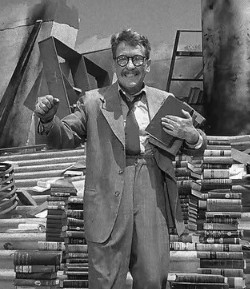
Okay, this is going to be a long one. And I’m going to put this on my Medium and my Substack. How many of you remember that episode of The Twilight Zone with Burgess Meredith. It’s a famous episode. You know the one: “Time Enough At Last.” Such an iconic story. So this essay is mostly about finding the time to read when we get older. A lot of us don’t have that luxury, so think of this as a kind of exercise. Maybe we can do this challenge together, and it can become routine.

People often ask me what writing part-time is like; I used to do it full time in the 2000s. Depending on what kind of writer you are, you’re basically putting your thoughts into words and getting them down on paper. You’re living out a fictional scene in your head and trying to put that scene into words, along with the world around it. You’re doing a lot of typing, a lot of line editing, a lot of reading. Then you return a week, maybe two weeks later, to revisit what you wrote and do some more polishing. Improve what you started, improve your craft, experiment with things like structure and style. Even when you’re not writing, you’re reading.

If it’s not gate-kept, writing is a numbers game where you’re constantly creating content, trying to make it into some bigger editor’s second or third reading tier. And you do this because you have to; you don’t really see yourself not doing it. At the same time you’re investing in your portfolio—fiction or non-fiction—and trying to get a paycheck from it if you’re lucky. It could be a short story, a novel, an article, even greeting-card jingles or nonsensical filler that, surprisingly, sells. If you’re like me, you might be banging out anywhere from 40 to 65 pieces per year.

Now a voice in the back row just said, “Hey, that’s great, Larry. You write a lot of stories, produce a lot of content. You’re in so many anthologies and magazines. You submit to so many places. But how do you read all these books? How do you find the time?”

Honestly, as you get older, you don’t. I’m looking at a giant pile of books behind me as I write this. It’s a mess here. I’m old now, and I’ll never get to all of it. I know that. And the trouble is, every time I’m in Manhattan, I keep picking up books and never getting to them. Obviously, short stories and novellas are more approachable than full-length novels these days. For me, at least.

Between 1985 and 2005, I read voraciously. Sometimes two to three paperbacks per week. Before my son was born, I had bookcases upon bookcases of pulp paperbacks, old Galaxy and Analog magazines, Hard Case-style crime thrillers in the vein of James Bond, Charles L. Grant anthologies, Stephen King novels, DAW “Best Of” collections. I had a collection of 2000 books. These were mixed in with the essential satires and mainstream dramatizations of the 1960s, 70s, and 80s—Kurt Vonnegut, Joseph Heller, Mario Puzo, Ira Levin, etc—the three most important decades of literature. But then you realize you have to change diapers, make formula, sing lullabies, rock carriages, go to playgrounds and push swings. Cook meals, send kids off to school, exhausted. And you have to co-parent until that kid turns eighteen and goes off to college.

You can’t get to all those books. Maybe at night in bed, or on a commute, or on the toilet doing business (don’t laugh), you get a lengthy chapter in. Then, when they go off to higher learning and hang out with their friends, you return to what you started. But there’s still never any time. It’s always that way. So I ended up donating the vast majority of those 2000 books, throwing a few away, giving some to libraries, and selling lots on eBay.

And what if you work demanding ten-hour days in the middle of nowhere, where you have to hop on the turnpike, beat the traffic rush, and drive home? What if you want to go out, have a drink, go dancing, go to a nice restaurant, socialize? What if you have other hobbies?

For example, one of my hobbies is console gaming. PlayStation, Nintendo, and the like. I have 700 physical video games sitting on my shelves. Yes, 700 games with replay value—or still sealed. You might have more than one hobby. Some people have a few. Like gaming, I also collect action figures and cars. I’m part of a few diecast communities these days. But you have to go to stores and hunt those things down.

A year ago, I bought an iPad with my royalty money. One of those nice ones with a lot of memory. The purpose was to read books and review PDFs wherever I went. On the go. You know, other than downloading a few Apple songs, I haven’t even really used that iPad yet. I recharge it every few months so the battery doesn’t run down and bloat.

I used to watch television. For years I was a die-hard Walking Dead and LOST fan. I watched those two shows religiously, while devoting extra time to British imports like Doctor Who and Torchwood. I got rid of the Disney Channel, got rid of TV. I don’t watch television anymore. The Walking Dead ended after 11 seasons, I gave Ncuti Gatwa (the 15th Doctor) two years of my time, and I felt that was the end of my TV days. As for movies, I go to the theaters twice per year. Superhero films don’t interest me like they used to, and IMAX doesn’t really have anything either. I’m fatigued by the fandom surrounding modern cinema. And there’s just no time; although I am looking forward to the Super Mario Galaxy movie.

Also, as you get older you get less sleep and you’re prone to afternoon naps. There’s the grocery shopping, the laundry, the quick cleaning of the kitchen countertops and bathroom. As you age, you forget stuff. Your brain shrinks. Your eyesight goes on you, and you have to read passages more than once to comprehend them. And you have to take care of your body—gym, yoga, outdoor fitness—because you’re aging and your body can break down. More time away from books.

Then there’s social media—talk about time-consuming—a rabbit hole that can steal your life away. These days I use one or two pieces of social media. I have a TikTok. I don’t even use it. I use BlueSky. And you know what? With only one or two platforms, I get more work read and more exposure publicly. When I had ten pieces of social media back in the 20-teens, I was read and noticed less. Sometimes less is more.

After everything you’ve just read comes the fact that you have to be a picky reader. There are over one billion books worldwide. Think about that number. There are over one billion authors—dead authors, living authors, traditionally published authors, small press authors, children’s authors, fiction writers, non-fiction writers, textbook writers, anthology writers, self-help writers, self-published writers. There’s new books, used books, ebooks, audiobooks, web novels. You will never get to all the books you want to read, no matter how hard you try. You have no choice but to pick and choose, and you have to do it wisely.

So I decided to sit down this winter and choose five books—just five—that I know I’ll actually get to. Books that interest me, that have been tapping me on the shoulder for a while now. The plan is to spend January, February, and March reading these particular titles. And once I’m done telling you what I picked and why, I want you to choose your five, too. We’re doing this together.

These five books are our January, February, March. They can’t be just any books. Life is short, time is precious. They have to resonate. If your schedule is packed, let that be a recurring theme. Five is an easy, honest number to work with. Then when the weather is cold outside next year at this time, you can do it again with another five books.

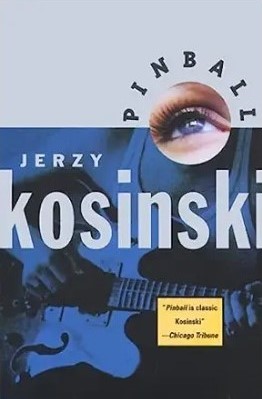
Number 1: “Pinball” by Jerzy Kosinski

I picked this book not just because I’m familiar with Kosinski’s work, but because the premise hooked me right away. It’s an alternative rock-and-roll murder mystery, with a main protagonist sculpted after one of the Beatles. To my surprise, when Kosinski was alive and living in New York, he was actually close friends with George Harrison, and this book is dedicated to that friendship. Only here, the story turns on a female stalker with a past who shadows the protagonist everywhere he goes. So I’m definitely looking forward to this one this winter. Other Kosinski books I’ve read include The Painted Bird and The Hermit of 69th Street. Hermit was “meh”—your mileage may vary—but The Painted Bird is concentration-camp fiction at its finest, drawn from Kosinski’s real life as a Polish refugee who, as a young boy, witnessed unimaginable atrocities during World War II.

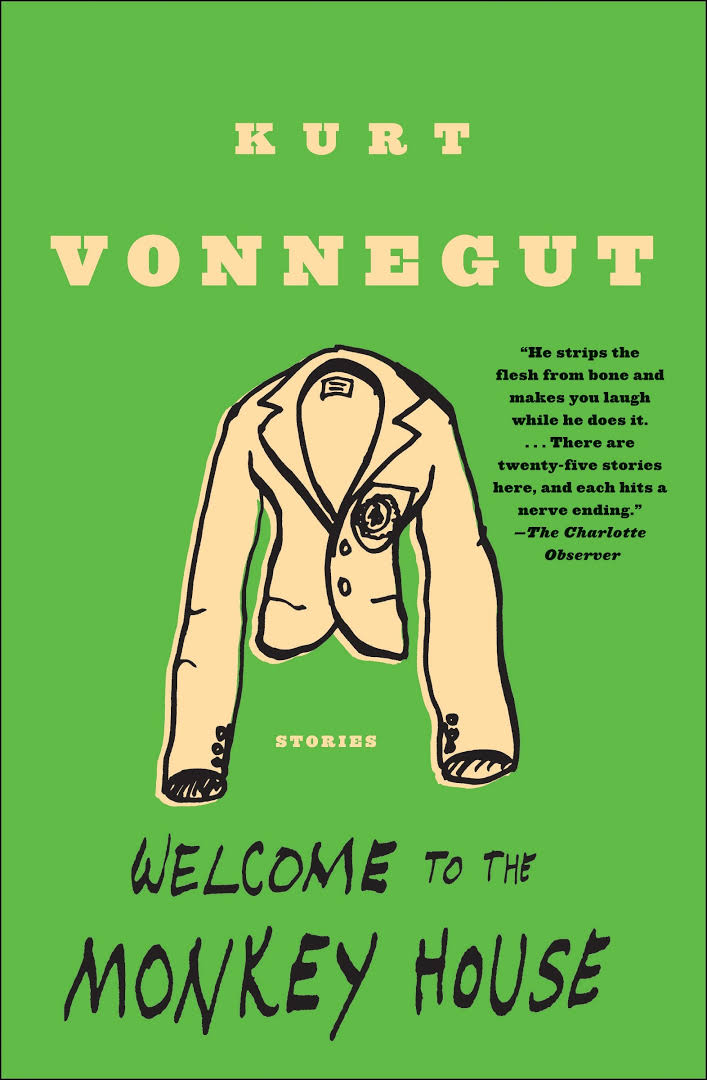
Number 2: “Welcome to the Monkey House” by Kurt Vonnegut

I used to know Kurt Vonnegut back in the ’90s. We lived near each other, and I’d deliver his prescriptions; he had a house account at the pharmacy where I worked. I was going to school at night then (for writing, obviously), and he’d toss me these little bits of advice, kind of like a humorous mentor who wandered in and out of my day. I remember sitting in the second row at his Timequake reading and premiere in an area of Manhattan known as Turtle Bay around ’98. He signed my copies of Slaughterhouse-Five, Breakfast of Champions, and The Sirens of Titan—three of my all-time favorites—and I tore through his paperback of essays and reviews, Wampeters, Foma, and Granfalloons. But I never really sat down with his science fiction short stories. This collection covers the pieces he wrote in the 1960s. Yes, Vonnegut started out as a speculative fiction writer; a lot of people don’t know that. And it’s one of those books I want to finally get around to reading this winter.

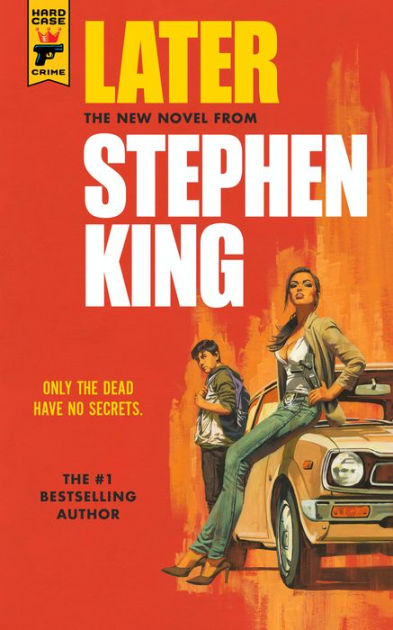
Number 3: “Later” by Stephen King

I usually devour anything and everything Stephen King. The last thing I read by him was Doctor Sleep. I know, that was a long time ago; remember what I said about co-parenting above. But this one—this book—I’ve been sitting on for well over two years now. It’s got one of those gritty Hard Case Crime covers that just punches you in the gut. I grabbed it at Strand Bookstore on the cheap. I heard they were turning it into a miniseries with Lucy Liu, though for all I know it already came out and I’m late to the party. From what I understand, it’s a supernatural coming-of-age thriller with shades of The Shining and The Sixth Sense. It’s got horror, it’s got true crime, and one of the main protagonists is a single mother struggling in New York City. My hometown. So yeah, this one is right up my alley. Now I just need to stop procrastinating and finally give it the time it deserves.

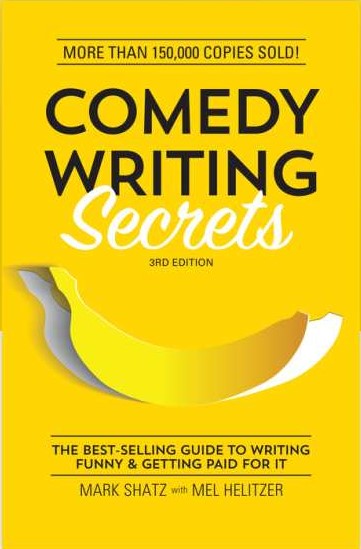
Number 4: “Comedy Writing Secrets” by Mark Shatz (with Mel Helitzer)

Yes, this one’s a “how-to,” an instructional book I picked up recently. Something that might tighten or sharpen a few corners of my writing. Why wouldn’t I want to improve myself? And don’t get me wrong, I know how to write humor somewhat effectively (see my short story “How Jones Goes”). I’ve been paid and published for humor before. I know how to slip it into my speculative fiction when the moment’s right; horror, not so much. But humor is a field that pays well, and I want to write comedy better. Why wouldn’t I want to write anything better? An editor recommended this book—and another, actually—so I went to Barnes & Noble in Union Square and grabbed this one. It’s sold more than 150,000 copies, so on that I’ll give it a try. I want to write more humor, more satire, in the years ahead, and if this can help me get there, then it’s worth spending part of my winter reading it.

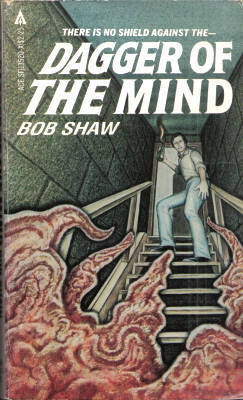
Number 5: “Dagger of the Mind” by Bob Shaw

The book above is the version I have: a first-edition ACE paperback from 1979. Vintage, extremely rare. And remember what I said earlier about the 1970s being some of the best years for literature. This copy is a tough find, and I was lucky enough to snag it for only three bucks. It’s in fine condition; no complaints. Bob Shaw was an Irish writer, by way of Belfast, and from the late ’60s through the late ’70s he turned out some of the best short fiction around. He was primarily a speculative fiction guy, a real linguist on the page, and he wrote his fair share of hard SF for publishers like DAW and Berkley. In Dagger of the Mind, the protagonist suffers from Grand Mal seizures, and it forces him to question whether he’s slipping into hallucination, tapping into telepathy, or brushing up against something paranormal leaking in from another world or universe. Now this is the kind of speculative fiction I live for. You know I want to carve out some actual leisure time and sink into this one

Those were my five picks for Winter 2026, and as you can tell, they’re pretty eclectic. I don’t box myself into just science fiction or horror. Now it’s your turn. What were your five choices? Which authors or genres pulled you in? Remember, you can do this. Five is such an easy, honest goal. So stay warm, settle in with a book, or maybe five, and let’s make this a tradition we come back to next winter.

Happy New Year,

Lawrence Dagstine

Other New Entries/Newsletter Updates: You can find the same piece reprinted here (https://lawrencedagstinewrites.substack.com/), and I also invite you to join my Substack. I don’t write exclusively about writing and freelancing. I write about growing up in New York, my life, and life in general. Over time, I’ll be testing new features Substack has implemented, including live video, and in the future the platform will also host paying anthology calls for literary work.


Androids and Dragons: A Journal of and about Speculative Fiction – SUBSTACK ZINE

Happy September to you all. Autumn is just around the corner, and this is where I start getting a lot of short fiction acceptances and stuff published. Always September through December. And for this website post, I am currently appearing with a reprint in the Substack publication: “Androids and Dragons: A Journal of and about Speculative Fiction.” It has hundreds of followers, hundred of readers. It’s a token-paying market. There’s a lot of these Substack newsletter publications (in the form of modern webzines), popping up these days. In the old days, when I first started getting published, a lot of webzines were hosted by Lycos or Geocities. Or they depended on programs like Dreamweaver and Flash, to look stylish for the time period. It seems Substack is becoming a major platform to build your fiction-reading audience. Stories can be emailed to subscribers, direct to their inbox. You can read a short story anywhere, not just home computer but on your phone on the go. And it pops up really quick on search engines, because the one thing Substack has going for it is many a search engine algorithm. The editor is Jenna Hanan Moore. I’ll leave any links down below, direct or otherwise. And the name of my reprint is: “Past and Present Company Excepted.”

Androids and Dragons: A Journal of and about Speculative Fiction

Substack Publication – Edited by Jenna Hanan Moore

Featuring Dagstine reprint: “Past and Present Company Excepted.”

Photo credit: Androids and Dragons/Jenna Hanan Moore
Photo credit: Caras Jr. on Unsplash, 2025.

The September Edition Opening Page – (click link, be redirected):

https://androidsanddragons.substack.com/p/issue-12-september-2025

My short story – (click link, be redirected):

https://androidsanddragons.substack.com/p/past-and-present-company-excepted

Other New Entries:

And speaking of Substack publications or newsletters, I’ve updated my own personal one recently. But only with a quickie. You can find a link to that right below…

https://lawrencedagstinewrites.substack.com/p/lawrence-dagstine-even-prolific-writers

FREE STORIES: “Visitation Rights” by Lawrence Dagstine

Welcome to Free Story Day! I have a chapbook tale to share called “Visitation Rights.” It’s a paranormal court story about a heated legal battle for a child transitioning into a ghost. The child’s father argues that his spirit should stay with him during this eerie transition, rather than remain in the realm of science. However, the judge believes he knows what’s best for the child’s welfare in his current state. There are science fiction elements to this story, as I predicted such court battles would take place long after Barack Obama left office. Originally published in 2009 by Damnation Books, it was part of their debut lineup of ebooks, when ebooks and the digital revolution were fairly new—Amazon Kindle, for example, was probably in its Second Generation. Lisa Jackson was my editor, and it sold extremely well for five years. Cinsearae Santiago created the cover. The story emerged during a time when I was writing a lot of sociological horror involving family dynamics, father-mother-child relationships, and how children can be more terrifying than adults in certain situations. Not too many authors were doing this kind of fiction back then. At least in a way that makes the idea of life after death seem totally plausible, kind of like it could just blend right in with the living and everything we deem real. At the time, I made a professional impression with it.

Anyway, without further ado…Visitation Rights (2009) by Lawrence Dagstine.

Jack Golden was magnificent, his wife Margery thought as she looked on from the front row. He was controlled, sincere, and candid, just as their lawyer had urged him to be. He was a tall, handsome figure of fifty-seven, barely even gray at the sides. He had dark brown hair and lively, intelligent green eyes like Margery, who had her own spark of confidence. She was petite, auburn-haired, and just as youthful-looking in her middle age.

Their naturally relaxed manners of speech were usually inclined to set a distance between themselves and those who existed outside the norm of modern society. Some in the courtroom found their cultured East Coast accents disquieting—after all, they were dragging this out in Jenny’s new hometown—especially when it came to these things. Still, wherever the legal battle might end up, Jack always regarded his family first and foremost and was ready to fight.

Margery, however, had felt awful on the stand. It had been a relief to discover that the lawyer had not chosen to make an issue of her visit to her daughter-in-law, Jenny Hathabee. She was as good as a wife could be to her son, who had been fatally wounded in Afghanistan. Of course, Jenny’s opening testimony was a real surprise; it almost felt like a custody battle. Cagey lady, Margery thought, wondering what other surprises the opposition had in store.

She watched now as Jenny’s lawyer slowly rose, like a bear moving in for the kill. Only this bear was rotund, his disposition stiff like the color of his suit, along with a short mustache and bulbous nose. Oh yes, and dark eyes. All lawyers had them. The odd image frightened her, but good ol’ Jack seemed to be reacting well, chin thrust out, hands on his knees.

“Mr. Golden.” The voice of the lawyer boomed in the cavernous courtroom. “What is your occupation?” He did not smile. His pose was unmistakably aggressive.

“I used to work in Washington during the Obama Administration. I was an inspector for a stem cell research facility. Just retired. Now I work part-time in a slightly similar platform, what the scientists-turned-corporatists call a nursery. The rest of my days are spent gardening, cooking, cleaning, hanging out about the house.”

“Are you enjoying your retirement?”

“I told you, I’m not that retired,” Jack said, smiling.

“All right. Since you’re familiar with stem cell research and nurseries, can you tell me why you chose that particular day to visit your daughter-in-law’s AV-36 at the camp?”

“I—I just couldn’t stand it any more. I’d looked at some pictures in an album, some frames on my mantelpiece. I missed him is all.”

“But why that particular day?”

“It was my birthday.”

“How old were you?”

“Fifty-seven.”

“What else did that day mark?”

Jack cleared his throat. “My retirement day, after twenty years.”

“Voluntary retirement?”

“No. They have this new program. Fifties are the new sixties. You hit fifty-five, you can retire.”

“In fact, it was an involuntary retirement, wasn’t it?” the lawyer pointed out.

Margery’s stomach knotted, afraid of where this would lead.

“Well, sort of,” Jack went on.

“And you felt, well, lousy. You needed a bit of comfort, a bit of remembrance. So you ran immediately to see your daughter-in-law’s AV-36?”

“Must we refer to him as AV-36?”

“Please just answer the question, Mr. Golden.”

“Well, yes.” Jack sounded confused. “Is there anything wrong with that?”

“From your point of view? Maybe not. From the point of view of an AV-36? That’s another question.” The lawyer began to pace in front of the chair, then suddenly shot Jack a query. “How did AV-36 react to your confrontation?”

Jack squirmed in his seat. “He seemed brain-dead at first, but otherwise he was glad to see me.”

“How glad?”

“Just glad.” He forced a laugh; it sounded hollow. “I brought him some clothes.”

“Where was he when you arrived?”

“In captivity.”

“And your visit interrupted this captivity?”

“Well, yes.”

“How did he express his happiness?”

“He sort of smiled.”

“Did he rush into your arms?”

“Well, no. He probably didn’t know to do that.”

“Did he say something like, ‘Gosh, I missed you,’ or did he show confusion and surprise?”

“I guess he was confused. No, wait! Maybe he was surprised.”

“Not confused?”

Jack scratched his head. “I can’t be sure.”

“In fact, for an AV-36, he was totally confused. Wasn’t he, Mr. Golden? We have it on good authority from the researchers that were present. AV-36’s transition was disrupted. He really didn’t know what was happening. You saw there was no military presence and you bullied your way in. You did not even use your real name.”

“I wanted to see him,” Jack said.

The lawyer sighed heavily. “Mr. Golden, the tragedy here is that you needed AV-36 for therapeutic reasons, to make you feel better about the things that happened to you on that day, to make you feel better about the things that happened to your son, Eric, in Afghanistan. Only AV-36 didn’t need you. He was doing just fine. He is doing fine.” A brief pause, and then, “Yes, I understand it’s hard losing an only child to war, but you intruded on this woman’s life”—with this, he gestured to Jenny—“the new one she has built and worked so hard at. AV-36 is a happy, adjusted, productive, normal… Well, you worked in stem cell research, Mr. Golden, and even now you’ve found part-time employment in a nursery or camp which fosters the same kind of thing. As much as I hate to say it, he either didn’t need, or want, your visit, did he, Mr. Golden?”

“If they let the transitioning period happen in a normal way—”

“We are dealing here with what is best for an AV-36. That is the only issue in this court, Mr. Golden.”

Jack clenched his hands into fists. “Oh, for God’s sake, stop with the scientific labels! He needed his family around him. Not Jenny shipping him off to be prodded and poked!”

As the cross-examination continued, Margery felt a sinking sensation in her heart. She knew her man. Just beneath the surface, he was at the breaking point. The opposing lawyer suddenly became ingratiating, leading Jack through a series of questions that focused on his early life; the things that he and Eric, of all things, had done together—baseball, football, hunting, fishing—the affection and interests that both father and son shared. How odd, Margery thought. She wondered where the lawyer was going with this and hoped Jack would be able to sustain himself from tears.

“It was a terrible blow to lose your only child, your cherished son?”

“Yes, it was,” Jack admitted sadly. “Many young men and women died for nothing.”

“It depressed you?”

Jack faced the bench. “Very much.”

“Then when you finally realized that stem cell research opened up doors to all sorts of other possibilities, there came the loss of your AV-36?”

“Yes. I never knew we could renew and harvest so much more through monoclonal antibodies and mitotic cells. I never knew we could reach that level.”

“This loss and these possibilities combined, bothered you, did they not?”

“Objection!” yelled the defense. “My client is clearly being psychologically baited now.”

The judge said, “Overruled. I want to hear this. Go on.”

Jack looked to Margery; she covered her eyes and sank in her seat.

“Thank you, Your Honor.” The lawyer cleared his throat. “And your job after twenty years? After witnessing such scientific breakthroughs firsthand? Come, Mr. Golden. No wonder then that you were depressed, that you exhibited odd behavior. Also, you have been known occasionally to lose your temper.”

Jack was rattled now. “Sometimes. But I never—”

“All the pressures of life suddenly coming together can wreak havoc on a man’s psyche.”

“I don’t know what you’re talking about,” Jack cried, his voice rising, his body taut. He looked over at Margery again; she gripped herself from standing and interjecting.

“I’m talking about—” The big lawyer paused, his gaze first roaming the room, first to the judge, then to his client, Jenny, then to Margery, and finally back to Jack. “I’m terribly sorry, Mr. Golden. But your suicidal tendencies have to be faced.”

Margery felt an invisible hand grab at her insides and squeeze. She nudged her attorney on the elbow to do something.

The defending lawyer stood up. “Objection, Your Honor! I reject this line of questioning,” she said. “This is outrageous and debased speculation.”

The judge thought for a long hard second, then waved two fingers and said, “Sit down.” He nodded at Jenny’s lawyer. “Go on. This better be relevant.”

Jack rose out of his chair, then fell back, looking bewildered, exhausted, and defeated. “My what?!”

“I’m sorry, Your Honor,” the opposition said, shaking his balding head as if the revelation were equally painful to him. He turned and looked toward Margery. “The state of Mr. Golden’s mental health, as will be shown, was reported by Mrs. Golden herself in a meeting with a nursery counselor only a few months ago.”

“Did this meeting happen because of the AV-36?” the judge asked, still trying to find relevance.

“I can discontinue this line and pick it up again with the counselor. But I assure you it cannot be swept under the rug.”

The judge looked at Jack with an expression that seemed like sympathy. He shook his head, then turned and looked across the courtroom at Margery. His eyes were sad and questioning. His disappointment seemed to drill through her; she wished she could disappear.

Margery turned toward Jenny. “How could you?” she asked in tears. “You were like a daughter to us. We treated you as family. We put a roof over your head while you were married to Eric. Why?” Jenny quickly turned away, keeping silent.

“Um… May I request a short recess, Your Honor?” the defense asked.

The judge nodded, raised his gavel, and brought it down. He looked behind him at the clock. “Go and have some lunch, people. Be back at two.” Those present rose as he left the courtroom.

For a moment, no one moved. Margery rushed forward to her husband. Feelings of sorrow cluttered her mind, along with much to answer for. But she couldn’t find the composure to speak.

“I’m sorry, Jack,” she eventually said, embracing him as he stepped down.

He looked down at her with moist eyes and a frown. “You really think I would have chosen the easy way out? You really think seeing him like that would have affected me where I would have just…just ended it?” There was a moment of silence, then: “I miss him, Margery. I miss him dearly. He’s the only thing our poor Eric left behind. Transitioning doesn’t last a lifetime, you know. All I want is what’s fair before it’s too late. I just want visitation rights.”

*

When the hearing reconvened, Jenny Hathabee rose and approached the stand. It was her second time recalled. Her lawyer followed. Despite the wickedness beneath all that makeup, Jenny looked more radiant than Margery had ever seen her. Her face had filled out and her skin glowed with health. Clear-eyed, neat in her starched blouse and dress ensemble, she looked the picture of confidence and contentment—a far cry from months before, when depression and despair filled her life. It had left her like a hollow shell. Now those around her could acknowledge the fact that the emptiness was gone. She had never appeared as strong as she did at this moment.

Notwithstanding the dispute, Margery felt admiration for her. She had come a long way. From them. Perhaps from Jenny’s point of view she and Jack were pariahs, reminders of sadder days, an unwanted, unnecessary, and negative influence on an AV-36 already lacking in substance.

Jenny’s lawyer gently led her through the questioning. Earlier, he had driven home a few key points to his arguments. It remained to put the frosting on the cake. “And your previous husband, Eric Golden, who is a major factor in all this, was, to say the least, unsatisfactory?” he asked.

The question made Jack shrink back in his seat.

“At first I was reasonably happy,” the woman of twenty-eight said. “At first we even lived in Connecticut with his parents, because we were still on the waiting list for a home on base. Then he went off to Afghanistan, the war became fierce, and the military rarely let him home. After that, there came AV-36.”

“I understand. But when the military did let him home, how did he act?”

“He was distant. He was different.”

“Did you contemplate divorce?”

She lowered her eyes and clasped her hands across the expanse of the bench. “It was on my mind to run away. Yes.”

“Was the experience frightening?”

Very.”

“With respect to your former in-laws, how did they treat you during the marriage to their son?”

“We never had real words. They were never unkind, mind you. They acknowledged me as their daughter.”

“And are they sincere when they say they love AV-36 now?”

“I believe so.”

“Is it true that after your husband’s death, they were supportive?”

“Yes. I suppose so.”

“And when you learned about the importance of transitioning facilities, both morally and ethically, how did your father-in-law react?”

“He did not approve of them.”

“And he made these views known to you, yes?”

“Emphatically. Often angrily.” She stopped for a second. Then, facing Jack, she went on, “Of all people, I thought he would have understood.”

The lawyer paused. Turning, he looked at the Goldens. “Would you tell the court, Ms. Hathabee, in your own words, exactly why you feel that it would be better if Mr. and Mrs. Golden stayed away from your AV-36?”

“Where does he come off saying that it’s her AV-36?” he whispered to Margery.

“Shush!” his wife pinched him.

The judge tilted his head toward Jenny for her reply, then looked over at Margery; she reached out and took Jack’s hand. It was cold and clammy.

“AV-36 is a happy, well-adjusted manifestation. He has a new life awaiting him in every respect. All that stands in the way is the transitioning process and the constant interference of Jack Golden. Thanks to the good people at the camp, he has a new form. One which he loves and, as I’ve said to this court in previous days, another on the way. I know my former in-laws think me cruel and heartless for taking this action, but I have to make decisions that are best for my AV-36. The past for him is a dim memory, as is the case with much of his kind. Why should he be disrupted? Why should he be treated differently than the rest? It is not necessary for him to visit with Margery and Jack. In fact, with all this emotional debris and refusal to let go, it will undoubtedly be bad for him—”

“What makes you say that?” the lawyer interrupted.

“His reaction to Jack’s visit to the camp was upsetting,” Jenny answered. “It upset the others like him. It was an unneeded intrusion on a perfectly good harvest.”

“This must have aggravated you.”

“Yes, well so.”

“And how did this affect you?”

“Badly. I began having migraines and terrible thoughts. I woke up with nightmares almost every night thereafter. I felt haunted by something. Like I was surrounded by negative energy. Like—”

“Like something was molesting your conscience and the environment in which you resided?” the lawyer asked.

“I can only assume it was because of that.”

“Some researchers call that kind of invasive energy an entity.” Then the lawyer said, “Do you believe in the supernatural, Ms. Hathabee?”

Jenny vested a short laugh. “This is the twenty-first century,” she said.

He pushed some more. “Did this whole ordeal leave you with any regrets, any second thoughts about your decision on visitation?”

“None.”

“Regardless of contemplating divorce, did you still love Eric?”

“Yes. I’d be lying if I said otherwise.”

The lawyer nodded and looked up at the judge. “No further questions, Your Honor.”

He doesn’t have to go much further, Margery thought, watching him closely. She looked up at the judge, then back at her husband. Jack’s eyes were burning with intensity. Then the defense attorney moved forward, long-legged, lean and spare, indicating a singleness of purpose that almost made Margery wince with fear for Jenny’s sake.

The female lawyer, brown-haired and bright-eyed, started abruptly. There were no introductions or preliminaries on this day. “If you had not stayed married to Eric, Ms. Hathabee, would you have allowed your former in-laws to have access to AV-36?”

“I object, Your Honor,” the opposition said, rising. “That question is completely hypothetical.”

“I understand.” She reconsidered. “I’ll put it another way then. Ms. Hathabee, you did not have any objection to living with your former in-laws or their support—psychological, financial, whatever—during the brief period following your widowhood. Am I correct?”

“Well, I was no longer an army wife. I had to leave the base. I had no choice.”

“Did you detest it? Were those extra few months so terrible?”

“I did not feel comfortable being dependent on them again. But I did get back on my feet and start a new life for myself.”

“Did you think that they were a bad influence once the AV-36 revealed itself?”

“I wasn’t overjoyed.”

“Why?”

Jenny hesitated, her eyes searching the courtroom. “They couldn’t offer a positive atmosphere for him in this new state.”

“Are you blaming them for the hauntings?”

“The bad energy? In a way, I suppose. You have to understand. Even though Eric and I were distant at times, and the marriage quite rocky, we took vows. If we had divorced, mentally, it still would have been ‘til death do us part. For me, at least. There were always hauntings, but not really in the paranormal sense of the word. Eric’s father just possessed him, instead of the other way around.”

“Possession unwarranted and through influence, an influence you perceived as negative. Is that what you mean?”

“In some ways, yes.”

“In what ways?”

“They were together a lot.”

“Meaning you were left out. That seems very vague, Ms. Hathabee.”

Jenny’s lawyer stood up. “I object, Your Honor. Now she’s badgering my client.”

“I’m almost inclined to agree,” the judge said. “Go on, but gently, please. This is not a murder trial.”

The defense turned back to Jenny. “So you felt that your father-in-law was a bad influence on your AV-36. Perhaps there is vindictiveness lying just beneath the surface, Ms. Hathabee.” She paused. “What do you think?”

“No, I don’t,” Jenny said calmly. “You’re making it sound like I’m deliberately hurting my in-laws. That’s just not the case.”

The attorney was relentless. “So if it had not been for Eric Golden, you might never ever have prohibited your former in-laws from seeing the AV-36?”

“Maybe not.”

“But the spirit didn’t want to be reminded of its own life, what had happened to it, as if it somehow diminished him. It wanted to move on in the most comfortable way possible, surrounded by loved ones. It didn’t want to be brainwashed or tagged. It didn’t want to be harvested or converted. Transformation was the last thing on its mind. Or at least what was left of it. Isn’t that right, Ms. Hathabee?”

“This line of questioning is ridiculous, Your Honor,” the bulbous-nosed lawyer said as he rose to his feet once again.

“I’m simply trying to show, Your Honor, that none of the motivations for barring my clients from visiting their son’s ghost have anything to do with the welfare of the soul per se,” the defense explained, “that an adult woman’s concerns have clearly interfered with what is a perfectly natural, helpful, and enhancing way of moving on to the afterlife uninhibited. It is both moral and ethical, and I see no reason for an objection to that line of questioning.”

“In cases of spectral phenomena, that does not mean the right to automatically grant visitation rights,” the judge interjected. “There are new laws in this day and age. There are reasons for these camps. One minute you’re letting ghosts roam freely around living rooms and graveyards, the next, religious fanatics are hiding in church basements. Or protestors are blocking the White House lawn in droves.”

On the witness stand, Jenny looked wilted, and for a brief moment Margery was afraid her attorney had pushed a little too far. She glanced at Jack, who merely shook his head.

“It’s way out of control, honey,” he whispered. “We should have just said our goodbyes. Besides, there’ll always be the memories.”

“Poor Jenny,” Margery said. “Poor Eric.”

The judge banged the gavel. He was visibly angry and the creases in his forehead stood out. “You may step down, Ms. Hathabee.”

Shaken, Jenny walked back to her seat.

The judge, calming, looked down at all of them. “It would seem that the presentation of both sides of this case is missing a very important element.” In the long pause that followed, Margery felt her stomach drop. “You will see to it that Eric Golden’s ghost is present in this courtroom tomorrow at nine.”

“No,” Jenny cried. “I will not have that!”

“Sir, I hate the idea of putting my beloved, but deceased, child through this,” Margery said.

“He’s only dead seven months,” Jack agreed.

The judge did not respond.

“You know, the man is right,” the Goldens’ attorney said to both sides. “Nobody wanted it this way. Now it’s our only chance.”

“But it’s wrong,” Margery said, her eyes welling up. “He’s barely recognizable.”

“It’s also his soul at stake.”

“Can they refuse to bring him?” Jack asked.

“No. Not while he’s in the custody of that facility. Not while he’s tagged.”

The whole courtroom seemed upset.

Finally Jenny’s lawyer, who was just as concerned, stood up and sucked in a deep breath. “Tomorrow at nine, Your Honor.”

*

The next morning, the courthouse was quiet, all but closed down, mortally wounded by the previous day’s events. It surprised Jack to see it this empty, except for the clerk and the stenographer.

“I won’t say that I’m not scared,” Jack admitted.

“I’m petrified,” Margery swallowed. “You think in this state he’ll know me?”

“You’re his mother. Nobody forgets their mother.” They took their seats, and soon Jenny arrived with her lawyer. The two of them had probably had breakfast together, Jack thought with disgust. Conspiring to manipulate our lives. What did it matter to them?

Despite all his valiant efforts to hold back the gloom, depressing thoughts still consumed him. This thing with AV-36—Eric being called to court—had jolted him. Why was all this happening? Time was when you could go to sleep and get up in the morning and society would be the same as it was back in 2010. A man went to work and provided for his family. A mother watched over the house and helped with her share during a struggling economy. Parents stood lovingly, proudly by their sons and daughters who served in the military. Back then there were no such things as hauntings or the spirits of the dead wandering the earth. At least not outside the movies or comic books. There were no such connections between stem cell research and the paranormal. There was no such thing as life after death in modified forms. Even outside religious circles, the soul was a questionable invention. Had times changed that much? Was this really the future? Where were the honor and dignity in mothers and fathers having to sit in court and secure the right to visit their own offspring and say farewell? Jack was sorry he had turned down the open coffin at the funeral now. Anything was better than having to go through this.

He tried to remember why he had put those shells in the shotgun the day Margery had found him in the study. He could barely remember doing it, just as he had barely remembered the time he placed the razor blade and bottle of scotch along the side of the bathtub. Was he consciously seeking to check out of life, put an end to the frustration and pain and join his son in this wisp-like form? Never! Could he have done something so cowardly and unworthy? Of course not; impossible was a better word. It must have been some of that negative energy like they mentioned in court. Yeah, that was it. Bad energy.

Margery gripped his hand. They heard movement behind them and turned. A smoke-like figure with grayish-blue crystals surrounding it materialized at the door. It slowly moved in, looking like the former embodiment of a man, but now something else. The ethereal image of Eric. Jack felt his heart leap to his throat as their son hovered up the aisle. Everybody hurried to their places, frightened. The ghost stood at the head of the courtroom, busy exploring the high ceilings.

“He didn’t see me,” Margery whispered.

“Of course he can’t,” Jack said with some trepidation. “But he will.”

The clock read fifteen minutes after nine. There was no sign of the judge’s arrival. No one said a word. Margery cleared her throat and the ghost looked toward where they were sitting. Jack lifted his hand and waved. Eric waved back and smiled. Jack noticed a metal bracelet around his wrist. It was made out of a strange metal and read AV-36. Jack whispered to Margery, “Honey, focus!”

“M…Mom?” the ghost said.

“Hello, dear,” Margery cried, her eyes quickly filling with tears.

“See. He recognized you. Nothing to cry about.” Jack did all he could to blink away his own tears. “He just needed a bit of instruction.”

The door leading to the judge’s chambers opened. “All rise,” the clerk said, and they stood up. The judge breezed through the door, lips pursed, unsmiling, and tight-faced like the day before. Jack looked for signs of sympathy; he got no such vibes. Matter of fact, the judge seemed terrified by Eric. Eric, on the other hand, was busily absorbed in assessing this phenomenon of a room and the mysteriously black-robed man who sat high above him in it.

“Will counsel for both parties approach the bench?” the judge said after the ritual of his entrance. Both lawyers rose and stepped forward. Jack strained to hear what they were so fervently whispering about. Eventually, the two lawyers returned to their seats.

“It’s the best deal we could work out,” the Goldens’ attorney said. “The judge will talk with the apparition alone in his chambers. He’ll seek what’s best.”

The judge looked up from his papers. “This trial has been based on one party’s yearning to hold on while the other has wanted to let go,” he began. “It’s been about trying to stay in touch with something far beyond the scope of the living, to either pay tribute or say final goodbyes, and to do what is merely in the best interest of the deceased. Today we will come to a decision.” There was hesitation in his voice. “There will be no court reporter present and no lawyers. Just the ghost and myself.” He paused and looked at Eric. “AV-36,” he said gently.

Everyone in the courtroom looked at the spirit who, surprised to hear his tag called, looked down at his bracelet then up at the bench. When he started hovering, the judge turned to everyone in the courtroom. “Court is adjourned for one hour,” he said, standing up. The ghost gravitated toward the door of his chambers.

Jack felt something give way inside of him. An image, like a developing Polaroid picture, began to appear in his mind. The judge and Eric moving inexorably away from him, levitating, space and time disintegrating. In the image, he could see his own trembling hands, reaching, trying to stop the movement of Eric and the judge. Then they disappeared and he heard the sound of the door closing. The image dissolved.

In the end, all the legal research, all the petitions, all the printed words meant less than this court had realized. The answers could only be found in that most vulnerable place of all, the human heart and soul.

“What is it, Jack?” Margery asked. There was no hiding anything from her.

“It’s no good,” he said. “Either way.”

“You mean the transitioning?”

“Eric will leave this form at some point or another.”

She nodded. He knew what he must do.

An hour had passed. No word from the judge’s chambers.

Jack was watching Jenny. He felt so insignificant in the baroque vastness, not at all the formidable figure he once was. He moved toward her now and struggled to smile.

“I’ll only be a minute, Jenny,” he said, leaning toward her. “I don’t like this business of Eric being in there with him.”

Jenny turned a cheek. “I know that, Jack,” she said gently. “I’m not too crazy about it myself.”

Jack shook his head. “I tell you, Jenny, I never wanted this. I swear it! You were a good wife to my boy, and an even greater daughter.”

Jenny looked up. “Really, Jack?”

“Yes, absolutely. I know you’ll treat my son’s ghost just fine, you know just what’s right for him. He needs to move on.” He inhaled a deep breath. “So what I’m saying is that it’s your say all the way. We’re the outsiders now. We’ve had enough time to say our farewells and make our peace. And if you don’t want us around—it doesn’t matter why—you’ve earned that right as far as we’re concerned. Only what’s best for Eric’s soul counts here, and we’re not going to barge in. Let science handle it. It’s just no good any other way. No good at all.”

“I—I don’t know what to say,” Jenny stammered.

“You don’t have to say anything. We’re just not going to interfere in your life any more. What we want”—he took in some deep breaths—“is not to give Eric’s soul a minute’s worth of pain. Let the professionals go on handling his transition. We’re going to ask our lawyer to withdraw our petition, to stop this whole rotten business.”

Meanwhile, another hour had gone by. Still no word from the judge’s chambers.

“I appreciate that,” Jenny said. “Oh, and don’t think I am oblivious to the pain of it for you and Margery.”

“So that’s it, I guess,” Jack said, bending over and hugging her. Before turning away, he added, “Take care of yourself, you hear?”

When he sat back down, Margery kissed him. “It’s all right, darling,” she said. “Who knows, this might work out in everybody’s favor after all.”

Finally, the chamber doors opened. The voice of the clerk boomed, “Court is now in session!”

“I have reached my decision in this case,” the judge said, avoiding the faces of those in the courtroom. The ghost was not with him. Jack noticed Margery glance at him, but he remained rigid, eyes focused straight ahead. He shrugged his shoulders; he also sensed something wrong.

“As you are all well aware,” the judge began, “the law in this country is not explicit on the point being argued in this courtroom. Yes, morals and ethics must be considered. The issue here is clearly the best interests of the ghost who, when he was a card-carrying member of the living, went under the name Eric Golden.” He paused. “We had a nice lengthy chat in my chambers. Now, it is difficult to assess the state of anyone’s mind and spirit in the brief space of an hour, or two, or even three. Certainly, it is doubly difficult in the case of the dead.” He raised his head and looked toward Jack. He flashed him a broad smile.

Jack recognized those blue eyes and that smirk anywhere.

“But since I am charged with such judgment, I have concluded that this particular ghost is well-adjusted, bright, cheerful, and has much more to look forward to in the next life. He is obviously loved and cherished by his mother and father, as I’m sure is the case with his former wife. The inclination of the case law is to leave well enough alone.”

Jack leaned forward now. He was about to say something when Margery put a finger on his lips and he quieted.

“The question then is, does this well-adjusted, happy ghost need the visits of any family to enhance the quality of his afterlife? It seems to me that in all human endeavors there is not exactly an overabundance of love, genuine and unselfish, honest and caring. When you find it, you should never deprive it of its natural outlet. The dead, in my opinion, need as much of it as they can get. Put aside your grievances. All of you.” He banged the gavel. “This case is closed.”

Jenny’s lawyer now stood up. “That was a very moving verdict, Your Honor. But if I may be so bold, where is the AV-36?”

“Where he belongs,” the judge said. “Free. After our discussion, I let him out the window. It was his choice and his alone. I did not coerce him whatsoever.”

The entire court was shocked; murmurs of disbelief followed.

“Well, that’s that,” Jack said, getting up. “No point in staying.” Margery rose with him as the judge continued to speak. They moved down the aisle, ignoring Jenny’s upturned face. Nor did they pause for one last look at the judge, although Jack could feel his eyes watching them.

“Don’t feel so bad, Jack. Wasn’t really your fault. He did his best,” Margery said as they walked hand in hand out the courtroom.

“Seems he forgot who the victim was.”

“Say what you want. I still think we won the case.”

“Perhaps we did.” He brooded for a moment, pausing in the stairwell. “How can he judge what’s best for a ghost?”

“That’s his job,” Margery responded. “And it was an enlightening speech. I’ll give him that. Turned out he had a lot more feeling than I thought.”

“Hmm, seems he had a little bit more than that.” He paused for a moment. “They took awfully long in those chambers. I want to know why.”

Across the lobby, the couple saw Jenny and her lawyer watching them from above in confusion and slight disgust. The judge, all changed now, headed for the courthouse exit. Jack and Margery took a step forward, hesitant. The judge stopped moving the moment he saw Margery. Through a mist of tears, she moved toward him, equally hesitant. They went to meet one another, middle-aged woman and middle-aged man. When they embraced, Margery was certain it was not only a contact of bodies, but of spirits as well, and what passed between them was beyond words. Then they parted. Jack moved in and the three exchanged brief glances. What they shared needed no articulation. Not any more. The ordeal was finally over.

“Mom, Dad…” the judge said, smirking again.

“We’ve missed you, Eric. We’ve missed you something awful.”

“I’ve missed you, too. And I’m coming home.”

Jack extended a hand and the judge took it. Underneath his cuff there was a bracelet made out of a strange metal. It read AV-36.

THE END

Lawrence Dagstine: “2024 was my most productive year…but wait, there’s MORE…

2024 will arguably go down as my best year in writing and submitting; 2023 wasn’t so bad either (The Nightmare Cycle was published and I got an advance for it). I wrote a record sixty-five short stories between November 2023 and December 2024—all new. During that time, I also received the most book, anthology, and magazine acceptances (some yet to be released) for a single calendar year, surpassing my previous record year of 2008. I received acceptances from a variety of markets—mainly genre, as that is my specialty—in science fiction, fantasy, horror, and even humor. These markets ranged from pro-identifying to token, including small press and micro press. I also appeared in two anthology-magazines that went to number one on Amazon; another Kindle Anthology broke the Top 100 in World Literature, and a handful of my other offerings made it into the Top 100 or Top 500 sales rank-wise. That’s never happened to me before. Additionally, I have a couple of new books out right now (see right-hand column, scroll down).

My rejection ratio was fifteen turn-downs for every acceptance, if you’re curious about the odds. Yes, where there are acceptances, there are rejections. It comes with the territory. But I’m not here to toot my horn. This was a personal goal I wanted to achieve, and I did. I wanted to see if I still possessed that 2000s-era magic.

At fifty years old, you stop measuring press levels—Pro, Semi-Pro, Hobby, Indie—and accept whatever comes your way, especially if it’s available physically (paperback or hardback), and you know how to hustle and sell it. Believe it or not, most of my readers are not from the United States. Many Americans are too dependent on technology, staring at their smartphones all day, or engaging in activities that don’t involve literature. If they do read, it’s usually the “obligatory” twelve books per year—one per month. I’m guilty of this myself. I used to read a hundred books per year, but as you get older, there are only so many hours in a day. Most of my readers hail from places like India, Japan, and, oddly enough, Belgium. Earlier this year, readers from India wrote to tell me how much they liked my horror stories. I appreciate that; I’ve never received such feedback from US readers. Obviously, I was flattered. I joined two writing groups in Manhattan, got the necessary certifications, and became a writing teacher, which is relatively easy in New York State compared to other places.

As we get older, we often become adjunct professors, tutors, instructors, substitute or assistant teachers. We take up residencies, shepherd online MFA programs, hold online and in-person workshops, and add experience to our curriculum vitae. The revenue from these workshops helps fill our fridges. We may teach English as a second language if we move overseas or teach the short story form, novel writing, story analysis, and linguistics. We show younger writers our techniques and formulas, paving the way for them and enlightening them on how we did it. We pass our knowledge to the next generation of aspiring writers. We take on protégés. Other jobs we take on include writing advertising copy, technical writing/business writing, expository essay writing, things like that.

I can’t believe I’ve been doing this for thirty years. Sometimes I wonder if I wasted my life. Should I have pursued another field? Should I have become a full-time artist and taken up comic illustration, which was my passion in the early ‘90s? Despite my love for science fiction, I would have preferred seeing the art through. I lost my love for drawing in late 1994 and turned to writing instead. Applying for art jobs thirty years ago, where prospective employers said comic art and graffiti art weren’t “real art” didn’t help. So I ended up in writing. I appeared in a couple of magazines, made some cash, and bought nice things. Picking up every genre magazine I could get a hold of in Borders and meeting Kurt Vonnegut regularly while working as a delivery boy for a pharmacy further fueled my enthusiasm.

Author Mercedes Lackey once noted that 90% of the writers in the SFWA (Science Fiction Writers Association) have had or currently hold full-time jobs. The rest have spouses who work full-time, serving as the breadwinners, covering the overhead, and providing health insurance for the family. Alternatively, the full-time writer might be retired and living on a pension or 401K. I could join the SFWA tomorrow. But at my age? For what? Bragging rights? I’m ready for the grave. This isn’t to say I won’t produce an anthology in the future. I’m full of ideas, and I won’t accept anything less than outstanding. But hey, I’m old. Many of the books with my stories are published by presses that might not exist in five or ten years. Presses come and go; the same can be said about good books. Publications go on lengthy hiatuses. Economies rise and fall. Inflation affects spending habits. People’s reading preferences change. Advertising techniques and technology evolve. Not only that, over 10,000 books are self-published per day, so there’s no such thing as professional competition anymore. It’s a too-open field. Also, generational shifts happen, and what was popular with one generation might not be with the next. How many people do you know in 2025 who have a profound love for Philip K. Dick, Isaac Asimov, and John Brunner like I do?

I’m very much a socialite. I often go into the city, visit upscale places, penthouses, private parties, and get the VIP treatment. I network and get my books into these places. You have to network in this day and age. Word of mouth is still a very powerful tool, and you want to get non-genre readers interested in reading genre. When I sit down with a glass of wine and talk to affluent or corporate types about horror, they say, “Oh, Stephen King!” And that’s it. They don’t know anybody else. They think Stephen King is the only author there is when it comes to horror. I say, “You haven’t read the work of Paul Tremblay, Stephen Graham Jones, or Josh Malerman?” They give me a daft look. Who? What? They don’t even know that Stephen King has two sons who also write (Owen and Joe). They think Stephen King never had children. But we know. Because writers read each other. We are aware of each other. And it’s kind of depressing in a way. It’s like we’re trapped inside this shrinking genre bubble, and you’re not sure if it’s going to burst or when it’s going to burst. It’s disintegrating, for sure, it’s just a matter of when. You hope it pays your utilities for as long as it can, at least until you take up a teaching position or land an agent. Only 15% of writers ever land an agent and break into the Big Five. And that number shrinks with age. Some are luckier than others; your mileage may vary. What happens for most, whether traditionally published or indie-published, is we end up at genre conventions, gaming cons, comic cons, indie bookstores, or local fairs and fests, and our literature is available at vendor tables.

Nowadays, many people publish each other in a quid pro quo fashion (tit-for-tat), which is fine, but simply reading each other’s work isn’t sustainable in the long term. It seems we’re just passing time until we reach the end. If we’ve chosen writing as our forte, we must have a lot of time to spare. Some of the biggest names, award-nominated genre writers, are suddenly submitting to semi-pro and token markets. This used to be a no-no. Yesterday’s professional paying magazines now depend on Patreons or annual crowdfunding just to survive. And then there’s Artificial Intelligence, which will inevitably replace us in the next 20 years. I’ve seen some of these young tech kids at conferences, and what they can do with Python and Stable Diffusion; they’re smart.

Publishing was a very different animal in the first ten years of the Internet. You could actually make an income from freelancing regularly, and web content was big! Webzines were especially big. They were new, they paid fair money, and there wasn’t much of an editorial filter, but you got your byline and content out to the world. A handful of these sites were built with Dreamweaver, Frontpage (Microsoft), or typical HTML coding. Some were even hosted by GeoCities. Plus, the cost of living was cheaper back then (my rent was only $650 to $750 per month during this era, utilities included). You could stay home, take care of the kids, and have paper checks coming to your mailbox. This was still before the age of PayPal, Venmo, Zelle, and other electronic payment methods. So it was paper checks. If you were a freelancer of genre fiction and creative non-fiction, and you were a quick writer and productive, you got paid $20 to $50 per piece consistently! Sometimes more, sometimes less. One on top of the other. Some of the webzines that appeared in the first ten years of the Internet were Atomjack Magazine, Whispering Spirits, Midnight Times, Dawnsky, The Random Eye, Gotta Write Network Litmag, and hundreds of others! I appeared in many of these places, scouring market sites like Ralan and Spicy Green Iguana on a daily basis. The Boomers never went near these little zines, but I did. And I got my name out there. And I was paid. And I bought clothes. And I bought food. And I paid bills. At one point, I even had a $6000 bank account put aside for my infant son—from writing. There was a time when I had 200 different stories in a folder on a Windows XP laptop, and I would submit to any paying market, even those offering $5.00 compensation. Acceptance here, acceptance there. You do the math. You might find these webzines on the Wayback Machine, but if you’ve heard of the ones I just mentioned, you’re old and gray now, just like me.

To this day, I think the periodical I was paid the most for a single story or article was in either 1999 or 2000, and this was in a queer publication called GENRE Magazine. Or just Genre. And it had nothing to do with genre. They didn’t even publish science fiction. That was just the name. It was primarily a New York-based gay lifestyle magazine with a modest circulation for its time period. It was distributed to LGBTQ-identifying establishments before LGBTQ was even a term. Before ebooks, before Amazon, when physical publications still had modest circulations. When people still relied on the Writer’s Market. I was paid $750 for two, maybe three hours worth of work. The editor said he would take care of the grammatical errors. I kept my mouth shut, let him handle it. Nowadays, twenty-five years later, that same $750 is your paycheck for a horror novel to a rising indie press.

Still, I’m thankful I didn’t become a full-timer in this day and age. I own nice things. Call me materialistic, but I enjoy my little luxuries: designer clothes, nice electronics, video games. I can buy my family birthday and Christmas presents. I can wine and dine on occasion. Some writers who went all-in don’t have that luxury. Imagine not having health insurance, unable to run to an emergency room or urgent care. A vast majority of writers don’t have insurance. Sure, some scored two or three-book deals with the big houses, only to not sell to expectations and never be heard from again. So when people ask me what advice I would give an aspiring writer in 2025, I say, “Don’t quit your day job. Do this strictly for passive income. Do this because you love it. For the sake of art. Do this because you like to tell stories. And read!”

Listen, H.P. Lovecraft died extremely poor. He couldn’t afford treatment for his small intestine cancer, compounded by his fear of doctors. So, he wrote and lived in daily pain—not a pot to piss in. Some of his finest works weren’t noticed until decades later. John Wyndham, a prominent British science fiction writer, was often overlooked in his lifetime. He didn’t receive the recognition he deserved, even as the author of “The Day of the Triffids.” It’s only now, in the 21st century, that his shorter works are being sought out and reprinted. John Brunner, author of mega-hits like “Stand on Zanzibar” and “The Crucible of Time,” feared failure. He wrote under a pen name in his later years and worked as an underpaid proofreader. But regardless of success, they were storytellers. And there’s nothing wrong with being a storyteller. If you get paid for it, that’s like the cherry on top of a hot fudge sundae.

Looking back, I’d say I’m privileged. I’m not a New York Times or USA Today Bestseller by any means. I see myself as a semi-pro of the short form, one of those one-to-three cent jobbers. Apparently, I’m a jobber who makes it into the TOP 100 often; I probably would’ve really crushed it during John W. Campbell’s era. Many writers don’t get to do this for three decades, non-stop. Today, many people self-publish books that are mediocre at best, invest in Amazon Ads, and suddenly they call themselves bestselling authors. They don’t know what it’s like to have spent time in the trenches. Otherwise, a handful of the younger kids coming up don’t know how to read, write, spell their names, or pick up a book after high school. I definitely didn’t think I’d become a teacher. Like I said, I feel privileged. I came to this earth and got to do it. And I’ll try to continue doing it for as long as I have the desire.

This is Lawrence Dagstine, prolific writer for the past thirty years.

Storyteller. Jobber. Future anthologist? I could live with that.

Edited to Add: This essay, which I write from firsthand experience, will be reprinted in a newsletter, currently under development. Stay tuned for news of that.

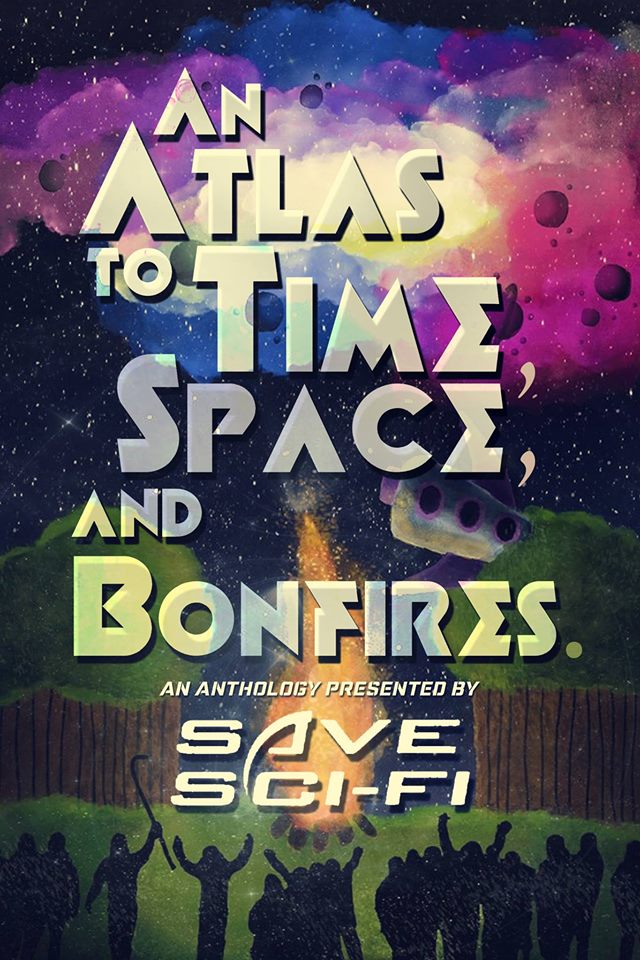
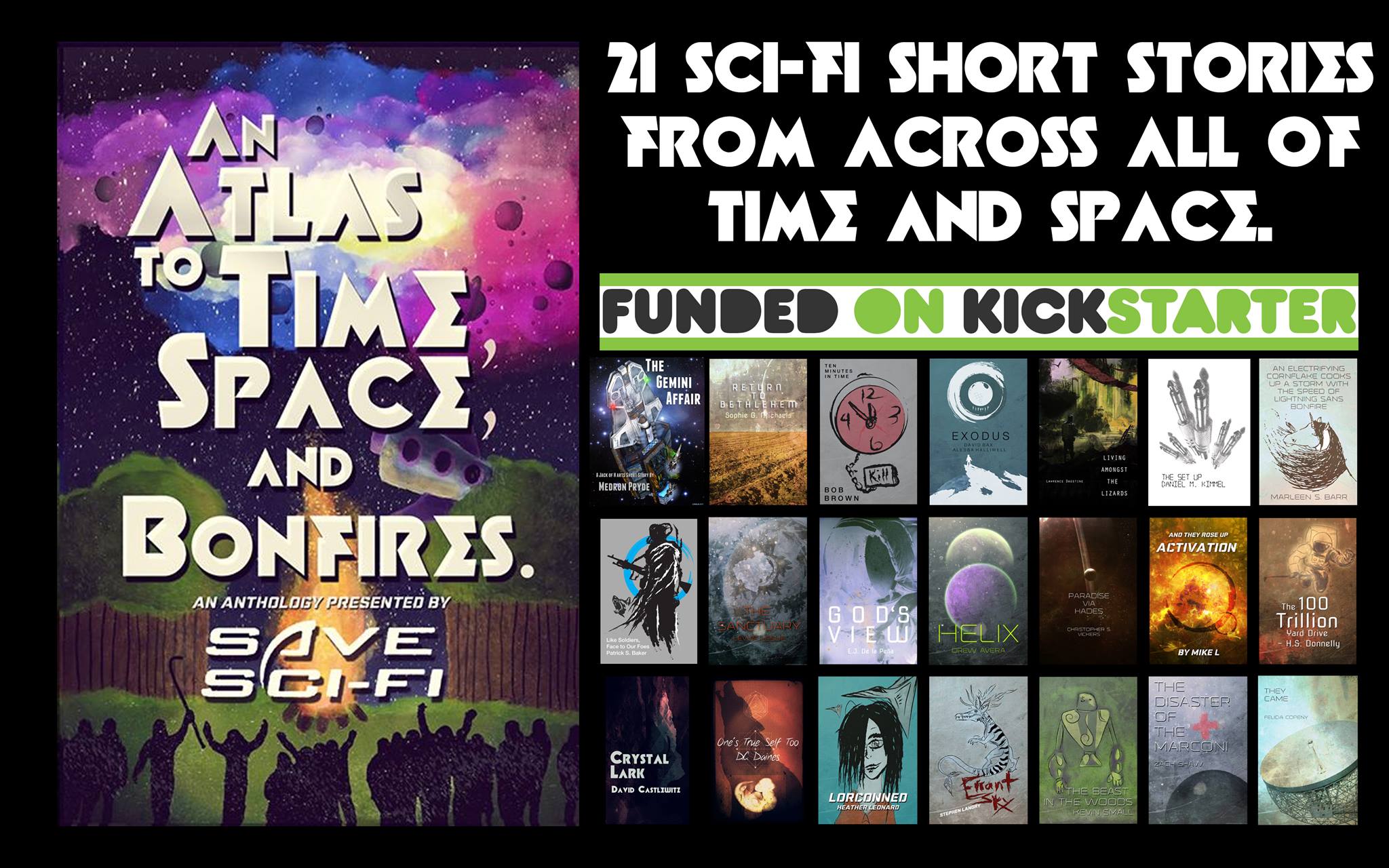
Science Fiction Anthologies: “An Atlas to Time, Space, and Bonfires” – presented by Save SciFi.com

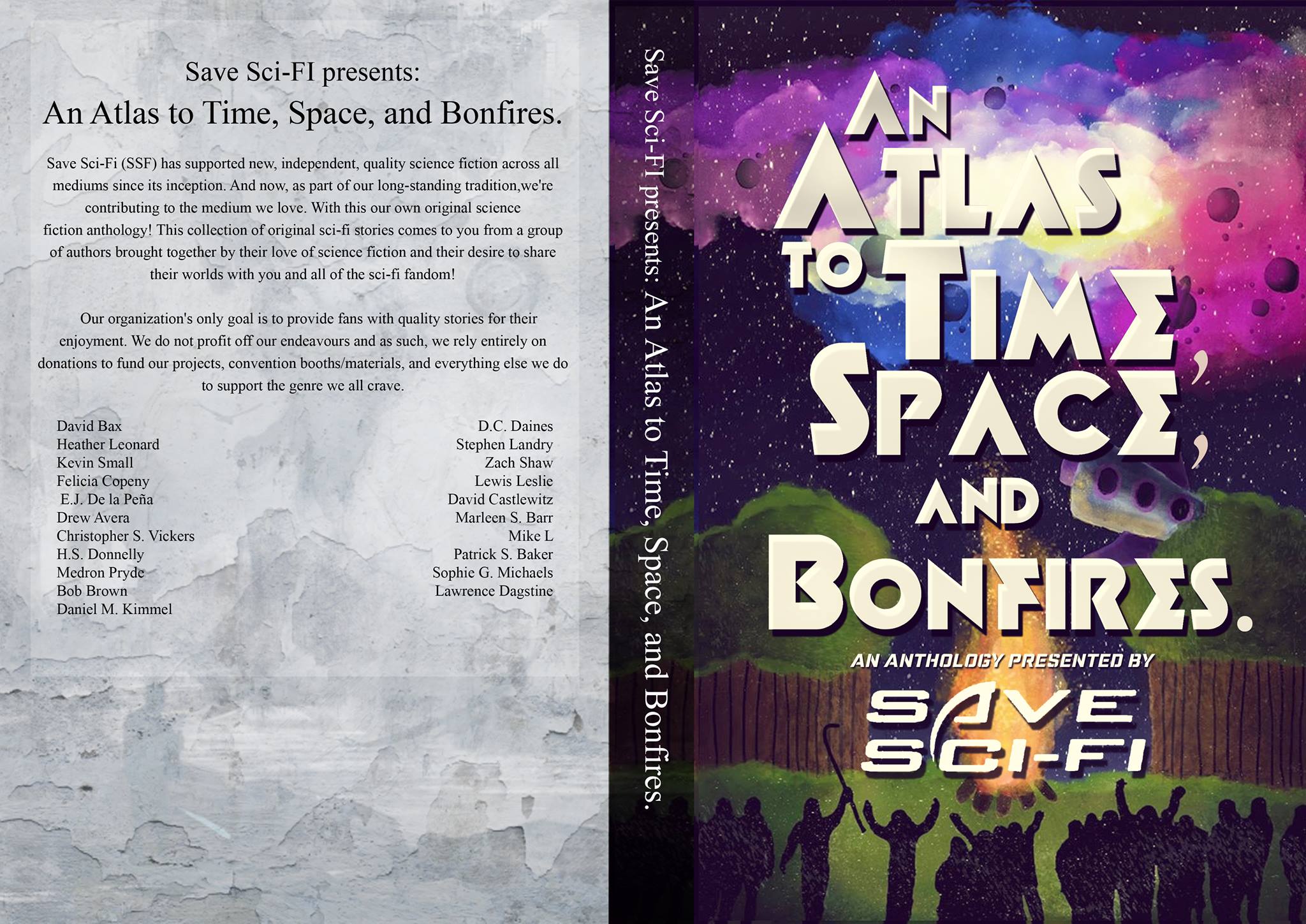
I’m pleased to announce that I have a short story in the successfully “Kickstarter-funded” science fiction anthology, AN ATLAS TO TIME, SPACE, AND BONFIRES. Old school and new school short fiction authors, 350+ pages, 120,000 words in length, and presented by Michael Daugherty and Stephen Landry over at Save SciFi.com. I’ll put all necessary pictures, links, banners below. It is available as a thick print book or in digital format on storefronts like Amazon (Kindle) and Smashwords. Each author’s story is also presented with original artwork by artist, Stephen Landry. It is chock full of new and reprinted stories from across the universe. A must-own (and a must-read) for the science fiction anthology enthusiast.
An_Atlas_Time_Space_Bonfires

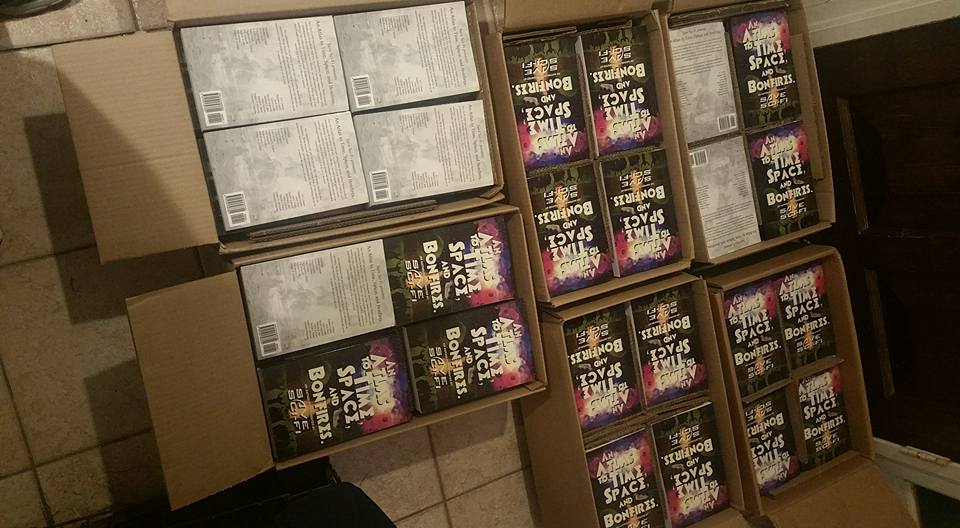
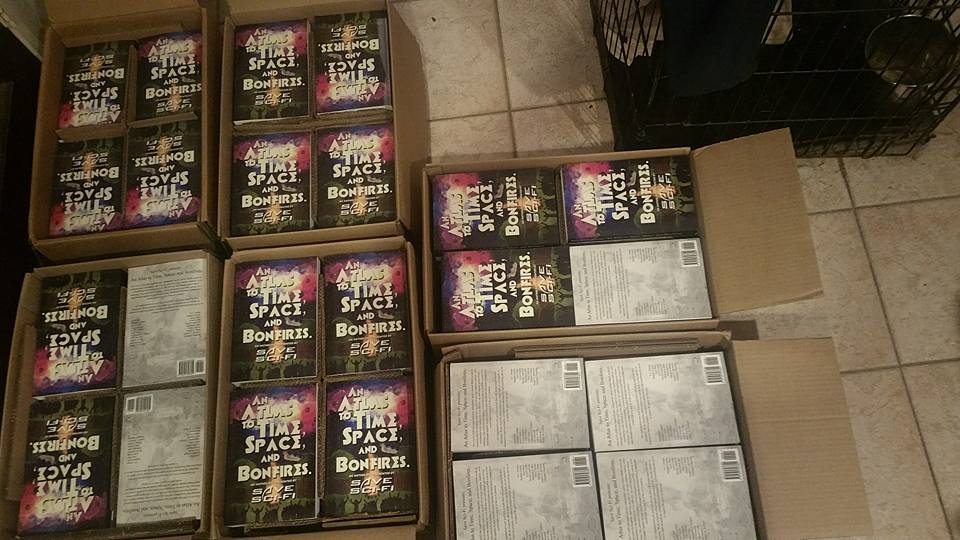
NOTE: As of the writing of this website post, on this date, AN ATLAS TO TIME, SPACE, AND BONFIRES has done extremely well. Not only being a successful Kickstarter campaign, but also pushing a hundred or so print copies at a science fiction convention (in Harrisburg, PA, I believe), and hundreds of digital versions (eBook format). Also, thank you to Michael Daugherty, Stephen Landry, and the people who funded this book over on Kickstarter. Much love. Save science fiction. Pictures and links below.
An Atlas Book Cover Back

An-Atlas_Kickstarter_ThankYouBanner

SAVE SCIFI TEAM:

Editor and Founder: Michael Daugherty

Head Artist: Stephen Landry (w. Kristina Sotje)

WEBSITE LINK: http://savesci-fi.com/category/savesci-fioriginals/anthology1/

AUTHOR LINE-UP

David Bax

Danny Daines

Heather Leonard

Stephen Landry

Kevin Small

Zach Shaw

Felicia Copeny

Lewis Leslie

E.J. De la Pena

David Castlewitz

Drew Avera

Christopher Vickers

Mike Lawson

H.S. Donnelly

Patrick S. Baker

Sophie G. Michaels

Bob Brown

Lawrence Dagstine

Marleen S. Barr

Daniel M. Kimmel

Medron Pryde

An Atlas Book Lot

An Atlas Book Lot 2

Once again, thank you to the people who funded this over at Kickstarter.

YOU MADE THIS POSSIBLE.

SMASHWORDS:

https://www.smashwords.com/books/view/724921

AMAZON KINDLE:

http://www.amazon.com/Atlas-Time-Space-Bonfires-Anthology-ebook/dp/B0725R41YB/ref=sr_1_1?ie=UTF8&qid=1495461708&sr=8-1&keywords=an+atlas+to+time+space+bonfires

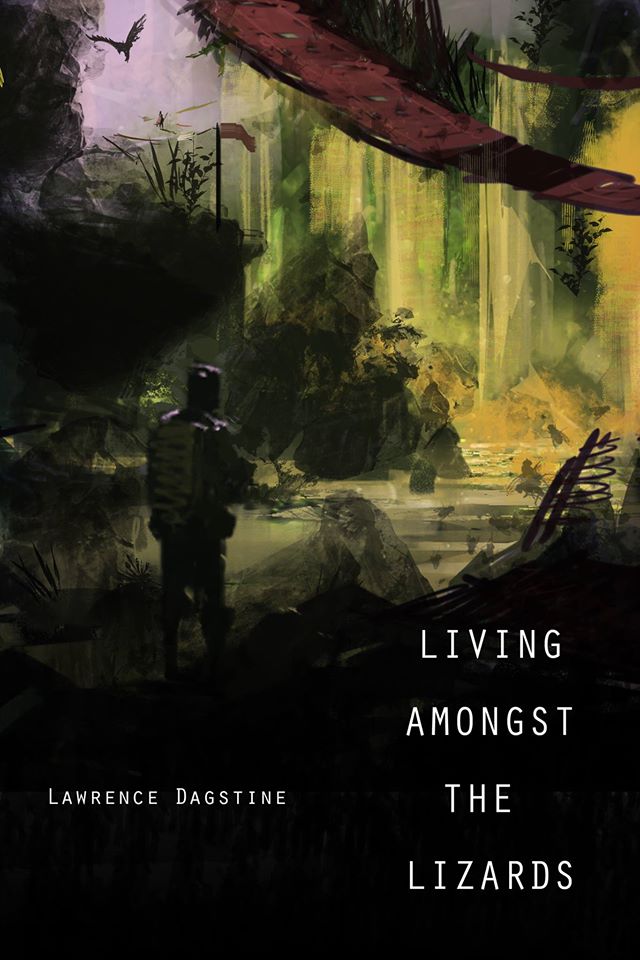
Living Amongst the Lizards

NEW ENTRIES: “Books & Anthos”


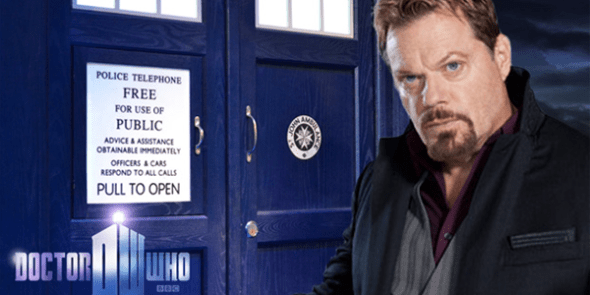
Doctor Who: “Eddie Izzard cast as the 12th Doctor…”

Finally, someone older and sheer comic genius is chosen for the iconic lead role of England’s long-running scifi hit series, Doctor Who.  Unfortunately, Steven Moffat and the gang at the Beeb had a hard time keeping it under wraps (or, as Alex Kingston would say, Spoilers!).  It was leaked yesterday, and the regeneration script is dynamite! For a while such names as Paterson Joseph, Colin Firth, Tom Hardy, Simon Amstell, Benedict Cumberbatch, Russell Brand, Chiwetel Eliojor, and Jenna Louise Coleman were among the hopefuls tossed out there.

izzard-timelord

Matt Smith, who has played the role of the 11th Doctor for 4 years, will step down this Christmas and hand the TARDIS keys to 51 year old Eddie Izzard (best known for his comedic roles).  Apparently, Izzard has wanted to play the Time Lord ever since the show was relaunched back in 2005; Tom Baker even hinted that Izzard would be perfect for the role.  Moffat, however, is uncertain about his own future with the show — there are rumors flying around that the BBC is looking for fresh blood in the production department, and Mark Gatiss or Toby Whithouse would be good successors — and he may only stay on for one season of shooting for the Izzard incarnation before moving on.  Doctor Who resumes production next year, and the 12th Doctor returns to television screens in Fall 2014.

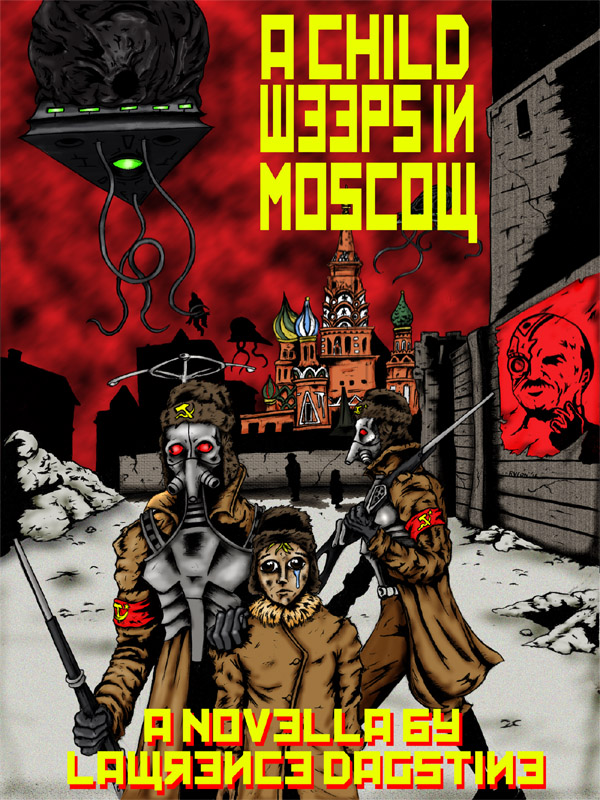
Coming Soon: “A Child Weeps in Moscow” by Lawrence Dagstine

COMING SPRING-SUMMER 2013

to Amazon Kindle, B&N Nook, Sony eReader, Kobo…

Coming to e-Dagstine.com Download Center, coming to eBooks & Kindle (and as a chapbook).

In the vein of George Orwell’s 1984

“A CHILD WEEPS IN MOSCOW”

A Novella by Lawrence Dagstine

ChildWeepsMoscow

Alien possession meets alternate history, in this communist tale set in 1923 Russia, about a boy named Abraham (Abe), whose parents suddenly disappear one day.  Like many of the adults throughout Russia, they are being taken away in the night by a special police force put together by Lenin’s “new” government, a government put together after the arrival of spacecrafts with biomechanoid origins and higher intelligence and influence.  Aliens the citizens simply call, The Invaders!

Klara Izolyev, Abe’s teacher, tells the boy that the only way he can learn the truth about the Invaders is to go to Moscow.  There he will learn what they really want on Earth, what role they play in the current socialist movement, and possibly find his missing parents and sister.  There he will fight starvation, arrest, combat homelessness, and meet an even more influential figure.  Arkady, the leader of a Moscow street gang, whose parents have also been taken away.  Together they will all journey to find the people they once loved, discovering just why the aliens are so interested in helping Lenin.

Official soundtrack for… Mysterious Lady of the Caribbean (teasers):

Also coming in 2013, and a MUST READ!

For fans of Weird Tales & Pirate Fiction

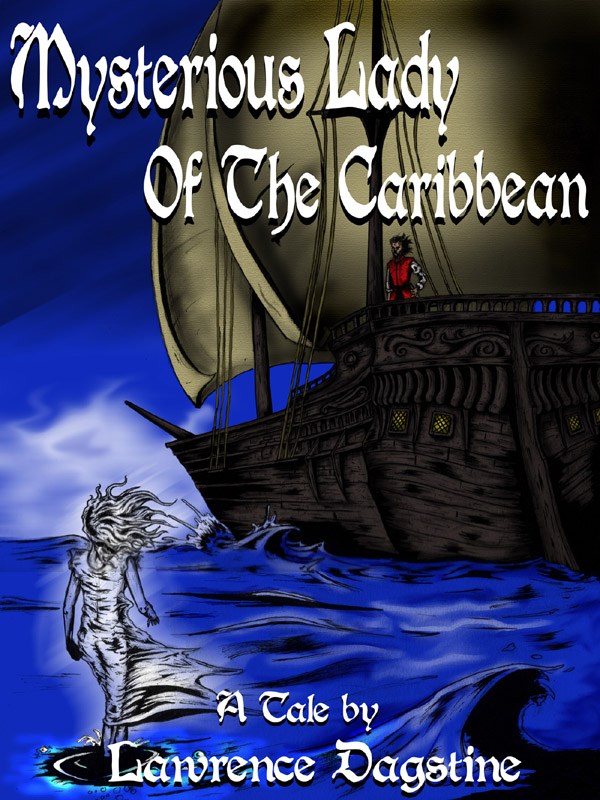
“THE MYSTERIOUS LADY OF THE CARIBBEAN”

A Novelette by Lawrence Dagstine

MysteriousLadyoftheCaribbean

Coming Soon to: New Releases, eBooks & Kindle

Free SF Serial: “Orphan’s Prey pt. 4” by Lawrence Dagstine

*Science Fiction Serial – New Installment – First Draft*

ORPHAN’S PREY #4

Last Time (part #3): https://lawrencedagstine.com/2010/09/02/free-sf-serial-orphans-prey-pt-3-lawrence-dagstine/

For a reptile such emotions were not like him; then again, perhaps he did not try hard enough to show emotion.  Along with his predictions in the weather, and for as long as he could remember, he had experienced premonitions instead.  If the premonition seemed genuine, his chest unit would emit a strange glow, and he would utter a warning of disaster to the rest of the tribe.  Very rarely did the Vendragon take him seriously, and very rarely did they act on it.  His forebodings were never specific, the calamity either absurd or nameless, so it was unusual that he did not speak of any premonition in the days or hours before Arim—a most treasured farmhand assisting their nascent culture in advancing agriculturally—was attacked and fell from that high cliff.  And never in his wildest dreams, he thought, could he predict that, even now, the two orphans he searched endlessly for might bring with them a terrible but ancient disaster.

 ORPHAN’S PREY #4

by

Lawrence R. Dagstine

Blake discovered that there is a point beyond which another blow to the spirit is almost meaningless because it cannot be felt.  Helping his sister cope with the jaw-dropping size of the storm—though the gravity of its suddenness was what was most startling—no shelter from the wind-driven onslaught in sight, and instilling a renewed sense of faith and meaning in the importance of survival, the boy led the way through the wastes as any adult leader would.  This was not the same frightened little cherub from two days earlier.  This was not the same eavesdropping eight-year-old who cowered only in the safest corner of an overturned transport, as shadow monsters with an insatiable taste for fluid waited for their next meal.  No, this was a child who finally came to the realization that, in this unnatural environment, the odds were stacked greatly against him.  He had no choice but to push on, even if it meant dragging those he loved dearly along with him; his sister obviously loaned him some of that inspiration and courage in order for this sparkling change to take place.

The fast-approaching clouds, with their thunderbolts and swirling snows pulverizing the landscape, looked like an entity unto itself.  During the late night scramble, above the four-thousand-foot high stretches of sand and rock, the children progressed hurriedly through a dark expanse of steep ridges and intertwining cliffs, upward rather than down across the valley floors.  Blake assured his sister that the higher you were, the safer it was.  So Chandler had told him.  Long after the bluffs were in complete shadows, Chelsea had watched the rapidly changing weather with a solemn look on her face.  One minute it was one season, the next it was entirely the opposite.  It went from hot to cold and cold to hot, to just plain damp and icy again.  It was uncanny, especially at this height.

“Fog thickens and encircles the thunderheads first,” Blake pointed out from atop a thin ledge.  They both stopped for a quick breather. “Or maybe the other way around.  Sorry, sis.  I’m kinda tired now.” He nodded toward the sky. “Streamers.”

“Streamers?” The girl was confused.

“Yup.  See them?”

“I suppose,” Chelsea said, though she still didn’t know what he was talking about.  Practically gasping for air, she’d run so far and fast that she could barely concentrate on the present moment.  Fearful of the climate, and being lost on account of her brother, she also felt displaced. “What about it?”

“Think of them as a main storm body within another storm body.”

“Then they should be carrying warning features.”

“Maybe.  Chandler wouldn’t have thought so,” the boy admitted. “Oh, and see those big dark masses over there?” His finger was outstretched and pointing. “They’re the real soldiers, carrying the big muscle, all the moisture and all the winds.  If they want to, they can regroup, break out the lightning and hail, and really kick ass”—he paused, shaking his head gently in awe—“and with more power,” he went on, “than you can believe possible.  More energy released, too!”

Chelsea nodded. “I see.”

“Moisture inside the fog cloud condenses with the help of little specks of mud and dust,” the boy added, “and as it rises in an updraft it turns to ice.  Then maybe it comes down, builds up more moisture, and goes up again, swirling around and forming more ice.  Up and down, back and forth, growing and getting harder all the time.  That’s how you get hailstones the size of pterodactyl eggs.”

Chelsea was smiling lightly. “I told you, bro.  Pterodactyls are extinct.”

“Oh, well, the hail’s still big.”

“I bet.” Outside, the girl continued listening quietly, her eyes on the distant horizon; inside, she was growing impatient. “Chandler taught you this?”

“Yep, he sure did.  And those big ol’ fog clouds aren’t static either.  Somewhere inside they boil and churn.  Like you said, enormous magnetic forces are at work”—he paused again, this time to show off his necklace as it slowly drifted away from the collar of his shirt by some invisible force—“updrafts, downdrafts, sudden cooling, sudden warming, generating enough electricity to light a whole solar city for a few nights.  Come on, look at the rope around my neck, sis.  You know there’s some evil at work here.” He tucked the chain back in; the way he’d explained it sounded like it was a good thing.

Chelsea snapped. “Did it ever occur to you that actually looking for a place to hide in the rock face might be an option, rather than a weather report?”

“Huh?” Now it was Blake who was confused.

“You really want to know what’s happening out there, little brother?”

“Hey, how come—”

“No, let me finish!” The girl was fuming. “Because this place isn’t cool one bit, and that’s what you’re making it out to be.  Neither is it rad or awesome.  I know your ego is fragile, Blake, but every so often you need to be kicked in the noggin.  Repeat after me: IT’S OKAY TO BE SCARED!!” There was a stunning silence as they just stood there, long and heavy raindrops sopping their clothes. “Mom and Dad aren’t here.  The Keeper isn’t here.  The Vendragon are a no-show.  The planet itself is unpredictable.  Chandler is dead.  Even the friggin’ information bank on my wrist got wet; damn thing is on the fritz!” She smacked the top of it. “All you can do is talk about how amazing and deadly the climate is? Seriously, I don’t think it gets any more selfish and immature than that!”

After five long days, Blake’s shyness suddenly reappeared.  For a brief minute his thoughts went back to the time spent aboard the Juniper, then his body loosened and he reached around to rub the back of his neck.  He walked up to the top of the ledge, watching the storm-crazed heavens; he was in such a trance he would have probably walked straight off it, so long as he didn’t have to be around his sister.  The moons of Ragnarok were much farther now, and the night continued closing in.  The mix of rain and snow got harder.  The air got colder.  The lower parts of the land became darker.  New stars appeared in the clear sections of sky but eventually those patches, too, were blotted out as the clouds merged and continued their relentless advance.

Some of the showers and hail that evening were mere dustings which held on the chilled ground and rocky ledges.  In other high places the winds dropped as much as five or six inches which, here and there, accumulated in small drifts.  He could only imagine the shape of the marshlands, the lower valleys, and the much flatter plains.

Finally the girl swallowed her awful tongue and approached him. “Hey, listen, I’m… I’m sorry, kiddo.” She suddenly felt terrible for the way she acted. “Being lost like this would pretty much drive any girl stir-crazy,” she carried on in a low but silly voice. “The weather doesn’t help any either.”

The boy did not say anything.

“Come on, Blake.  You know how much I worry about you.  What if this storm caused us to get separated? What if you got terribly ill? What if—”

“Stop!” Blake narrowed his eyes in hurt, but did not turn around. “Why’d you mention Mom and Dad?”

“Huh? Oh, that… It was spur of the moment.  You know, a passing reference?”

“So that gives you the right to preach?”

“I was scared,” Chelsea admitted. “My nerves got the better of me.  I’m soaked to the bone, I’m numb with cold, and I thought you were fooling around.  It felt like it wasn’t the right time for bullshit.”

The boy went silent again.

“Blake, please!”

He crossed his arms and ignored her.  Now his thoughts went back to another time and place, even long before the freighter.  Mother.  Father.  Other family.  He was so young; it was all so hazy.  But there were some memories.  Vague instances that were not really detailed, but they were better than no memories at all.  And there they were again, playing itself out amidst the hard driving rain like some mental hologram.

Blake’s parents had been wannabe out-colonists from the start.  They were like any other family of their generation, saving up their earnings while looking toward the future—in their time, to look ahead was the only way to think—often waiting with prolonged anticipation to see what a new planet in a new solar system would bring.  Jeremiah Prittengayle, a business savvy engineer by trade, dealt in matter transference and rockets.  He believed that the urge to visit the world of your choice, or what could eventually become the fruits of your new origins, was buried deep in every human’s heart.  To communicate with alien races, to explore and inhabit lands many light years away was something to be appreciated.  It was an escape from orthodox living and remedial technology in a Great World Society; some called the lifestyle homogenous.  But, being by nature a self-contained man, he had never asked how other family members felt about it—most of Blake’s aunts and uncles lived in the same block as him—nor would he have cared what their answers might be.

As too perfect as it might have been, and for as little time as he experienced it, Blake wanted to be back in that society now.  Anything was better than Ragnarok.  Perhaps that’s why he talked about the weather so much.  To take his mind off things like Earth, Mom and Dad, Aunt Rachel, Grace and Steven, Grandpa Jack and his funny metal leg, apple pie and real friends, other kid’s laughter.  He remembered his father most from his shaving emulsion, which gave off a peculiar but interesting scent.  His superficial-in-a-good-way attitude second.

He suddenly wept.  But it was a good weeping.

There had always been insight into his family: his great-grandfather’s journals which, unfortunately, he had left behind on the Juniper.  He wondered if the diaries were still there, tucked between the metal frame and mattress of his bunk, or if some other youngster had come along and found it.  Would the new child have thrown it away? If he lay down to read it, what would he have thought afterwards?

Of his mother, Courtney Prittengayle, he remembered her soothing voice and the way she embraced him.  She gave the best hugs.  The soft teddy bear kind.  Both she and Rachel had been the daughters of a once-famous geologist.  Though the man had died well before his birth, Blake recognized who he and Chelsea inherited their instinct and desire to adapt from, and when and how to use it.

He remembered being a toddler in the backseat of her father’s ship, vacationing one year in the icy plains of Europa.  He must have been about two-and-a-half.  Chelsea was probably about his age now.  His mother had skills as a navigator and pilot; so did Rachel.  Looking back, she flew the sleek white craft with precision, something he was sure that, as an adoring mother, she did many things.  She’d glance over her shoulder and smile at him, and he’d laugh back.  That feeling of events gaining the upper hand was always with her, but she knew when to push it aside, settle down, and study her surroundings.

“Honey, look, a wilderness!” She pointed downward.

Blake’s father peered out from his side. “Oh yeah, look at that.  Real trees.  They must be rooted somewhere in the ice.” He turned around to face the children. “Look kids, a forest on Europa.  Isn’t it breathtaking? Maybe one day when you grow up both of you will visit a sphere just like this.  Who knows, maybe you’ll even live on one.  Wouldn’t that be exciting?”

The boy nodded cheerfully at the time.

Chelsea was awestruck.  She had opened her eyes as wide as possible, then stuck her forehead and freckled nose against the special glass. “Awesome! Do you see that, little brother?” She tugged his shirt to the point of wrinkles. “Do you see the sculptures and waterfalls? It’s beautiful!”

“Wowww!” The boy sat up on his knees, amazed, then giggled. “Beautiful!”

“Baby, sit down and put your belt back on,” his mother ordered.

“Yes, Mommy.”

“Come now.  You too, Chelsea.”

Blake had lifted his head as far as his neck would stretch.  He just managed the tip of his mother’s shoulder; he never quite understood what went on in the front seat.  He had seen a visual system come down with elaborate keys.  Some were heat-operated, others you just had to blink commands.  They were topographical maps, as Chelsea had told him, and even his father had a virtual one open on his lap.  The contours crowded close on the atlas like holographic shapes and symbols.  It indicated oceanic rifts and icy basins, steep mountainous slopes or sheer cliffs; but the reality of their exploration were the rock faces dropping into darkness, bottomless canyons into which the sun would penetrate only for short hours or even minutes a day, rocky slopes too steep for a human to stand on.  Like Ragnarok, these seemed features of another world; they were features of another world.  In north-facing crevices and hollows, the last Jupiter year’s freeze-over held.

“Looks like we won’t be able to bring her down there,” his mother said.

“Should we take her back to the rough country?”

“We may have to, dear.”

“Mommy,” Blake muttered.

“Oh, almost forgot, darling.  Oxygen.” His mother handed his father a special mask. “You too, Chelsea.  And give your brother one.” She already wore her own, and her voice was muffled. “The atmosphere is dense in this area.  We’ll be up about twenty thousand, and the deep pockets can sneak up on you.”

“Mommy,” Blake repeated. “I have to pee.”

The boy had eventually put on the mask without another word.

From this height, any basins or frozen lakes they passed looked small indeed, toy representations of the real thing; a child’s model platform suddenly came to mind.  There was the wintry stream that was supposed to feed the lake, and there were its countless tributaries and dry ice cracks, some gleaming faintly with heat-generated water, some flowing now but easy enough to pick out from the way they extended across the landscape like branches from a tree.

Where they were now, thousands of feet above the highest ranges, the view was breathtaking.  More sheer slopes and more steep cliffs, some snow-blanketed, others mostly ice-covered, with indentations stretching to the poles as far as visibility went.  It was through this unknown, tangled mass of blue and white, Blake thought, that his parents and others like them had found their lonely way.

His father tapped his mother on the shoulder. “Look, Courtney, there’s the air tower.  The hotels and shops must be just beneath it.” He turned slightly and hollered, “Hey guys, keep your masks on.  We’re almost there.”

From the distance, much of it looked like a metallic ski resort. “This is so cool,” Chelsea said.

“Honey, you think checking in early will be a problem?”

“Nah, shouldn’t be,” the man said. “We can always come back.”

Beside him, the woman seemed to be waiting for some kind of signal. “Maintain this altitude, but swing back over the basin again,” she said, throwing some control switches.  At once the horizon shifted as they began a wavering turn.

As the wind currents moved slowly beneath them, Blake caught the gleam of standing water near the top of a high canyon.  They were coming over the tower now, and although the boy had no idea what his parents might be looking for, he searched carefully every slope, every gorge, every steep drop-off.

That was until they collided with an air pocket.

The sudden force ripped through the hull of the craft; invisible, but the power was tremendous.  Chelsea’s mask flew off and, though strapped in tight, reached for her throat and fell into a state of oxygen-deprived unconsciousness.

His father turned around. “Chelsea? Chelsea! Omigod, Courtney.  You have to bring her down now!” He saw the girl’s head tilted to the side.

The boy grabbed the armrests in fear.

“I…I can’t!” his mother cried. “Nothing’s working.  What’s going on?”

“Blake, whatever you do… DON’T MOVE!” The man had shouted it to the boy with the utmost urgency.

“Jeremiah, we’re going down.  Fast!” There was confusion; it was hard to understand anything over the inrush of wind, which came from the rear.

“Blake, listen to me.  Stay still!”

The boy suddenly stopped and shook his head in silence.  He tried to go back and remember some more but saw nothing that could explain the optical illusion he had seen while in the air.  That and the crash.  Was there even a crash? Were his parents even dead? It was so long ago.

Reality had brought him down to that sodden cliff on Ragnarok so fast and so cruel again, he didn’t know what to say.  There was so much he wanted to understand, but he never got around to reconsidering the past.  Upon their return home, Rachel had disappeared from their lives, too.  He was abandoned by other surviving family and, along with his sister, thrust aboard a ship for orphans, forced to just… deal.

Finally he heard someone say DON’T MOVE again, and with the same insistent tone his father had used.  He turned around in the pouring rain and saw his sister at the opposite end of the cliff.  Frightened, she was backed into a corner by a large and terrifying beast.  It had jumped down from a much higher ledge and almost pounced her.  The creature was feline, but it only had one eye.  It looked like some kind of saber-toothed Cyclops cat; Blake didn’t know how else to describe it.  It stood at least eight feet long and four feet wide, very powerful, with a large ivory horn in the top of its head.  From its sides were long and thin tentacles, three to each and six in all, with fine and sharp pincers at the tips.  The animal raised a giant claw and dug it into the ground with force, causing an upheaval of wet snow and mud.  It made its presence felt between the children; it had noticed the girl first but still left about ten feet open for them both.

Blake motioned with his hands from behind and said extra-softly, “Chelsea, don’t move.” He slipped off his satchel and searched for some perma-flares.  When he saw that he wasn’t the one carrying them, he searched for something else.

The girl stared past the animal at him in fright. “Please, hurry,” she indicated quietly and carefully, then went back to trembling in her corner.

The giant cat displayed its massively long fangs and gave off a monstrous roar.  Chelsea put her hands to her ears and held them there.  It roared and slammed the ground again, then proceeded slowly toward her.  The tentacles at its sides began to viciously click and snap.  The colossal eye widened and loomed in on her, while Blake emptied his bags and looked for something—anything he could use as a weapon.

Seconds later he remembered where he had left the crystal-tipped spear with the attached laser cutter.  It was leaning against the rock wall, just within reach.  He slid across the mud-spattered floor and retrieved it, standing and shouting from the far left side now, “Hey you! Yeah you, ya big ol’ pussycat! Why don’t you pick on someone your own size?” He tightened his grip around the base of the weapon, as the enormous beast turned its giant pupil and sharp fangs toward him. “Get away from my sister!”

“Blake, you don’t have enough room!” Chelsea shouted once she was clear of the ledge; she had maneuvered about fifteen feet. “Get out of there.  Now!”

“Keep climbin’, sis.  I’ll take care of this mean ol’ cat.  Just go!”

“Blake, don’t be an idiot!”

The animal started backing him up in a corner—it was either that or face it on the thin ledge—and snarled angrily.  The boy made small pokes and jabs at it.  Instinctively, the cat responded by opening its mouth, cringing its long-whiskered face, and taking quick swipes.  Blake was short and slim enough to pull his body back from the razor-sharp talons that were now swinging right to left and left to right.

Moments later the cat took two steps back and stood up on its hind legs.  It roared ferociously and raised an angry paw that overshadowed the child’s face.  Blake stood on the balls of his feet and, using as much leverage as he could muster, dug the now-heated tip of the spear into the underbelly of the animal.  The cat bellowed in pain, then swung its massive frame back and forth until the weapon broke like a twig.  Blake fell backwards to the ground.  The cat’s paw descended with a mighty thud, tearing up earth and hurling fragments of rock aside.  The boy lay watching beneath the rubble, as the salivating animal opened its mouth wide and came in for the kill.

TO BE CONTINUED…

Free SF Serial: “Orphan’s Prey pt. 3” – Lawrence Dagstine

Science Fiction Serial Part 3

First Draft – Follow it from the beginning…

Orphan’s Prey 1: https://lawrencedagstine.com/2010/04/20/free-sf-serial-orphans-prey-pt-1-by-lawrence-dagstine/

Orphan’s Prey 2: https://lawrencedagstine.com/2010/06/10/free-sf-serials-orphans-prey-pt-2-by-lawrence-dagstine/

Who are the Vendragon?

So self-assured, she was, only hours earlier. So brave and self-confident. So virtuous and independent at the right moments, yet obviously weak during others. 

She suddenly found herself pressing her hands to the sides of her head—she’d never done something like this in front of her brother—almost sick with discomfort.  She saw the expression on the boy’s face, then her own, only in her mind’s eye, weak, scared, unprotected, and she realized once more that they were just small children, incapable of much, and just how alone they really were.


ORPHAN’S PREY

 by

Lawrence Dagstine

A rather large, muscular, adobe-colored lizard was awakened that same night by what sounded like distant explosions.  From behind the controls of his land scout, the startled iguana with the reddish-brown leather armor and twaddle-speaking tongue realized it was thunder reverberating among the low cumulus that was some hundreds of miles wide.  There was the pitter-patter of rain pellets on the vehicle’s front looking glass and hood.  A break in the drought? No, couldn’t be; Ragnarok should only be so lucky this time of year.  All the water in the universe couldn’t fix that recurrent problem, only toss it a band-aid.  Hence the greenhouses, pipelines, and special sprinkler system back at the city.  Fog clouds approaching? Maybe.  It was a more logical bet.  In sandy, mountainous regions like this, a heavy thunderstorm or methane-mixed hail shower could be an isolated occurrence or a signal that a new front was moving in—or yet another unwanted season.  Whichever it was, the lizard was glad he was snug inside his tracker rather than camped out in a dry marsh or deep desert valley where the storm was picking up speed and strength.  As for how bad conditions would get, he’d just have to wait and see.

“Fog billows?” asked a similar life form from a standard operating panel in the rear.  Unlike the front of the vehicle, there were no visual systems or radar maps or even a looking glass to peer out of.   Compared to his much taller partner, this reptile’s armor was grayish steel, the portions of scaly flesh that was visible a mustard tone.

The tongue-tied lizard at the wheel of the land scout looked at his weather gauge. “With precipitation like this”—when he talked his mouth didn’t always move but, rather, an electronic chest unit with a flashing orb flickered—“what else could it be?”

“The way you study natural features,” his friend remarked, “I would have thought something more exciting.  Whatever your definition of exciting is.  You know, Koral, I’m quite surprised you never applied for an Earth visa.  You show a certain kind of enthusiasm for your work.”

Their vernacular wasn’t perfect, the interpretive English and back and forth chitchat a bit skidded; but the chest units helped immensely with vocabulary and pronunciation.

“You mean neurotic?” Koral’s tongue lashed out in slight irritation.

“Mmm, that’s the word.  A human term, too.  I’d bet my green farm that Earth scientists would have adored you.”

“Funny, Bakkra,” he laughed. “I don’t know whether to pat you on the gills for your clever perceptions of me—because I am mostly used to your cynicism—or just go ahead and collect my winnings now.  Heh! And here I thought only the man-droid was able to understand me.” There was a brief pause. “Speaking of which, the synthetic one has not returned or communicated back with our lovely package.”

“He’s a robot.  Robots are late, too, you know.”

“Not this robot.  I was the one the manufacturers hunted down and finally sold to.  I was the one guiding him through the wastes.”

“You seem concerned, and tired.  Should we call off the search?”

“No.  Not yet.”

“They’re that important to you, huh?”

“Yes.  That important.” Koral leaned back in his metal chair and let the ravaging elements unfold before him, while keeping a close eye on the overhead gauges and monitor for something else.

Lightning flashed some more.  The alignment of the bolts, shooting outward from the cumulus in all directions, reminded the lizard of the storm chasing he undertook in his youth; after three hundred and sixty years, one begins to feel old but still take pleasure in the eccentricities of the past.

Thunderstorms in the wastelands of Ragnarok were forever awesome displays of limitless power, he thought, sometimes releasing energy many times greater than the atomic explosion range.  Hailstorms derived of methane were a whole other story.  Still, he knew if you were close to either one, or became trapped in the very center of a fog cloud, there was about them a personal quality.  It was dramatic and inescapable.  It was terrifying but vivid, as if every sudden flash, every strong gust of wind, and every simultaneous explosion that crackled and boomed were seeking you out; after all, it really sought no one else.  The lightning came in multitudes and blinded you.  The thunder wreaked havoc on your ears and deafened you.  The ice-cold rains came down heavily and drowned you.  And on the open plains, the sand-filled wastes, and in hanging valleys of crystal and rock, there was no place to take refuge.

The snow, which frequently becomes spot blizzards with reckless currents of air beyond gale force, could also be merciless and astonishing in its ferocity.  Large, lazy flakes drifting down at first, touching the ground and melting instantly.  But in minutes the fall becomes thicker, more rigid, and the wind-whipped mess pummels the landscape.  The temperature drops rapidly.  Marshes and gullies turn in the twinkling of an eye to great streams of half-frozen mud, which then later break apart from those very same winds and become torrents, rushing steeply downhill unintended, catching up loose rocks, Yurga bush, even boulders.  Other times, the mud is uplifted and snatched from their channels, as if by some godly hand.  Then it is flung into the air with impending force, thus turning it into hail during its whirl around the cloud formations and falling with a shrapnel effect down upon lower elevations of land.  In the midst of the mud particles, an unscented methane composite, laid bare to Ragnarok’s wrath and planetary nature to do whatever mixing and mashing it likes.  Once it falls back down again, hardened and in hail form, it wreaks of the most terrible odor, which can be inhaled up to hundreds of miles away.

Koral always remembered the cloud masses beginning somewhere in the high mountains, never the desert regions or marshlands, and in an almost tentative fashion.  Always the highest escarpments, always the greatest plateaus.  Perhaps that was what made the seasonal irregularities so peculiar, so unrelenting in their expansive devastation.  And you never expected a season to change so fast or, unintentionally, drive through one.  Not unless it was closely monitored or regarded from a distance.

From within the land scout, and up along a high altitude, the now-dozing lizard found such an effect magical.  A swirling, shifting pattern of light, eventually graying, then dulling and, finally, obscuring.  Precipitation from some disturbance in the planet’s magnetic field eventually conjured up the surrounding fog—yes, that had to be it—but he couldn’t be certain.  Neither could his people.  It was just another mystery of the planet, passed down from generation to generation, and his hypothesis was open to much conjecture.  Sometimes there was a break; usually there wasn’t.  Sometimes it revealed uncharted peaks, gorges and canyons, and the Vendragon Township far below, often untouched by the gathering clouds and coming storm.

At times he found such atmospheric wonder indescribable.  He often used worlds populated by humans as a comparison: where Earth’s seasons changed over the course of months, the cycles on Ragnarok could change within minutes if not mere seconds.  He used these comparisons in his teachings.  The Vendragon, whose society already flourished in ways early human colonies had, achieved much knowledge and experience from it.  They took it with them wherever they went; though formally a tribal race, that and available technology became a handed down tradition.

Finally the lizard’s thoughts were interrupted by a voice on the overhead speaker. “Hey, storm chaser! Come in, chaser! What are you chasing after now? Over.”

“Apparently little boys and girls,” Bakkra hollered from the back. “Ain’t that right, Koral?”

The man-sized iguana turned and shot his mustard-colored friend a filthy glance. “Do you mind?” His chest unit flared bright red.

The speaker chimed again: “Check.  Fog clouds reach you yet? Over.”

“Affirmative,” he answered. “Unpredictable weather surrounding just about everything.  All within close proximity of the vehicle, at least, otherwise cloud-to-ground.  Too soon to tell.  Just beginning.  Over.”

“I’m sure the young ones are all right,” the speaker crooned; the voice on the other side tried to be reassuring.

“What makes you think I was worried about that? Over.”

“Have any of our friends made an appearance?” An intense silence followed.

Bakkra was about to say something smart when Koral turned and shushed him. “The man-droid has still not reported back, and no,” he said. “No activity or other signs of life in the region.  Over.”

“Oh, well, still armor yourself.  This storm system reading is immense from our side.  We’re going to catch it for good and for sure, and there’s an airstream behind it.  First snow and ice, then rain and wind, heavy at times.  Even at your elevation.”

“Trust me.  We’ve already felt the thunder.”

“Thunder is nothing.” The communicator cut off for what seemed like two, maybe three seconds, followed by unusual static. “We may lose… you if… you go any… higher,” the voice continued brokenly. “You been feeling tremors? Over.”

“Negative.” Koral flipped a few switches on the overhead panel and fixed the glitch. “Unless there’s something I don’t already know or you’re not telling me.  Over.”

“Hmm, well, we’re still sending two extra rovers your way.  Over.”

“Helpful, Ooglad, but Bakkra and I are all right.  Over.”

“Listen, Koral, I know it’s just a random search, and this cloud build-up is like all the other occasions, but let’s be honest here, you can use all the help you can get.” A brief pause, and then: “Small stuff, under four on the quake register, with sand-shocks set well outside your perimeter.  But why turn down a free assist? Over.”

“Thanks, Ooglad, but no thanks.  Out.” Koral switched off the communicator.

Bakkra was the one with the smug look now. “What did you do that for? You’d have to be mad to turn down a rescue and assist in conditions like this.”

“We don’t need it.  We’ll just stay the night.  The storm will pass, like those before it.”

“For all you know those children might already be dead! Your droid’s bleeper would have picked them up kilometers ago.  This, my friend, is just suicide!”

“Really, Bakkra? How so?” Koral leaned back in his seat once more. “Does this also mean I’m forcing you to commit suicide with me? Because I do occasionally entertain the thought.”

“I guarantee you these children are already worm food or some other kind of beast droppings!”

“I say you’re wrong.” The lizard was terribly amused. “For once in your pathetic existence, don’t be such a coward.  Part of our race’s survival depends on these two kids.  We’ve weathered fog clouds before, and knowing how Ooglad thinks, he’ll most likely still send out that extra patrol regardless of what I say.  He’s crazy and neurotic, too.”

“You’re right,” Bakkra said. “For once you are very right.  That young reptile is paranoid and foolish like you.  But I am not.” Gathering his things, he went on, “I don’t plan on staying here with you.  So, if you will not wait for the assist and accept it, then I will.  They’ll give me a ride back to the city, while you stay out in the hail to wither and die.”

He was prepared to slide open the door and exit the vehicle when Koral jumped up and stopped him. “Oh no, my friend.  You are not leaving this tracker.” The lizard made his presence felt; the air suddenly became hostile and serious. “Not while I am in charge.  I say we weather the storm, investigate these hills and cliffs, and that is final!”

“Let go of the door, Koral.  Things could get messy in a very confined space.”

Lightning flashed just outside; the crackling sound was ear-piercing.  Koral shook it off.  Then he released his massive-sized hand from the door’s grip. “Go ahead,” he said. “I’d ask you to be reasonable but I think you and I both know we are beyond that now.”

The mustard-toned reptile reconsidered. “The only reason you are being this way is because of what happened to Arim.  You’re scared you’ll have to live through a repeat.” There was a brief silence, significant, and followed by what seemed like an even more emotional reawakening. “Your puny brain might not realize it, because it’s crammed deep inside your subconscious—yes, one of your human terms—waiting for the chance to be exposed, waiting for the opportunity to be expressed, and aired in permanent relief.” Then Bakkra put his things down and took two steps back. “There is a cause to your neuroses, Koral.  I see this.  Ooglad sees this.  The whole tribe sees this! They worry about you.  They can see right through your armor, the pain you are suffering, the empty feelings you sometimes emit.  You leave the camps and city grounds to study the conditions out here, bury yourself in your research.  This is your means of escape.  But because Arim perished and you suffer does not mean others need suffer as well.”

Koral did not reply.  Instead, he returned to the front of the vehicle, strapped himself back into his metal chair, and peered silently out of the looking glass.

Bakkra went on, “I will not go.  I will return to my station.  This is a very strong storm formation we are dealing with here.  Hopefully, your instincts are right this time.  I also pray you will not be blinded by pride again.  This stubbornness needs to subside.”

Koral blocked the rest of what he had to say out and stared up at the overhead panels in dismay.  Eventually he closed his eyes and, with the ease of long practice in strange places, went immediately off to dozing again.  In a few hours he would see what effects of the storm he could find, and if the children or the man-droid had left a trail for him.  This time he was prepared.  He had a carry-along machine, lightweight with a strap, which detected alien life forms.

He continued to ignore Bakkra’s petty banter through the night.  He continued to be aware of feeling kinship with the environment and, oddly enough, with the fog clouds.  It was a feeling he found impossible to shake.  Pensively he looked back at the fateful actions that led up to the Arim tragedy.  It was so long ago, uneventful to say the least.  How could the thoughts still persist? Were they really bottled up inside of him? It was his first interspecies “coop”, as most out-colony settlers called it in those days.  The boy was too young.  Sixteen in Earth years.  For every hour the lizard was out there searching for the two orphans he probably thought of Arim and the accident that befell him twice as much, only unconsciously.

For a reptile such emotions were not like him; then again, perhaps he did not try hard enough to show emotion.  Along with his predictions in the weather, and for as long as he could remember, he had experienced premonitions instead.  If the premonition seemed genuine, his chest unit would emit a strange glow, and he would utter a warning of disaster to the rest of the tribe.  Very rarely did the Vendragon take him seriously, and very rarely did they act on it.  His forebodings were never specific, the calamity either absurd or nameless, so it was unusual that he did not speak of any premonition in the days or hours before Arim—a most treasured farmhand assisting their nascent culture in advancing agriculturally—was attacked and fell from that high cliff.  And never in his wildest dreams, he thought, could he predict that, even now, the two orphans he searched endlessly for might bring with them a terrible but ancient disaster.

TO BE CONTINUED…

Lawrence Dagstine: “Masters of the Universe 2010…”

The birthday of all birthdays approaches.  Three.  And this year’s theme is actually the very expensive, 30th Anniversary re-release of some funky figures I grew up to in the very early 1980s.  He-man and the Masters of the Universe: Adult Collector Series.  These are for my son, but I’d be lying if I didn’t say I had a little fun with them myself (he he).  The artwork and detail is out of this world, done by the Four Horsemen, and if you have an action figure or toy news blog, please feel free to use these pics.  I was most surprised by how expensive they were.  First off, they sell out in less than 24 hours all the time on Mattel’s main homepage… So your only shots are places like eBay or Amazon if you want to own these high-end figures.  Next, when I say high-end, I mean it.  The 2010 Masters of the Universe line-up runs between $25.00 and $80.00 per figure on average; with $35.00 to $60.00 being that in-between number with S&H.  Are they worth it? Yes and no (I also managed to pick up a 2002 Castle Grayskull MINT in the box.  Some of the more memorable characters are even more awesome-looking than when they first came out in 1982.  Characters like He-Man, Man-at-Arms, Trap-Jaw, and Moss Man included.  And they include better weapons and equipment, too.

Word, yo. It all good... Later we go to Mr. B's for a Nickel and Shiznit!

It should be noted that I didn’t pick up Skeletor but, rather, Scareglow instead.

No hard feelings, Skeletor.  I’ll give a little description of the figures further down.

Sorry, Skeletor... but Scareglow looked wayyy cooler than your candy ass.

So with the castle and the average forty-fifty dollar action figure I ended up spending close to $700.00 in He-man related toys.  Why spend so much, you ask? Well, while I agree they are for my son and I’m reliving my childhood through him, and hope one day that he might want to repeat the process… It wasn’t just a birthday celebration or bunch of gifts I just “had to own!” Yes, I do collect my own Doctor Who and Star Wars action figures.  Yes, I have Matchbox/Hot Wheels cars.  Yes, I have baseball cards made of chrome.   Oh, and don’t even get me started on Transformers, Thundercats, Smurfs, G.I.Joe, and some now-old school 8-bit NES games.  These toys were a celebration to welcome my son into my home as I now have custody (visitation rights) of him 7 to 8 days a month.  In the event a weekend lands with a Monday as a holiday, there’s your eighth day.  So I have my kid for lots of cartoon fun (and the park outdoors) one week a month.  Which means more to me than my writing, so yes, along with a new bed directly across from mine, makes $700.00 seem all the more worth it.

2002 Castle Grayskull - MIB; with Action Chip/Sound Effects

2002 Castle Grayskull - Back of box/castle interior view

Other gifts included a Superman “Through the Ages” gift set, a 13″ tall Cyberman, a pair of Iron Man sneakers, and a 2010 AT-AT Imperial Walker.  But let’s concentrate on the Masters of the Universe line-up for now.

Scareglow - Skeletor's Henchman from another dimension

Beast Man - Skeletor's Original Henchman with realistic paint job

Tri-Klops - Skeletor's Henchman who can see through one eye

Trap-Jaw - Skeletor's iron-mouthed, claw-armed henchman - RARE! $50 and up!

The He-man adult series also comes in nice collectible boxes

It appears I’ve picked up an unequal amount of good guys versus bad guys.  Maybe that’s because the bad guys always looked cooler.  I’ve also picked up the whole 130-episode television series, which lasted four years in the early 80s — they tried to bring it back in 2002, but failed — and they were the basis of my childhood and fantasies growing up.  It’s now time to introduce it to another generation, just as some parents from Generation X are introducing Star Wars and Transformers to their young ones.  Who knows, maybe the 80s culture will always be with us.  Why? Because the 80s into the early 90s were probably one of the coolest periods for things in general.  And not just toys.  Though cheesy to some today, you had your clothes, music, movies (ala Empire Strikes Back, Predator, Terminator, and Aliens), comics, graphic novels, and even science fiction, fantasy and horror novels when it was at its height.  There is a man by the name of Stephen King we can thank for that.  Anyway, on to some more action figure pics.

He-man in Battle Armor - paint job just like the day he premiered

Faker - The evil He-man which Tri-Klops & Skeletor put back together.

Wun-Dar - Savage ancestor of He-man; great grandfather - VERY RARE

Moss Man - authentic green fur and he smells like a Christmas Tree

Man-E-Faces - Good guy robot from the 2002 collection with three faces

Now before I go, get a load of this… Not only did they make the new figures look just like the older figures, only with superior paint jobs — once again, the Four Horsemen are responsible for these figures — but one of them included a ring.  The ring you see below I used to own and wear almost thirty years ago.  The Castle Grayskull Ring.  Every detail has been repeated.  I don’t know what’s funnier, the way it looks since I lost it in the early eighties and the fact that I still remember it, or when I was running around second grade with it on, raising my hand to the sky, shouting, “I HAVE THE POWER!” Actually, what’s probably hilarious is the ring still fits my ring finger, and I wore it outdoors by mistake one day, not realizing I had it on.  Nevertheless, when I was young I loved that He-man ring, and I’m glad to have an exact duplicate of it back.  It sits on my writing desk, and believe it or not, it even gives me a little inspiration when it comes to penning horror stories.  I fiddle around, put it on, or sometimes just stare at it.  Oh yeah, I also picked up the NEW Webstor figure.

The Castle Grayskull Ring - Memories that still fit almost 30 years later.

Castle Grayskull put together w. The whole gang saying goodbye.

Once again, there’s nothing wrong with reliving your childhood or passing it on to the next generation.  And it’s things like this which helped inspire me to become the one thing I do most these days.  Being a genre writer.

With that said, everybody say goodbye.  Until next time.  BYE BYE.  Bye everyone.  See ya.

Cheers,

Lawrence Dagstine

OG’s Speculative Fiction, Mid-Late 2010… (3rd Acceptance!)

A couple of weeks ago I grabbed my third acceptance to the long running speculative fiction/science fiction magazine on the Web — available as a free PDF Download to read and eventually purchase on LULU as a magazine for cons — The Opinion Guy (aka OG’s Speculative Fiction).  This would be my second acceptance in one year to them, and they’ve featured some very talented and familiar names in the science fiction arena.  Both short stories and poetry.  Matter of fact, this third credit comes right after my 2nd, and bolstered me up to the 400 credit mark.  Editor is Seth Crossman, and he also provides an Internet site full of informative articles.


Lawrence Dagstine RETURNS to OG’s Speculative Fiction

Third Acceptance – Click on the link(s) for some free reading in PDF format

MAIN HOMEPAGE:

www.theopinionguy.com

Previous Dagstine Stories:

https://lawrencedagstine.com/2010/03/25/ogs-speculative-fiction-march-2010-2nd-acceptances/

Other New Entries: “Magazines”

Steampunk Tales #7: “Town of Crows 2” – (eBooks & Kindle)

Holy Moly, the Scarecrows are back!! Steampunk horror, Neo-Victorian literature, and pulp adventure and mayhem during the post-Civil War. A tale with a twist.  An invasion of epic proportion! A novelette! Characters we care about, and an unexpected plotline. Hundreds of pages worth of Penny Dreadfuls for your pocket: PDF Format, iPad and iPhone, Mobipocket, and through Amazon Kindle! Featuring more than 500+ pages of fiction. Only $1.99 in most formats (Kindle prices go for about $4.99 to $5.99).

THIS TIME THE SCARECROWS AREN’T PLAYING

AND A CIVIL WAR SECRET SHALL BE LEARNED.

Lawrence Dagstine & His Killer Scarecrows in Steampunk Tales… Again!

Get it on Amazon Kindle, iPad or iPhone, PDF, or click: “eBooks & Kindle.”

STEAMPUNK TALES  – 7 (own both issues)


For Amazon Kindle

STEAMPUNK TALES – 6 (own both issues)

 BACK BY POPULAR DEMAND…. SERIALIZED SCARECROWS IN 1870…

For Amazon Kindle

Available for iPhone/iPod Touch, MobiPocket eBook for most smart phones, Amazon Kindle and as a DRM free Adobe Acrobat (.pdf) download! Steampunk Tales is available to everyone!

Emulating the style of the pulp adventure magazines of the 1920s and ’30s, Steampunk Tales contains first-run, original fiction written by an A+ list of award-winning authors. Issue 7 contains 8 stories, most running between 4,300 to 11,000 words, for an unbelievable price.


Only $1.99 in most formats (except Kindle)!

Tales in Issue 7 include:


1. Mask of Tezcatlipoca, Part 4 by G. D. Falksen
2. The Sacrifices of Automated Tabulation by Richard Farnsworth
3. A Town of Crows, Part 2 by Lawrence R. Dagstine
4. Unbelieving Jaxx, Part 2 by John F. Montagne
5. Mist and Shadow by Arkwright
6. Lonely Light, Part 2 by Karl Custer
7. The Trials of Professor Sinister; Extracts from the Traveling Diary of Matalaine Morningside, Part 2 by Larry C. Kay
8. Sideways, Part 4 by Andrew Singleton

Original cover painting by the amazing Adam Smith!

Other New Entries: “eBooks & Kindle”

Free SF Serials: “Orphan’s Prey pt. 2” by Lawrence Dagstine

Lawrence Dagstine’s Bimonthly Serial – Don’t Miss Out! Part One link below:

https://lawrencedagstine.com/2010/04/20/free-sf-serial-orphans-prey-pt-1-by-lawrence-dagstine/

“Vendragons live in the grassier regions—probably further north.  They rely on our knowledge of agriculture.  Supposedly, they thrive off it.”

“Yeah, but couldn’t we still head in that direction? I mean, somethin’ made that smoke.”

“Oh, Blake! It’s much too far.  We should wait for a scouting vessel.” She started to undo the knots in her hair. “Go back to sleep.  I’ll take first watch.  Besides, the distance of these plains are farther than you think.  And who knows what manner of beast created those rings.  For all we know it might be the same kind of creature that attacked us, burning carcasses and picking on flesh.”

The boy went scared and silent.

She hoped she spoke with conviction, but after what they’d been through, it disturbed her to know that her brother’s thoughts had been running so close to hers. 

They settled down by the fire, and before long their breathing grew slower and deeper.  After a while, Chelsea couldn’t stay up any longer.  Eyelids falling, she reached for her brother’s swollen hand.  Normally he’d have snatched it away, but he didn’t now.  A veil of mist drifted over the moons that scattered the night sky, and the children slept…

Orphan’s Prey – Part Two

by Lawrence R. Dagstine

Chelsea woke in the twin lights of dawn and reached for her brother.  He wasn’t there.  She quickly looked around her, then scrambled to her feet. “Blake? Blake! Where are you?” For a terrifying moment she thought he had set off by himself had gone on about those smoke rings and the Vendragon for a good hour.  But then she saw him, a dozen or so yards from where the fire had been, staring out across the desert.  In the faint light, with his red vest and tan khakis, he looked taller and older.

Displeased, Chelsea clenched her hands into fists and plodded over. “Blake Prittengayle! What are you doing?”

He didn’t move but kept staring ahead as if in a trance. “Looks like some abominable wasteland, don’t it,” he said, without looking up at her.

“Abominable?” Chelsea vested a short laugh. “I can’t believe you know what that word means.  Come on.” She led him back to the campsite.  He moved like a tiny sleepwalker, then he started to shiver.  She lowered him to the ground and cradled his head in her lap, just as their mother used to.  After a while his shivering stopped.

“Chandler told me what that word meant,” he muttered under his tongue.

“Did he now?”

“Uh-huh.  Also, the air smells funny.  The weather’s gonna change seasons again soon.  The air is salty, like there’s somethin’ big on the way.  Chandler called it pre-cip… pre-cipi…”

“Precipitation?”

“Yeah, that’s it!”

“Blake, what were you thinking of running off like that?”

He slowly got to his feet. “I don’t wanna live on Ragnarok.  We don’t belong here!” His eyes were serious, then he faced the distant mountains.  He remembered the out-colony stories he had heard at the sanctuary from those who were older, those who had gone walkabout with their siblings or cousins on foreign worlds, only to take part in alien ceremonies or have relatives sacrificed in accordance to them.  One boy, eleven, who he shared bunks with, had returned to the freighter after four months of living on nothing but insects.  A salvage team had found him naked, soiled from head to toe and huddled up in the corner of some old cave in the side of a cliff.  He came back without his twin brother or his two older sisters.  There was no trace of the adopting species, no documentation.  The only thing the boy had to remember them by was a photographic imprint locked into a small handcrafted identification bracelet.

“I don’t wanna end up like Louie,” he finally said.

“Louie?” Chelsea was silent for a moment. “Oh, yeah… Louie Peder.  The other kids used to make fun of him.  They used to call him Stinky, because he never bathed or washed.  But after he came back from that extrasolar rock, after his sisters and brother went missing, he just wasn’t right again.  He stopped talking.  Kids stopped making fun of him.  They stopped bothering with him altogether.”

“Hey, let’s go south! Back to the transmat station, where the Keeper let us down.  Plus the air’s not as salty there.”

“But the freighter is no longer above the planet,” Chelsea tried to explain.

“So, maybe it’ll come back when it finds out what happened to us.  The Keeper has rescued stranded kids before.”

“Blake, there is no way I am going back through those crystalline wastes.  And there is no way I am going to risk both our lives going back near those giant stones in the bluffs.  That’s where we first spotted those monsters.”

“Ahh, Chelsea, please!” The boy practically begged. “We have plenty of daylight to guide us, and lots of rest!”

“And what about your hand? Last I looked your knuckles were almost flattened, all black and blue.”

The boy held his hand up for her to see. “Look! All better.  I don’t even need a bandage.”

She had known it was coming, especially since the talk the night before about the smoke rings and the northern part of the planet. “That terminus could be anywhere from a couple of hundred miles to a whole thousand behind us.  We never kept track.  We were inside the vehicle the whole time.  It took almost three days to get where we are now, and using a durable transport.” A brief pause. “I know you’re not that stupid.  There’s no point in even checking our rations.  We’d surely die of hunger and thirst.”

“No nutrient packs or water?” the boy sulked.

“No nutrient packs, I’m afraid.  And not really enough water, to be honest.”

“We could die of hunger and thirst the other way, too, sis.  Or we could get the rover’s touchpad working again.  Least while it’s still sunny.”

“Idiot! You mean the navigational router? Not even the best mechanic in the Cat’s Eye could get that infernal taxi and its low-tech components to run again.  Don’t you remember what that thing did to it?”

There was a moment of significant silence as the memory flashed back.

The girl braided and unbraided her hair.  She was intelligent—so was the boy when he wanted to be, eager and far beyond his years—but her life as an orphan had done nothing to qualify her to make this sort of decision.  So why would Blake be any different? Deep down she was scared like him, only less easily at times to show it.  All she knew in this strange world was that she had to protect her brother, no matter what the cost. “Okay, suppose,” she said slowly, “we stay here one more night, find some kind of cave or shelter in the vicinity of these hills.  After all, I think I noticed some cliffsides.  We have plenty of flares.  We can find some use from all this Yurga brush.  Give your hand another day to heal, maybe collect some herbs or plantlife and make weapons out of the crystals.  If a scouting vessel doesn’t come by tomorrow morning, then we might as well head back to the transmat.  Hope that the Keeper or Koral are there waiting for us.”

Blake nodded. “Fine.”

But no rescue came.  They spent another night in the bluffs, sitting beside the fire again, waiting and hoping.  They examined the flora they had collected, separated what could be used as food or an ingredient and what could not.  Wrist encyclopedias helped them achieve this function.  As handy as the schooling devices were, there was only so much memory it could hold and only so much knowledge it could provide.  That whole day picking, and straight into the night, Chelsea was frightened the monsters would come back—out of all worries, that remained her constant—while Blake complained that the air got chillier at times and smelled saltier.  Whenever she looked down at her wrist, she tried to pull up info about the planet and its meteorological phases, its orbit, and other asymmetries.  Nothing.  No factual data relating to the worlds in the surrounding nebula.  Not even an out-of-place singularity in which she could barter for a clue.  Whenever she tried to be smarter than the device, punch in a successful tag or keyword, she got nothing.  There was absolutely zilch on the tornado creatures—she had figured as much—and nothing even remotely resourceful on the Vendragon.  With its miniature data core, it was pretty much only good for geological referencing: rocks, minerals, botany.  Blake’s was slightly bigger but malfunctioning because he wore his on the hand that got injured. 

In the early morning hours of their fourth day, toting extra satchels of herbs and shrubbery, they set out to walk to the south.  The now longed-for terminus of their dreaming which lay beyond a ridiculous amount of horizons, and an expanse of miles they could not possibly fathom, they walked.  They carried with them spears which they had carved and built by hand: part jagged-edged crystal, part disposable laser cutter.  But even with the lighted, armor-piercing weapons, from all paths the odds were still too overwhelming.  They were not stacked in their favor this day just like the rest; it was a merciful thing they didn’t realize that they had about as much chance of getting to their destination as a soldier ant crossing the cold, terra-formed wastes of New Sedna. 

In the late afternoon they arrived back at the scene of the incident, only along a much higher tract of land; the rover was just over some dry sandy hillocks.  Had they been mindlessly walking in circles? Regardless, Chelsea stood on her tippy toes to look over the rocks.  The moment she saw the monoliths her anxiety level rose again.  Blake began to set aside a couple of water canisters, some wireless provisions, and the weapons they had put together the night before.  Then they approached the edge of the nearest ridge and peeked down.  They lay quietly on their stomachs and just watched.  There were no signs of life, but Chelsea still remarked in a low voice, “We shouldn’t be backtracking let alone stopping here.  Not even briefly.  Those things live here.  I just know it.”

“Oh, come on, sis,” Blake said. “You knew we had to come back this way, and I still think we should go down there and disconnect that touchpad, otherwise look for some kind of communicator.”

“Again, what good will an inoperable router do us?”

“If we get it working it’ll lead us in the right direction.  Duh!”

“Is it worth sacrificing your life for? Oh, you can be so stubborn at times, little one.  Scared one minute yet outwardly brave the next.  No, bro, as your older sister this is where I put my foot down.” She grabbed his wrist with force and, as he pulled away, she fell backwards in the dirt.  His encyclopedia unit detached easily and was now in her hand. “Blake, get back here this instant!” He started running downward along the dust and crystal-lined ridge, handmade spear in tow.  The pulverized vehicle was less than a quarter-mile away. “Blake, please, don’t!” Hesitant to raise her voice any louder, she hurried after him.

Back at the wreckage, the boy stood quietly facing the rover.  A single tear fell from his eye; moments later more followed.  Chelsea finally caught up with him; so did the terrible memories of days past.  Together they turned their attention to the upended vehicle, the broken glass, and the headless driver, whose lanky frame was still sticking a few feet out.  Much of his synthetic tubing was shriveled up, the plastics and operating fluids dried out from prolonged exposure to the heat.  The girl wrinkled her nose, while continuously stealing glances over her shoulder.  Unlike before, the monoliths now interested her.  She wondered what had caused such tall and magnificent bricks to melt from within.

“He ought to be buried,” Blake said.

“Chandler was a machine.”

“Doesn’t matter.  He was still encoded with feelings.  That makes him just as human as us—and he was my friend!” The boy wiped his eyes with his sleeve. “He deserves a funeral.  Even in a place like this.”

“Yes, but how?” The body was too heavy to carry back up the trail, and the ground at the site of the accident happened to be hard. “Listen, if it makes you feel any better, I’ll make a pulley out of what’s left of the truck’s door.  Seems durable enough.” She looked up at the sky. “The suns are currently with us.  It’s that or nothing, kiddo.”

Blake gave a nod of approval.  Then he went to the vehicle to retrieve the touchpad and scavenge for items his sister might have otherwise overlooked or considered worthless.  Afterwards he had to admit reluctantly that she was right: the corpse was heavy.  Panting and straining, they heaved Chandler’s remains onto the top of the blue-tinted door.  In the end, they raised the zyranium stretcher along a ramp and atop a high flat-surfaced boulder.  So flat it resembled a slab in midair.  Once it was clear of the ground, Chelsea crossed her fingers and hoped that the strange alien creatures who walked by wind and shadow wouldn’t mistreat the rest of the body.

The boy didn’t want to chance it. “Burn it,” he said, swallowing hard.

“Are you sure?” Chelsea asked.

“Yeah, I’m sure.”

The girl approached the boulder, leaned up against it, stood on the balls of her feet and raised the spear in her left hand.  The laser cutter at the tip of the weapon worked in conjunction with the lime crystals and ignited Chandler’s dismembered form.  Then she returned to her brother’s side, and together they watched the flames.  A few minutes later she climbed into the back of the rover again and checked the power cells.  The solar reserves were exhausted.  Looking up, however, she noticed a small bulb on one of the contorted operating panels.  A distress beacon—the silent kind.  It was glowing green.  Perhaps Chandler knew the moment they were attacked to throw it on.  Perhaps help was already on the way.  She parted a smile. 

Perhaps there was hope yet.

Outside the boy was packing the router all snug in his satchel.  He deposited its energy cubes in his vest pocket.  Hopefully it could be fixed.  Hopefully he’d be the one to mend it, and, if so, put it to good use later on in their travels.  Then he stared back up at the burning body.  He remembered Chandler’s singsong kindness: the ancient stories of wonder and the furtive bites of jerky and candy that caused intoxicating laughter.  What he did next was partly instinctive, reminiscent of his days aboard the Juniper.  He began to pray and hymn; it was the special prayer which, according to keepers and lonely orphans, would exorcise a new home or planet of its evil spirits and bad elements.  Just like the one that caused Chandler’s death. 

The girl came back and watched her brother.  She felt torn in two; as if half of her was standing dry-eyed beside a spread-open coffin intoning an Earth requiem, while the other half was dancing around gaily and celebrating life.

The boy’s harmonious devotion ebbed and flowed between the smooth cadences of what the Keeper had taught him of religion.  When they were residents of the Juniper, the children had a much simpler name for it.  They called it Faith Class.

Chelsea patted her brother on the shoulder and, giving him as much time alone as he needed, went to inspect the monoliths.  She raised her arm to the first and largest of the great green stones and punched a few buttons on her wrist encyclopedia.  When Blake had finished, he’d gotten off his knees and caught up with her. “What’s up?” he asked.

“Oh, nothing,” she replied without looking back.  Her tone was matter-of-fact.

“Looks like somethin’ to me,” the boy said nosily.

“Just surveying, really.” Chelsea remained unconcerned, but her intuition would have told another story. “See this? According to my cyclopedia this is some form of granite with an igneous outer layer but an internal heating source.” She held her wrist out for her brother to see; Blake shrugged his shoulders. “I’ve never seen anything like it in text cards or disks.”

“You mean like volcanoes?”

“Kind of, I suppose.  Also, these blocks have their own magnetic fields—small, mind you; practically dwarf-sized—but given their geological shape over time they probably act as nothing more than a wind receptor or miniature power conductor.” When she leaned in closer the key drive containing her life essence flipped out of her shirt and clung to the great stone. “See what I mean?”

“Whoa!” The boy was taken aback; he, too, felt the rope around his neck being tugged and pulled. “You think they have somethin’ to do with this planet’s crazy weather system?”

“Maybe.  Magnetic properties are very common among these types of stones: Earth, Mars, Ganymede, Titan, Upsilon, Epsilon, Centauri, Andromeda—they’re all over.  Scientists and colonies from across the stars have proclaimed they even have the ability to metaphysically heal the sick.” The girl was confident she was on to something. “But all the suns and moons in the Cat’s Eye,” she went on, “all the heat generated in Ragnarok’s core couldn’t cause melting of this magnitude.  I just know it.  No, this was a very different kind of combustion.  Or at least something along those lines.  A very powerful force from within, and that force absorbed the special properties these stones give off and used it to burst free.”

“So somethin’ lived inside this big rock, huh?” Blake looked up at the tall stone and rapped the side of it.  He counted twenty more within a few yards of where he was standing.

“Or slept,” Chelsea said. “If you want my opinion, they might even be some kind of age-old resting chamber or husk.”

“The Vendragon?”

“Nah, couldn’t be.”

“Bigger?” The boy’s eyes widened. “Worse?”

“Yes.” Chelsea went back to her wrist and ran another analysis. “And very much alive.”

After she finished scrounging around for more data, she shut the device off and flipped the top panel shut.  She stepped back from the monolith and observed it some more.  For a moment it reminded her of an extraterrestrial Stonehenge, an ancient Earth supposedly known for its magnetic and metaphysical properties.  Then she pretended it was a giant sandstone coffin; the eerie comparison caused a sudden shiver to run up her spine.  She soon realized that anything else than what she’d discovered so far was just a mystery or worthless knowledge.  

Blake was already halfway up the trail. “Come on, sis! We’ve got a lot of walking ahead of us.”

Chelsea eventually caught up. “Oh, here,” she said, going into her knapsack and tossing something his way.

“What’s this?” Blake had never seen anything like it; the interior was paper.

“When I went back I found it in Chandler’s overhead compartment,” she said. “I know how close you were to him.  Thought you might want it.  It’s a book.”

“What’s a book?”

“It’s an antiquity.  The contents are paper.  They don’t make paper anymore.  Not for centuries.”

“What’s an antiquity?”

“Old objects of worth, numbskull.” Chelsea rolled her eyes and laughed. “Books were the things used for entertainment or learning purposes long before touchpads and wrist encyclopedias became necessary.  They were meant for the imagination.”

Blake thumbed through the pages. “It has words in it.”

“So do wrist encyclopedias.”

The front cover read: Lord of the Flies

The boy grinned. “Thanks.  I’ll treasure it with my life.”

He led the way south into the dry wastes and ridges of sand, crystal, and sprinkled garnet.  He didn’t look back, but the girl glanced more than once over her shoulder at the rover and flat-surfaced boulder in the glare of the two suns.  In the hours before the double sunset they covered perhaps twenty miles.  Chelsea was happy with it.  So long as they were far away from the site of the wreckage by the time the primary sun disappeared over the horizon.  That’s all that mattered to her.

They found a good place to camp among a cluster of Yurga stalks which rose like pallid ghosts around a depression.  There, in this quiet place, other washed out trees and herbs were strewn about.  They laid out their provisions, pre-programmed a half-dozen flares and made a giant circle of flames as their fire, then each ate jerky and wuava fruit.  With twilight came the stars—millions of them, literally dotting every section of the colored sky.  Compared to the bluffs, the wastes were beautiful by moonlight—fourteen moons, upon first count—and the children were settling down contentedly in the warmth of the glowing embers.  Here and there the boy went into his satchel and fiddled with the router.  But it was obvious he could not get the touchpad working, no matter how hard he tried.  The girl, on the other hand, sat thinking about the Juniper, and how she too missed the voices of the kids now.  She could hardly believe how far they journeyed.  She could hardly believe they were going into their fifth day on this enormous planet. 

With the flames crackling in all directions, the children heard a metallic clatter in the distance and saw a light inching across the skyline.  It was some time before they realized that it was a rover coming up through the wastes. 

They also shared the most unusual feeling that they were being watched.

The girl’s voice was uncertain. “If we ran quickly, do you think we’d catch it?”

The boy said nothing at first, strangely sniffing the air.  Very carefully he kicked sand and ash over the fires, extinguishing every single glimmer of flame that surrounded them.  His behavior was very weird.  After a time the light moved on in the direction of the bluffs.  Then, finally, he nodded to his sister. “Koral?”

Chelsea, hardly seeable, shrugged her shoulders. “Can’t be sure.” There was a moment of silence as they stared past each other in the darkness. “It’s late,” she whispered. “I really don’t want to take any chances if we don’t have to.  Go ahead.  Make another fire.”

The boy smelled the air again, then ran up the rocky ridge behind him. “Salty,” he said. “I knew it.  Look!” Not one, but two immense fog clouds were moving across the desert fast.  Almost like airborne sandstorms. “Bad weather’s on the way, sis.  Pretty low-cast, too.”

“Smells like methane if you ask me,” Chelsea remarked curiously.  After a while, the stench had become so unbearable she had to pinch her nostrils.

“It’s in the snow that travels over the endless sands,” Blake pointed out, “and the snow falls within the fog.  Never outside it.  Chandler told me all about it.  It’s an atmospheric phe-nom…phe-nom-e…”

“Phenomenon?”

“Yeah, that’s the word!”

“You make that sound as if it’s a good thing.”

“No, it really isn’t.” The boy looked to the plains and darkened horizon. “We need to take cover fast, sis.  Real fast.” His voice was full of worry.

With the helpful glare of one or more moons, Chelsea could notice the same in his eyes. “What if there isn’t enough time? What if we can’t find a cave or some rocks quick enough?” She panicked.

So self-assured, she was, only hours earlier.  So brave and self-confident.  So virtuous and independent at the right moments, yet obviously weak during others. 

She suddenly found herself pressing her hands to the sides of her head—she’d never done something like this in front of her brother—almost sick with discomfort.  She saw the expression on the boy’s face, then her own, only in her mind’s eye, weak, scared, unprotected, and she realized once more that they were just small children, incapable of much, and just how alone they really were.

*

A rather large, muscular, adobe-colored lizard was awakened that same night by what sounded like distant explosions.  From behind the controls of his land scout, the startled iguana with the reddish-brown leather armor and twaddle-speaking tongue realized it was thunder reverberating among the low cumulus that was some hundreds of miles wide.  There was the pitter-patter of rain pellets on the vehicle’s front looking glass and hood.  A break in the drought? Nah, couldn’t be; Ragnarok should only be so lucky this time of year.  All the water in the universe couldn’t fix that recurrent problem, only toss it a band-aid.  Hence the greenhouses, pipelines, and special sprinkler system back at the city.  Fog clouds approaching? Maybe.  It was a more logical bet.  In sandy, mountainous regions like this, a heavy thunderstorm or methane-mixed hail shower could be an isolated occurrence or a signal that a new front was moving in—or yet another unwanted season.  Whichever it was, the lizard was glad he was snug inside his tracker rather than camped out in a dry marsh or deep desert valley where the storm was picking up speed and strength.  As for how bad conditions would get, he’d just have to wait and see.  

TO BE CONTINUED…

Author’s Note: First Draft

M-Brane SF #17, June-July 2010… (Now Available!)

It’s finally summer, folks, and I’m back for what is my third appearance with a weird SF/alternate history tale of sorts to M-BRANE SF.  Edited by Christopher Fletcher, M-Brane Scifi is not just an electronic monthly, a speculative magazine dedicated to the pulps. It’s available in PDF format for  only $1.00 per issue ($12.00 annually); you can download it to your Amazon Kindles and other e-readers.  Christopher Fletcher also provides a daily blog site, complete with news, reviews, and insight on subjects of science fiction and science fact.  Hard SF, Sociological SF, Space Opera, Cyberpunk, Alternate History, authors new and old can all be found at M-BRANE SF. 

M-BRANE SF – Third Appearance – Early Summer 2010

Issue #17 – Edited by Christopher Fletcher

featuring Lawrence R. Dagstine


ORDER THE PDF MAGAZINE w. LAWRENCE DAGSTINE – Only $1.00

www.mbranesf.blogspot.com

Issue Line-up: Edd Howarth, Aaron Polson, Lawrence Dagstine, Jason Sizemore, Joe Jablonski, Charles A. Muir, Margaret Karmazin.

Previous Issues available as compilation print mags on LULU (www.lulu.com)


 M-Brane SF Issue #9 — October 2009

M-Brane SF – Issue #2 — March 2009


Other New Entries: “Magazines” – PDF Downloads

Lawrence Dagstine: “400 Publishing Credits…”


“The world only exists in your eyes. You can make it as big or as small as you want.” 

“You don’t write because you want to say something, you write because you have something to say.”

 “All good writing is swimming under water and holding your breath.”

— F. Scott Fitzgerald.

Lawrence Dagstine

Short Stories * Novelettes * Digital Stories

Magazines – Periodicals – Webzines – Anthologies – Kindle

Other New Entries: “The Dude” – Biography

Author’s Note: F. Scott Fitzgerald… The Great Gatsby… One of my ten favorite authors.

M-Brane Science Fiction, Summer 2010… (3rd Acceptance!)

In about a month or so I’ll be returning for a third time with a weird SF/alternate history tale of sorts to M-BRANE SF.  Edited by Christopher Fletcher, M-Brane Science Fiction is not just a monthly, speculative magazine dedicated to the pulps in PDF format.  It’s also only $1.00 per electronic issue ($12.00 per year), and you can download it to your Amazon Kindles and other digital readers.  Christopher Fletcher provides a daily blog site, complete with hardcore news, reviews, and insight on subjects of science fiction and science fact.  Hard SF, Sociological SF, Cyberpunk, Alternate History, authors new and old can all be found at M-BRANE SF.  A LULU version is also offered, I believe.

M-BRANE SF – Third Acceptance (summer 2010)

COMING SOON – SO STAY TUNED!

www.mbranesf.blogspot.com

Other New Entries: “Magazines”

Free SF Serial: “Orphan’s Prey pt. 1” – by Lawrence Dagstine

Science fiction meets interplanetary horror, in this 30th century survivalist’s fable about two orphans stranded on the most fantastic yet dangerous world, the benefits and perils of alien cultures meeting and clashing, being reunited with the past, and a most unique and dark breed of alien vampire. Lord of the Flies meets the movie Pitch Black meets Living Amongst the Lizards.  Welcome to Ragnarok, the largest planet in the Cat’s Eye Nebula, the largest world in the known universe.  Meet Chelsea and Blake (our protagonists), as we embark on a new bimonthly series of free serialized science fiction.  What are life servers? Who are the Vendragon? What are the Docengard? An adventure awaits you, in the first installment of Orphan’s Prey, here on… Ragnarok! First draft, first run.  A novella in entirety.  Enjoy!

ORPHAN’S PREY

Science Fiction Serial Part One

 by

Lawrence R. Dagstine

The planet was a phenomenon.  A livable, breathable phenomenon.  The jagged-edged terrain lay sedated to immobility by the heat of twin stars by day, and cold methane hails and monstrous storms by night.  From the vehicle looking glass, the land consisted of desert islands in a yellow sand-like mist that stretched to infinity.  The sky was radiant, directly overhead tangerine with purple, and although the air was chill, the primary sun was already beginning to warm the pre-dawn.

“Sometimes on mornings like this,” the driver said, “I pretend that I’m the only artificial intelligence on Ragnarok.  But”—he smiled with sudden brilliance—“I like it better like this, with a few other inhabitants, preferably young and small.  Oh, by the way, I’m Chandler.”

Suddenly, without warning, the overhead transceiver came to life.  A voice was speaking what sounded to Chelsea and Blake like gibberish, and Chandler smiled. “That’s Koral.  He’s a Vendragon.  You know, the people you were told about before coming here? Always erratic, that one.  He takes a little getting used to.” The children listened for a few moments. “The high pressure system—real high—moving hundreds of degrees faster than what you Earthlings are used to, that’s our direction from him and the colony.  We’ve got a fog cloud ahead of us, which is Koral’s way of saying we’ll be surrounded by irregular precipitation and possible danger.  Good old weather lizard that he is.  But we should be safe in here.  This baby stores double-solar oomph, and the alloy is wind-resistant.”

“Oomph? What’s that?” Blake asked.

Chandler nodded up. “The collector panels on the roof.”

“When do we stop?”

Chandler pointed to an overhead visual system. “Here.” He pressed a red circle on the touchpad.  Surrounding it, the lowest of the two suns lighted the mountaintops, glazed them, turning any visible snow to clear pink, accentuating the shadows of the canyons and valleys and whatever else reside beneath. “We want to be here.  You must understand, this planet is very big.  We go through four seasons every run; it takes more than eighteen seasons to get across the entire northern hemisphere.”

Blake dropped his bottom lip in surprise, then looked across at his sister, who had begun nodding off.

“The weather here is fierce and uncanny,” he continued, “but in the center of that brutality is a place filled with great sunshine, grassy knolls, colorful landscapes, and the most awesome valleys you can run and play in.”

“Did you hear that, Chelsea? Maybe things won’t be that bad after all.” The little boy crowed from his metal chair.

Chelsea was tired.  Her gaze was wandering vaguely, and after a few minutes she closed her eyes again as her lips curved in the faintest of smiles.  She found it hard to follow the A.I.’s rambling words about such a magnificent sphere, but there was still something in them which evoked a sense of unease.

Chandler rambled on.  Chelsea sat trying to think coherently, to feel any kind of enthusiasm, but nothing moved in her.  Eventually Blake stopped crooning and fell asleep himself.  Chelsea’s numbed brain began to come to life again, and she realized that what she had learned made no difference to the situation.  They were never returning to Earth.  They were never returning to the orphan ship, Juniper.  Perhaps it was stupid not to realize that it made a frightening difference.  After all, if it had, she might have been better prepared for the web of mystery, terror, and danger that was to entrap them.

By the time they exited the fog cloud it was almost midday.  The only moving thing was the large zyranium-shelled rover, churning in a cocoon of dust along the now weather-beaten track between the desert islands and the terminus from which they were picked up.  Mud and bacteria-bottomed channels filled the marshlike gaps in-between.  In the driver’s seat the A.I. was alert, optimistic, crossing territories and watching for signs of life.  In the back, seated amongst the luggage and other provisions, the children lay dozing, oblivious to their current surroundings.  The eight-year-old—bright, resourceful, full of energy—slept soundly.  Wisps of red hair covered one of his eyes.  As he breathed, a silky strand would fly up in the air and come back down upon his forehead lightly.  Like his sister, his nose turned up slightly at the end, a spray of freckles across it, his mouth thin, the cheeks half-plump and rosy.  His eyes were wide, a deep blue; his sister’s were hazel. 

Fourteen-year-old Chelsea Prittengayle’s facial gestures were more refined, however, more serious.  More brooding.  Other times they were exaggerated: surprise or puzzlement, pleasure or anxiety, the typical moody or unsatisfied-with-anything teenager.  Whatever emotion she felt, her face would either show it much too emphatically or much too hesitantly.  Compared to Blake’s ruddiness, her chin was smaller, the eyes and ears narrower, her body bonier, her tresses and bangs splayed purple and pink at the tips.  She was also more restless, dreaming.

Chelsea dreamed that she was standing again, as she had stood only three days ago, aboard the Juniper, holding her brother tightly by the hand and listening to her Sanctuary Keeper. “It’s a wonderful chance,” the nun figure said, “for you both, and you’ll be able to stay together.  No more foster planets, just a brave new world.  An exciting one.  Ragnarok is one of the biggest out-colony territories in the Cat’s Eye Nebula, and the Vendragon are a fine species.  Matter of fact, it might be the biggest planet in the known universe.  So much room to move around.  I’m sure you’ll be happy there.”

Chelsea faced the floor. “Yes, ma’am,” she said.

“But what if we don’t like it?” Blake stomped his feet and whined. “What if it’s just like the others? I don’t wanna go.  I don’t wanna leave my friends again!”

“Blake, calm down.” His sister knelt beside him. “Really, it’s all right.  You know the drill.”

The Keeper waved a soothing hand. “No, no.  He’s right.  Here”—she picked up two hexagonal-shaped chips from a servicing tray beside her, walked across the grated floor to a processing machine, then inserted them into place—“in the event you grow bored of your new home.” She brought up the two children’s molecular profiles on screen. “Now give me your hands.” She confirmed their print data.

“What are you doing?” Chelsea asked.

“You’ll see.” Seconds later she was finished.  She removed the two chips from the grooves in the console and attached titanium-alloyed ropes to them. “Wear these key drives as necklaces, but whatever you do don’t lose them.  They hold within them an embodiment of your memories, your metaphysical structure, who you are, and what you may eventually become capable of.  They hold your souls, your very essences.  If you are ever in danger, if you are ever bored, you need only crush them into fine grain, and you will cease to exist in this form and be free from a life unwanted.”

Chelsea held hers up in front of her eye; Blake quickly put his around his neck. “So this is us,” she muttered. “Everything about us is in this small chip.”

“The information on it can be accessed from any life server.  But, at the same time, I would be cautious.  It can be tampered with.”

“I still wish we didn’t have to go,” Blake said.

The Keeper nodded in agreement. “It’s a rush, I know.  The funding for your kind isn’t there either.  But the Vendragon want you right away, before the seasons on their side of the planet change again, and a special transport’s coming for you.”

Chelsea picked up her knapsack. “Why do they want us, and yet our own kind doesn’t?”

“Now, now.  That’s a silly way to think.” The Keeper was programmed to be sympathetic, but she realized she could not hold the truth from them. “Foster humans have become an expenditure for a very stressed and careworn Earth.  There are less than twenty-three thousand of you left, all within sanctuary care or already placed in homes many light years away.  Some siblings don’t have the luxury of being housed together.  Hopefully, both of your journeys will finally end here.  You are an asset to these other races because of your youth, your empathic ways.  The knowledge and traits you possess can grow with you.  Creatures like the Vendragon see human children as role models.”

Blake cried. “Oh, Keeper,” he said, running to hug her. “I’m gonna miss you.  An awful lot!”

“And I will miss you, child.” She embraced them as if they were her own.  Then she led both of them down to the craft’s transmat. “Now before you leave, is there anything either of you would like to ask? Anything at all?”

Teary-eyed, Blake stepped back and shifted from foot to foot.  Chelsea, in a voice she hardly recognized as her own, said: “Our parents.  Our real ones.  Suppose they come back from Earth.  How will they find us?”

“My child”—the nun’s voice was gentle—“if your parents are indeed alive, and if they do ever come back, we’ll send a salvage team for you.”

“Promise?”

The Keeper parted a half-smile. “Promise.”

The dream blurred.  The one thing that stood out from the whirlwind of goodbyes with the other children was the nun’s last minute reminder—“Oh, and Chelsea! See that you look after your brother!” Then they were waving from behind the protective glass of the particle disseminator, just one section of missionary freighter which had been their home on and off for five years, since she was nine and Blake three.  The transmat beamed them down to the terminus.  From this steel transfer point the rover waited, then headed out on the extremely long drive to the Vendragon Township via the listless wastes.


“Yes, sir.  Ragnarok! No ball in the universe quite like it,” the A.I. boasted. “Lots and lots of room to run and play.” 

At first the children had been in awe of Chandler, the synthetic man who was driving.  He was the planet’s tour guide and taxi driver.  He was built tall and rangy, pleasurable and amusing, and he understood the many wonders of human behavior.  Juvenile behavior.  The only weird thing about him was that his body smelled of coolant. 

After getting to know him, the children were taking turns riding up front, and he was feeding them processed nuts and jerky.  He told them of the great herds of reptilian creatures that once drifted over the plains and the thousand-year-old walking cacti, which kept the Vendragon on the move in a never-ending battle for food and water.  He educated them on the Docengard—the gangling, clumsy predecessors to Ragnarok, and how, for centuries, they lived in the rocks alone, yet the earlier species regarded them as something of mystics.  By the end of the first day’s ride they were best friends, and the children loved the voyage through the tired yellow landscape old as time itself.  They saw spiky clumps of Yurga, a sweet white medicinal herb, smooth sculptured garnet trees, bloated potato patches and vegetated mist swamps, and smoke rings rising gray and black over the lime crystal bluffs.  It was a fantastic environment, one that was full of desolation yet color, different yet utterly surreal; surely gods must have shaped it.  It was all exciting and new, but in the bluffs an incident happened that Chelsea wanted to forget.

On the morning of the second day’s ride, when a breeze was blowing over the blazing desert sands, Chelsea had seen shadowy columns of air circling the vehicle.  The silhouetted tornadoes had no real substance to them, neither any real shape nor form.  At first, the dozen or so that were out there did not scare her.  Matter of fact, she didn’t think much of them.  For a brief moment she took her necklace out of her shirt.  Curiously, she held the key drive up.  Then, after a minute or two, she tucked it back in.  With some extra speed and a waving of hands from Chandler and Blake, they were now setting out on what seemed like the final stages of their journey.  For a while the girl sat very still, her eyes on the Yurga-plastered trail, her lips pressed tightly together.  The rover made a weird humming sound, and it vibrated to the point of nausea. 

At midday, when the children were asleep in the back of the vehicle, Chandler was tempted to pull over for a much-needed recharge, but he knew that if the fog clouds or other storm-ravaging elements returned, it would hold them up and transform the ground into a sea of impassable mud.  So he drove on through the heat, watching for rifts in the trail.  The temperature in the bluffs was well over a hundred degrees.  They were three-quarters of the way through the landscape, one of the deepest desert regions on the planet, made up of miles and miles of sand and crystalline escarpment.  The road, still rugged in some areas, was following a gully down through a crack in the plateau, twisting and turning between grotesque blocks of melted green granite—monolithic play-bricks scattered along a dried up riverbed or marsh.

It happened without warning.  One second they were skirting a boulder half the size of a building, the next, the shadowy tornado came swirling around a bend, a ten-foot column of viciously dark spinning air.  It hit the rover head on, knocked the vehicle into a skid, and smashed it against an outcrop of crystal. “What was that?” Chelsea’s heart rose out of her chest and into her throat. “What’s going on?” Her seatbelt snapped and, as the vehicle upended, she fell back into the luggage, causing two rows of holding canisters to collapse on her head. 

The tornado, seemingly alive, came back for seconds.

“Damn!” Chandler fiddled with the clutch, but it was bent and stuck.  He quickly glanced through the looking glass in front of him. “Such power! Don’t worry, I’ll get you kids out of here.”

Blake was frightened. “It’s one of those big reptile monsters,” he shouted, as one of the large jagged-edged crystals pierced the vehicle’s interior.

“Can’t be, son.  They’re extinct.”

Chelsea managed to pull herself out from under the baggage. “It was the wind,” she muttered, her forehead bleeding slightly. “The black things swirling in the wind caught us.”

Blake huddled up in a corner with his sister. “I wanna go home, Chelsea,” he cried, as the tornado came back for more. “I want the Keeper.  I want my Mommy!”

“Okay, both of you need to calm down.  Just stay in back of the vehicle.  I’ll get you out of here, now—”

The A.I. was shouting some miscellaneous warnings when a large spear-tipped crystal burst through the front looking glass and caught him on the base of the neck and cut off his vocal functions.  Silver paint and white oil splattered everywhere.  The children screamed hysterically, as manufacturing fluid sprayed across their faces and drenched their clothes.  Chandler’s eyes rolled in back of his head.  He lifted a weary hand and grabbed the area where his larynx used to be.  Outside, the tornado stopped moving.  The tall phantom-like creature stood atop the shadier part of the monolith closest to the rover, sniffing the air.  Seconds later it flew off, spun its way back to the paralyzed vehicle, tore through what was left of the front looking glass, and ripped the A.I.’s convulsing head off.  Fleshy upper body connector tubes and other plastics fluttered everywhere, leaking more white oil and fluids.  The tornado extended a claw-shaped appendage and tore out Chandler’s mechanical heart, then attempted to absorb the spraying juices.  Frustrated that the A.I. was not digestible, it gave off an ear-piercing howl, swirled in a backward motion, and disappeared from the rover with Chandler’s head.

Shaking uncontrollably, Chelsea hugged Blake.  She dare not let go, as a few more metal boxes fell.  There followed a significant period of silence; she did not even blink.  After what seemed like many hours, she finally whispered, “Stay still.”

“No, Chelsea.  Don’t!” Blake cried frantically but quietly.

“I’m not going anywhere.  I just want to look.” They continued to talk in short whispers. 

“But, but—”

“Shhh.” Chelsea lifted her head slowly and peeked out from the rover’s backend.  At first, everything looked quiet.  The same barren wastes, the same gargantuan stones, the same lime crystal formations, the same patches of Yurga root sprouting here and there.  But then her eyes moved to the far left.  There it was—the ravenous tornado creature.  It whirled playfully up the gully with Chandler’s head in tow, leaving the crushed rover on its side, its enormous tires spinning slowly to a halt.  Her eyes then focused on the other dozen or so monoliths in back of them.  Her heart leaped again.  Silhouettes with razor-sharp claws—not spinning, not moving—stood atop the shadowy parts of the high ledges.  Hauntingly, each one seemed to stare back at her, right through the vehicle’s shell, right through her very soul; she grabbed her necklace out of force of habit.  They reminded her of vultures, hungry and in wait for their next meal.  After a few more minutes, the dust settled and the suns beat down harder.  The tornado creatures vanished.  Everything was very quiet again. 

“Blake!” The girl’s voice was frightened. “You okay?”

The boy was matter-of-fact. “Uh-huh.  But my left arm is stuck under this darned metal crate.  And I can’t feel my fingers.”

“Anything broken?”

“I…I don’t think so,” Blake said. “What was it, sis?”

Chelsea shrugged her shoulders. “A whirling devil or something, I suppose.” She used her feet to push the heavy box of provisions aside.  Then she eased the other toppled luggage away from his fingers as gently as she could, and he pulled his bruised hand away from the piled up chaos. “Probably native to the region,” she went on, “and we just happened to shortcut through its habitat.”

“Do you think that was the Vendragon?”

“No.  It was something else, something far creepier.  More dangerous.”

“How do you know?” 

“The Keeper showed me learning disks.  The Vendragon have lizardy features, sort of like iguanas.  They’re a scaly, dry-skinned race.  Their bodies don’t give off perspiration like we do because of their arid surroundings and Ragnarok’s two suns.  She also said they’re humanoid in more ways than one, more than we think.  Can we continue this biology lesson elsewhere?”

Blake nodded, then pushed himself against the escape hatch. “It won’t budge,” he said, then looked back at his sister. “I’m scared, Chelsea.”

“Yeah, I know.  Me, too, brother.” She felt the impacted metal. “Let me have a go at it.”

She managed the door open and helped Blake down from the half-crushed vehicle, and they stood gazing at the wreckage.  The headless A.I. was sprawled halfway out of the driver’s seat, his flittering tubes and empty chest open to the hot-winded air. “Man, only a giant could have done this,” Blake said after inspecting the damage. “Poor Chandler.  He was cool.  Maybe we can use the spare power cells stored in the rover to reenergize him or somethin’, help guide us the rest of the way.”

“I don’t think that’s possible,” Chelsea explained.  She kept looking over her shoulder. “And I don’t think we should stay out here any longer than we have to.  It’s going to get dark soon.”

“Surely the Township isn’t too far now, huh, sis?”

“Yeah, surely…” Chelsea retrieved her knapsack and Blake’s in a hurry.  She looked for any lightweight supplies—digital nightspecs, perma-flares, laser cutters or first aid blocks—and pre-processed rations she could find.  Anything that might come in handy, anything that might aid in their survival. “Here, catch!”

Blake walked back to the front of the vehicle.  He didn’t understand much about artificial intelligences.  Even headless, he thought for a moment that Chandler was only injured or out of battery power; then he saw the remnants of fluid seeping from his shoulders, and the peculiar angle of his synthetic shape. “Chandler’s not growing another face, is he?” His eyes opened wide and, like his sister, his fingers moved to the key drive hanging low around his neck. “Does he at least have a soul?”

“Blake,” Chelsea whispered. “Chandler’s gone.”

Some time later they sat on a rocky cliff while the environment turned from yellow and green to a dusk brown and deep tangerine.  Chelsea had decided to get as far away from the wreck as possible, but she never left the trail.  Chandler had been in constant communication with Koral.  A scouting rover, she told herself, was bound to come sooner or later, and for the moment they had plenty of sunshine and plenty of food and water.  Blake was falling asleep; the boy was worn out, and his hand swelled something awful.  Every so often Chelsea got some irrational fear inside of her and steeled herself to kneel beside her brother, listening for a flutter of a heartbeat, making sure that he still had his soul on him.  Only when his body began to rest comfortably did she kiss his forehead and lay down beside him. 

“Mother and Father aren’t here,” she said, running her hand through his flimsy hair. “Neither is the Keeper.  It’s my job to look after you, little brother.”

Without realizing just how many hours of daylight Ragnarok was subject to, Chelsea too closed her eyes the moment her muscles stopped tensing and the tornado creature left her thoughts.  The first sun slid behind the rim of the gully, then eventually dissolved over the bluffs; the sky turned orange, with the occasional streak of red marking their spot in the universe.  Then the second, slightly larger sun disappeared over the tip of the escarpment.  The desert wastes, the misty, bubbly swamps that separated them like islands, and the crystalline plateau vanished under a blanket of purple and black, touched up with a satellite-tinged glow.  A breeze swirled the planet’s dusts and, in the face of the twilight, the girl shivered. 

Chelsea was awakened by the wind’s intensity; the monster from earlier played with her mind once more.  Afraid, she shook her brother out of slumber. “Blake.  Blake, get up.” She glanced around her. “It looks like we’re here for the night… However long that is.”

Blake barely opened one eye. “So?”

“So I think those whirling demons can’t take too much daylight.  When I saw them, they always seemed to stand in very little sun or take to the shadows.”

“Then we’ll build a fire.” Blake was very self-possessed. “You took perma-flares from the rover, didn’t you?” Seconds later, he sat up.

“Yeah, but when was the last time you and I went camping?”

“Titan.” Blake smiled.

“How could you possibly remember that? You were only two.  You mean you actually have a vivid memory of Me, Mom and Dad on our trip to Saturn?”

“Yes.”

Chelsea pinched his cheek.  Then she went into her knapsack and handed him a flare. “Remember how to program a spark, too?”

A short while later the children sat close to the blazing fire, listening to the flip-flap-flip of the two-headed air marmot, the long sad wail of the desert dolphin, and the surreal pitter-patter of marsh insects.  They weren’t exactly frightened of these animals; but the front row seat was a far cry from the virtual zoos and jungles back on Earth.

“You think that wind creature was a pterodactyl?” Blake asked out of the blue. 

Huddled closely around the flames, Chelsea answered, “No, silly.  It definitely wasn’t a pterodactyl.  Pterodactyls are long extinct.  From all worlds.” A moment of silence followed. 

Then the boy began to fidget. “Chelsea, what’s this Ragnarok place really like?” He almost wanted to cry again. “Chandler had told me so much.  What do we do now? How are we gonna survive?”

“I don’t know, Blake.  But I reckon we’ll be OK.  So long as you stay with me at all times.  We must never split up, never lose sight of each other.  Not even for a second.”

The boy fiddled with the key drive around his neck. “If something bad happens to one of us, should we give each other permission now to—um, well, you know—”

“Crush the chips and let our souls go free?” Chelsea grasped her own necklace tightly. “Let’s hope we don’t have to.  And if Mom and Dad are still alive, if they’re still out there somewhere, they wouldn’t want us giving up without a fight.”

The boy picked up a garnet tree branch and stirred the fire. “Maybe if the Vendragon find us, they’ll let us use their life server.”

Chelsea grimaced. “Yeah, sure.  Maybe.”

The boy said, “Remember those smoke rings we saw on the way? You reckon they came from the Township?”

She shook her head. “Vendragons live in the grassier regions—probably further north.  They rely on our knowledge of agriculture.  Supposedly, they thrive off it.”

“Yeah, but couldn’t we still head in that direction? I mean, somethin’ made that smoke.”

“Oh, Blake! It’s much too far.  We should wait for a scouting vessel.” She started to undo the knots in her hair. “Go back to sleep.  I’ll take first watch.  Besides, the distance of these plains are farther than you think.  And who knows what manner of beast created those rings.  For all we know it might be the same kind of creature that attacked us, burning carcasses and picking on flesh.”

The boy went scared and silent.

She hoped she spoke with conviction, but after what they’d been through, it disturbed her to know that her brother’s thoughts had been running so close to hers. 

They settled down by the fire, and before long their breathing grew slower and deeper.  After a while, Chelsea couldn’t stay up any longer.  Eyelids falling, she reached for her brother’s swollen hand.  Normally he’d have snatched it away, but he didn’t now.  A veil of mist drifted over the moons that scattered the night sky, and the children slept.


TO BE CONTINUED…

Lawrence Dagstine: “Historical Works in Progress…”

On Alternate History, Historical Weird Tales, and SF Serials…

In the next couple of weeks I will be continuing my bimonthly series of Free Fiction.  This time I will be serializing a science fiction-themed novella about two orphans that get stranded during an interplanetary adoption. It takes place on the largest planet in the universe — The planet Ragnarok (aptly named after the warring Gods of Norse Mythology, which later supposedly caused a lot of catastrophes concerning Mother Nature and the like for Mankind).  You’ll understand why as you get into it over the course of the year.  There are even a few flashback sequences similar to the series LOST.  On Ragnarok, Quadrant 4, located on the outer rim of the Cat’s Eye Nebula, like most of my worlds, there are eighteen seasons.  Unlike Earth, which has only four.  The good guys are a bunch of giant lizards with chest communicators.  Think the Silurians from Doctor Who, only bigger, stronger.  Bad guys are a bunch of elemental wind creatures who harvest meat by “shadowy” & “vampiric” means.  These guys are the horror element to the story.  Main orphan characters are Chelsea and Blake, and you are sure to fall in love with these two kids.  Mind you, this serial is FIRST DRAFT, so if you see the occasional typo or a bit of redundancy, I don’t plan on publishing this anywhere but my homepage.  Entertainment purposes only.  I could best describe the early portions as a cross between Lord of the Flies, the movie Pitch-Black, and Living Amongst the Lizards (short story).  Serials shall run between 2,500 and 5,000 words in length.  Parts 1, 2, 3, 4, etc.  Once again, all first draft.

Name of planned Bimonthly Serial: “Orphan’s Prey” – Stay Tuned!

On The Great Depression and post-Civil War era…

I already have a batch of finished short stories and novelettes set in these two eras.  Some accepted, too.

Story One: “A Town of Crows” – Killer Scarecrows after the Civil War now appearing in Steampunk Tales #6.  See eBooks & Kindle.

Story Two: “A Time and Place for Monsters” – a very long novelette with vampires and werewolves during the Great Depression coming to Cover of Darkness.  Also, a bit of back history concerning President Hoover and The Monsters.  Never before done.

Story Three: “The Two-Sided Market” – Dedicated to H.G. Wells/Parallel Piece.

Story Four: “The Great Martian Depression” – Scifi currently appearing in The Martian Wave Issue#1.

Story Five: “FDR and the Locusts” – Franklin D. Roosevelt and BIG Insects, with a plot twist.

Cleopatra VII - Brooklyn Museum of New York 2008 - 2009

On Cleopatra and Alternate History…

There are two finished stories, finally edited, featuring Cleo as a fourteen-year-old.  They take place between Ancient Egypt and Rome. Alternate History meets Historical Fantasy, and there will also be mages, sorcerers, the undead, gods, and demigods! Also, the stories begin with Mark Antony as narrator for the first page and ends with him conceptually.  Here, I decided to experiment.

Story One: “Young Cleopatra and The Whispering Ancients”

Story Two: “Young Cleopatra and The Eye of Horus.”

Story Three: UNTITLED (coming 2011, and concerning the suicide of Mark and Cleo).

On Pompeii and Rome…

Next, later in the year off to Pompeii and some more fiction in Rome.  Introducing the Children of Ash short stories/novelettes.  All stand-alone tales, which I often prefer.

Story One: “The Children of Ash” – After Volcano Day.

Story Two: “The Nightmare Lair” – Inside the Volcano.

Story Three: “The Vampires of Pompeii” – The Romans have some neighbors. 😉

I’m also thinking up a totally “messed-up” Caligula-style crossover piece as well.  Of course, this is still not a guarantee that a market will accept all of them.  Never is.

I also noticed that a lot of Fresh Blood PDFs were sold.  Like 40 or 50 in the first two, three weeks.  At $3.50, yeah, it’s a great price. If you own a reader, click on eBooks & Kindle and treat yourself to a copy.  You can also now read PDFs on the Amazon Kindle, or download the free iPhone/iPad application off of Amazon.com as well.  I’d like to thank all of you.  I hope you enjoyed it as much as I enjoyed writing it.  The same with my scarecrow story in Steampunk Tales #6 (www.steampunktales.com).

Other than that, there are ten brand new short stories and novelettes completed, my first novella is in the editorial screening stages, and ten brand new acceptances for 2010-2011.  I wish I had the time to blog ten times per day, but life does not permit me such luxury.  I’ll try and fit what I can.  Historical stories take two, three weeks alone.  However, some acceptances are to print anthologies.  So stay tuned! SF serial starts Late April/May 2010.  It’s gonna be fun!

Cheers,

Lawrence Dagstine

Print Magazines * Amazon Kindle * The iPhone/iPad * Sony & PDF Download

Other New Entries: “General News”

P.S.: Speaking of crazy historical tales, enjoy the new season of Doctor Who.   Series Five with Matt Smith!

OG’s Speculative Fiction, March 2010… (2nd Acceptances!)

You can find me for a second time in the long-running, speculative fiction magazine and PDF webzine: OG’s Speculative Fiction.  Issue #23, March to April 2010.  Previous issues include an appearance in Issue #9.  Edited by Seth Crossman, this particular issue not only features myself but stories by Wayne Helge, Poetry by Darrell Lindsey, and Cover Art by Jem French.  It’s a classic issue, in both free format and print format (eventual release through LULU)…  Online articles, too.  Enjoy!

“Still one of my favorite stories we have ever published. We hope you enjoy the issue.”

— Seth Crossman, editor of the Opinion Guy

OG’s SPECULATIVE FICTION Issue #23 – Feature Author

Available in print via LULU, or as a free PDF – THE OPINION GUY.

HOMEPAGE (with articles):

www.theopinionguy.com

FREE PDF DOWNLOADS (for most readers):

http://theopinionguy.com/2010/03/ogs-speculative-fiction-issue-23/

http://theopinionguy.com/ogs-speculative-fiction/

PURCHASE A PRINT ISSUE (Convention Copies):

‘Also featuring Lawrence R. Dagstine’

ORDER SAMPLE ISSUE BELOW:

Other New Entries: “Magazines”

Steampunk Tales #6: “A Town of Crows” – (eBooks & Kindle)

The scarecrows are finally here!!! Steampunk horror, Neo-Victorian literature, and pulp adventure and mayhem during the post-Civil War. A tale with a twist.  An invasion of epic proportion! A novelette! Characters we care about, and an unexpected plotline. Hundreds of pages worth of Penny Dreadfuls for your pocket: PDF Format, iPad and iPhone, Mobipocket, and through Amazon Kindle! Featuring more than 500+ pages of fiction. Only $1.99 in most formats (Kindle prices may vary).

Steampunk Horror and the Post-Civil War!

Digital Novelettes and Thrills and Chills!

THE SCARECROWS ARE HERE!!!

"A Town of Crows" by Lawrence Dagstine

*eBOOKS & KINDLE:*

Apple iPhone – iPad – iPod Touch – PDF Version – Amazon Kindle

“A TOWN OF CROWS” by Lawrence R. Dagstine

www.steampunktales.com

Hurry Up! Buy Now!

AUTHOR LINE-UP: G.D. Falksen, Joe Goodson, Lawrence Dagstine, Katherine Isham, Arkwright, Karl Custer, Larry C. Kay, John F. Montagne, Andrew Singleton.  Cover Art by Brian Bowes.  Steampunk Marketing, Evelyn Kriete.

Past Dagstine-Featured Editions!

"The Freak from the Past" by Lawrence Dagstine

Author’s Note: ‘probably one of my scariest novelettes to date…’

Other New Entries: “eBooks & Kindle” and “Magazines”