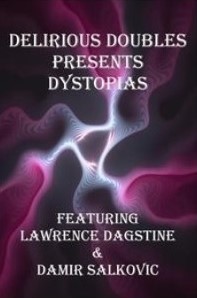
I have a new novella out this month from Nomadic Delirium Press, and edited by J. Alan Erwine. I’ll put links below, as there are a handful of places you can purchase this from. I’m also featured in the chapbook alongside fellow spec-fic author, Damir Salkovic. I’ve shared TOCs with Damir in the past, but this time we are both sharing what’s called a “Delirious Double.” So what exactly is a Delirious Double? Well, how many of you sci-fi readers out there are old enough to remember the Ace Double Paperbacks of the 1960s? Those old pulps were the bomb! You can actually still find them in used bookstores. But back in those days, you would get a small paperback featuring not one but two science fiction writers. A novelette or novella would be on each side of the book; turn it over, and another novelette or novella would be on the other side. Two lengthy tales for the price of one! That’s what Nomadic Delirium Press is doing here, they are emulating the Ace Doubles of yesteryear. And this time around the theme is dystopias/dystopian fiction. My novella is called “GeneApart,” and runs close to 22,000 words in length; Damir has his own novelette on the other side. What happens when you take interplanetary apartheid, cloning as slavery, genetic engineering gone terribly wrong, and throw human meddling and corporate influence into the mix? You get my dystopia, Gene Apart. If you’re into movies like District 9 or Gattaca (and yes, television shows like Orphan Black), this one may be up your alley. And remember, not just me. Damir too! Two stories for the price of one!
Nomadic Delirium Press presents…
Delirious Doubles (theme: dystopias) – Edited by J. Alan Erwine
Featuring brand new Dagstine novella:“Gene Apart”
Also featuring Damir Salkovic’s tale:“Seniority”
Get it now in EBOOK format for a variety of ereaders/various platforms
Including: Apple Books, Barnes & Noble Nook, Kobo, Vivlio, and Fable
ORDER AND DOWNLOAD HERE – (click preferred ereader, be redirected):
SYNOPSIS of Lawrence Dagstine & Damir Salkovic’s tales:
Everyone should fear civilization slipping into a dystopia, but this has always been a very real possibility, and over the decades, science fiction has examined a number of possible dystopias. Now, Nomadic Delirium Press has put out a call for stories about dystopias, and we now present you with the two best stories that we received.
In Lawrence Dagstine’s “Gene Apart,” Danjarr is a buster, a clone, but most importantly, he is seen as inferior to the Authentics. Danjarr does everything he can to get ahead in his world, but he is always faced with the so-called inferiority of the busters, and the prejudice that accompanies that inferiority. Desperate to prove himself equal to the Authentics, Danjarr knows that he will do anything he has to to get ahead, but what happens when those choices have consequences…possibly devastating consequences.
In Damir Salkovic’s “Seniority,” Brian is desperate to get ahead in his company. Every day, Brian sees society decaying and falling apart around him, but he knows that all he needs to do is get ahead in his company, and he can save himself and his family from the deteriorating world around him. But what happens when the fall of society catches up with you, and even your position in a powerful company might not be enough to save you.
Other New Entries:“Digital Credits” and “Books & Anthos”
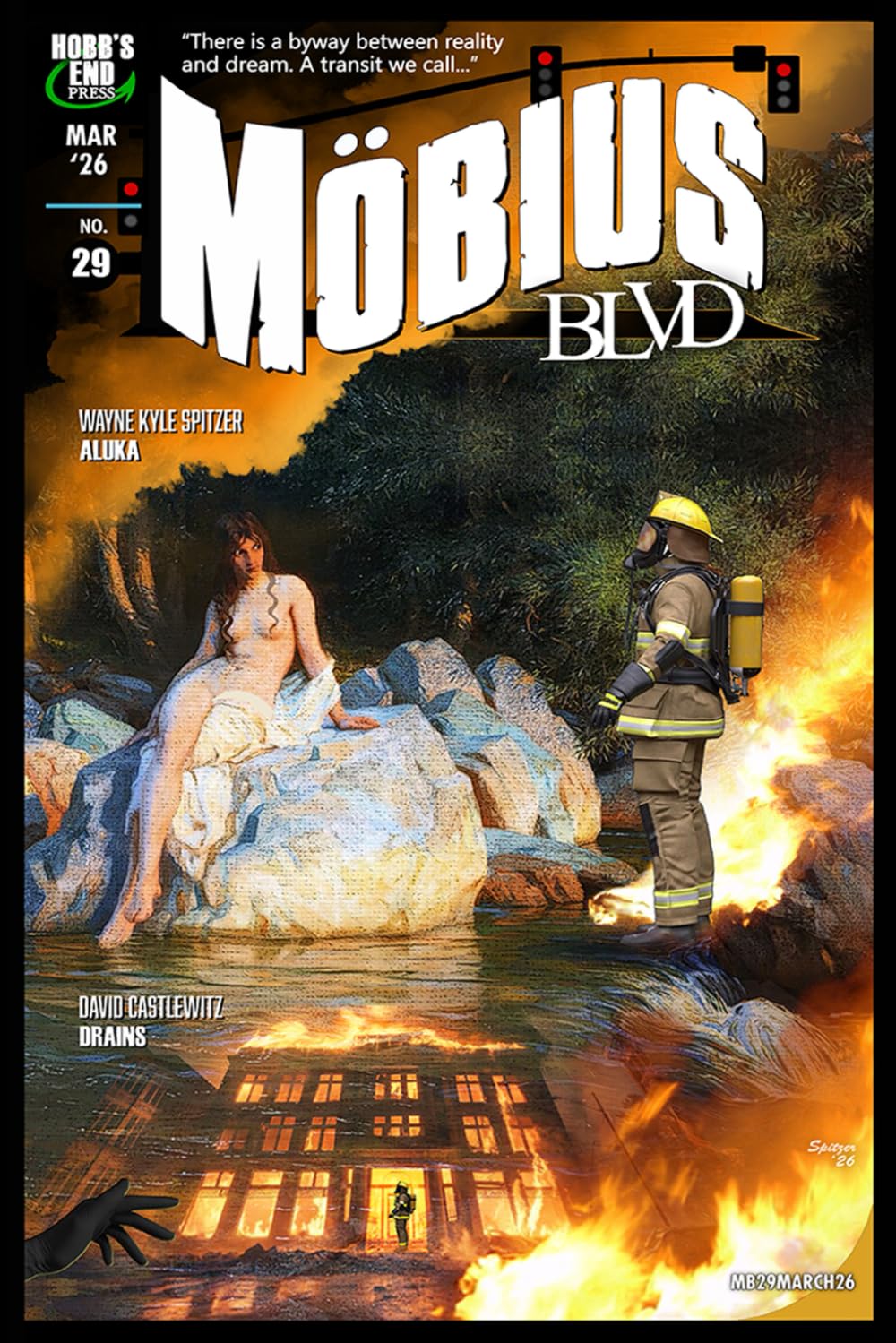
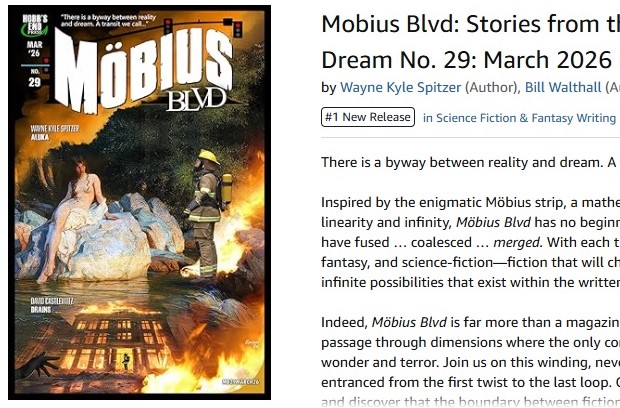
I’m pleased to announce I’m back at Hobb’s End Press for March 2026, and in Mobius Blvd Pulp Genre Magazine for a third time. This next story is one I wrote a couple of years back, almost borders on novelette length, and it’s a time-traveling western. Been a while since I’ve penned something set in the Wild Wild West (I think the last piece I wrote was The Show Must Go On). However, I am working on a new one as we speak, this one set on an Indian reservation. This particular tale, entitled The Missouri Man, is about a lawyer who finds a hole in back of his Westinghouse refrigerator. And that hole is a time tunnel. It leads back to the 1880s where this lawyer (a D. A., no less) must rescue a certain damsel in distress otherwise risk implications in the future. The magazine cover art and editorial was done by Wayne Kyle Spitzer. And it’s only $9.99 for the print, $3.99 for the Kindle version. The best of both worlds. Check out The Missouri Man in the latest issue of Mobius Blvd. I’ll leave a whole bunch of info down below; it also shot to Number One in the Amazon Sales Rankings overnight (scroll to the bottom).
Hobb’s End Press Magazines presents…
Mobius Blvd, Issue #29, March 2026 – Edited by Wayne Kyle Spitzer
Featuring New Dagstine Story:“The Missouri Man”
AUTHOR LINEUP FOR MARCH 2026/ALSO SAMPLE ON AMAZON:
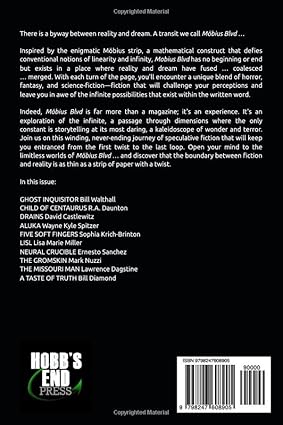
In this issue:
GHOST INQUISITOR Bill Walthall
CHILD OF CENTAURUS R.A. Daunton
DRAINS David Castlewitz
ALUKA Wayne Kyle Spitzer
FIVE SOFT FINGERS Sophia Krich-Brinton
LISL Lisa Marie Miller
NEURAL CRUCIBLE Ernesto Sanchez
THE GROMSKIN Mark Nuzzi
THE MISSOURI MAN Lawrence Dagstine
A TASTE OF TRUTH Bill Diamond
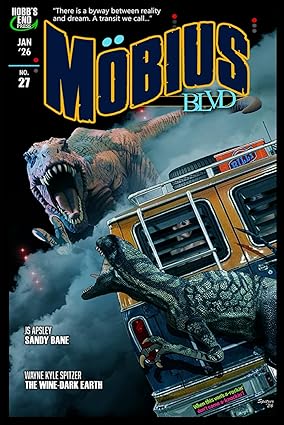
Would you like some past issues of Mobius Blvd? See some sci-fi and pulp from previous editions I wrote? Then I recommend heading on over to Amazon, and checking out issues #19 and #27. Because I have tales in those as well.
PAST ISSUES OF MOBIUS BLVD FEATURING LAWRENCE DAGSTINE
DARK HORSES MAGAZINE / HOBB’S END PRESS PERIODICALS:
Edited to Add: I’m pleased to announce that, right after its debut, the March 2026 issue of Mobius Blvd is Number One in science fiction & fantasy writing. Thank you to all who purchased an issue.
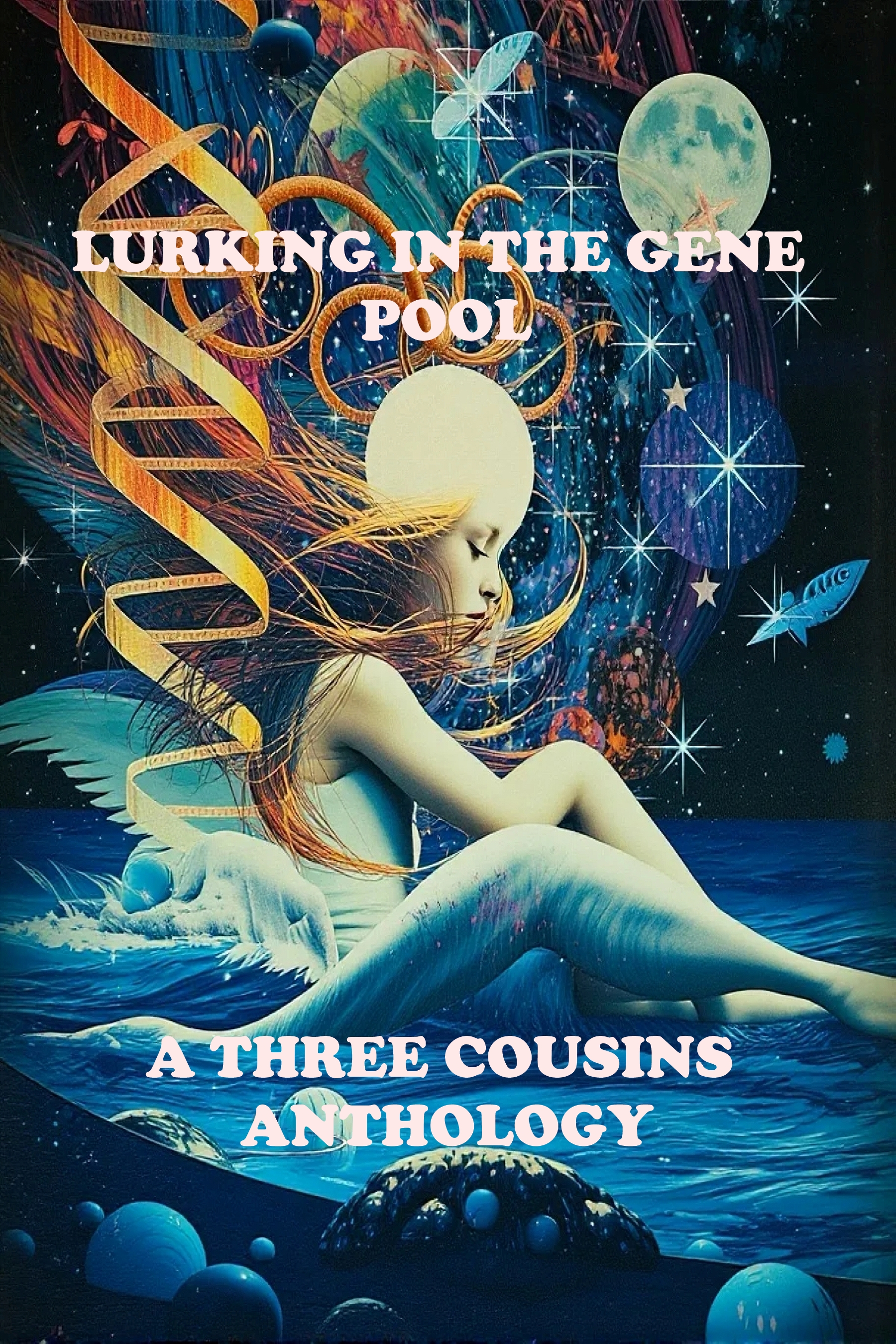
Pleased to announce I have a 4000-word story in this year’s West Mesa Press anthology (inconjunction with Three Cousins Publishing),Lurking in the Gene Pool. This one is just in time for Halloween, and the theme for this year is “supernatural family members” — something I’m good at writing over the years — or anything in relation to such family members. Hence, the title. Lurking in the Gene Pool (genetically). I’m not sure, but there might even be an Audible audiobook and a hardcover coming from Amazon down the road. So it will be available in all presentations, all formats. My story is brand new and a “different” kind of lycanthropy tale. It take place with a backwards family and a visiting grandfather down in Appalachian country. So yes, technically, it’s Appalachian Horror. I’ll leave all pics and ordering info down below. Check out my tale: “Looking for Meteorites.”
Lurking in the Gene Pool Anthology – Edited by Robert Lupton
Published by West Mesa Press(Three Cousins Publishing)
Featuring new Dagstine story:“Looking for Meteorites”
***Available in EBook and Print Paperback formats***
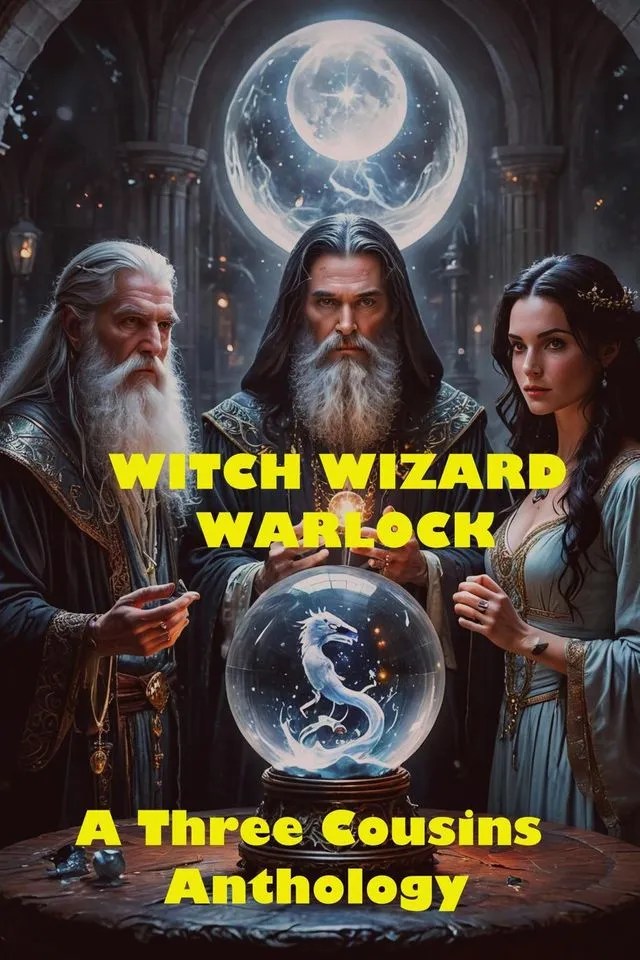
Here are some other West Mesa Press titles (once again, in conjunction with Three Cousins Publishing), I appeared in a few years back. Witch Wizard Warlock features my story “Family Ties.” A witch’s tale. And it’s available at the usual online booksellers: Apple Books, Vivlio, Kobo, Barnes & Nobles, etc.
Other New Entries:“Books & Anthos” and “Digital Credits”
Happy September to you all. Autumn is just around the corner, and this is where I start getting a lot of short fiction acceptances and stuff published. Always September through December. And for this website post, I am currently appearing with a reprint in the Substack publication: “Androids and Dragons: A Journal of and about Speculative Fiction.” It has hundreds of followers, hundred of readers. It’s a token-paying market. There’s a lot of these Substack newsletter publications (in the form of modern webzines), popping up these days. In the old days, when I first started getting published, a lot of webzines were hosted by Lycos or Geocities. Or they depended on programs like Dreamweaver and Flash, to look stylish for the time period. It seems Substack is becoming a major platform to build your fiction-reading audience. Stories can be emailed to subscribers, direct to their inbox. You can read a short story anywhere, not just home computer but on your phone on the go. And it pops up really quick on search engines, because the one thing Substack has going for it is many a search engine algorithm. The editor is Jenna Hanan Moore. I’ll leave any links down below, direct or otherwise. And the name of my reprint is: “Past and Present Company Excepted.”
Androids and Dragons: A Journal of and about Speculative Fiction
Substack Publication – Edited by Jenna Hanan Moore
Featuring Dagstine reprint: “Past and Present Company Excepted.”
Photo credit: Caras Jr. on Unsplash, 2025.
The September Edition Opening Page – (click link, be redirected):
And speaking of Substack publications or newsletters, I’ve updated my own personal one recently. But only with a quickie. You can find a link to that right below…
For my next anthology appearance it’s a flash fiction piece. A cyberpunk vampire tale. Something I’ve never done before, melding the two tropes. And it comes to Wicked Shadow Press’s latest offering, which has become somewhat of an annual thing (perhaps even celebratory): ‘Flash of the Dead – Reloaded!‘ I’ve been in about three or four of these Flash of the Dead-themed horror books the past four years. The tales are not half that bad. Wicked Shadow Press produces very beautiful books, books that have actually assisted me in nabbing other writing-related opportunities I wouldn’t normally get at my age (freelance stuff, non-genre related). People in India read them. Yes, India loves their horror just like we do here in the States. Flash fiction are bite-sized stories. They usually run between 500 to 1500 words in length, and they are considered quick reads. You can digest them in the time it takes you to get from one location to the next, say, on your daily commute to work. Anyway, without further ado, my 1400-word cyberpunk vampire tale: “The Lurker Code.”
Flash of the Dead RELOADED! – published by Wicked Shadow Press
Edited by Parth Sarathi Chakraborty
Featuring Dagstine flash piece:“The Lurker Code”
Where to order Flash of the Dead Reloaded (click links, be redirected):
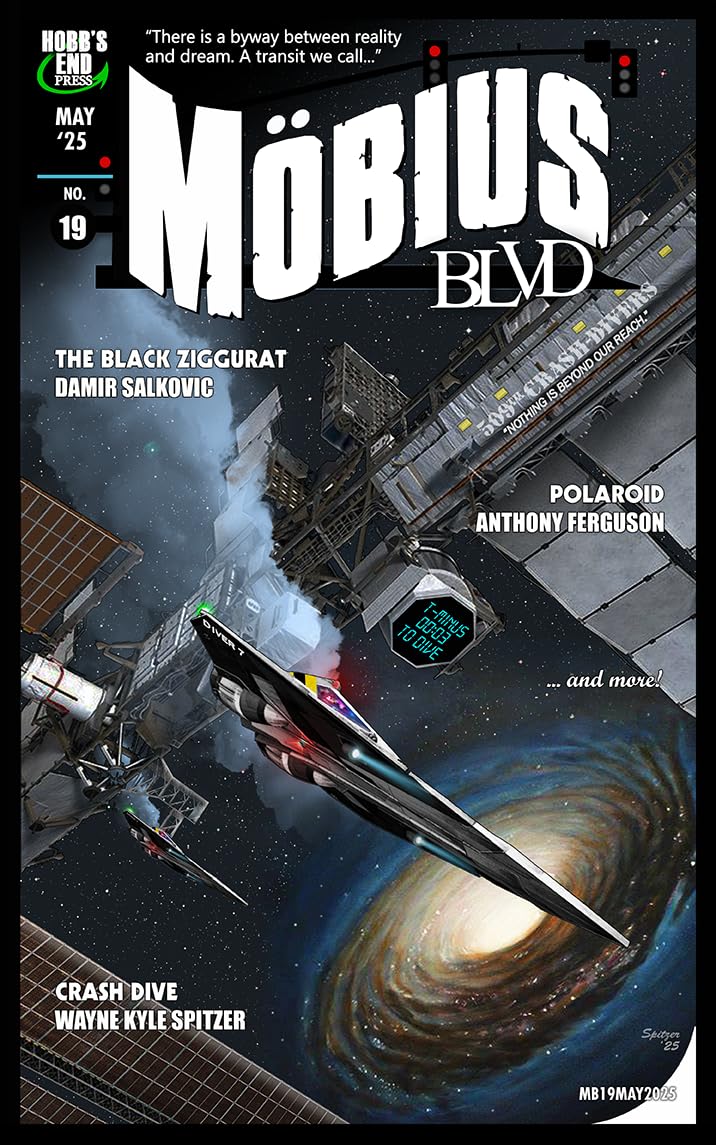
Pleased to announce I have a scifi tale in the current issue of Hobb’s End Press’s genre magazine, MobiusBlvd. They put out a couple of these science fiction, fantasy, horror publications. Other magazines include Black Sheep and Dark Horses, and it’s edited by Wayne Kyle Spitzer, who I also believe is an artist. I can be found in the May 2025 edition. Mobius Blvd #No. 19. I’ll copy-paste all info from Amazon, put it down below. Such as cover pics, ordering links, stuff like that. And author lineup. If you like off-world tales about dinosaurs, be sure to check out my story: “Dinotopia.” There is a Kindle version and print version.
Mobius Blvd, May 2025 Issue – Hobb’s End Press
Edited and published by Dark Horses and Wayne Kyle Spitzer
Featuring Dagstine scifi tale:“Dinotopia”
MOBIUS BLVD MAY 2025 AUTHOR LINE-UP (in order):
QUINTESSENTIAL GRANDMA Olaf Baumann
MANDIBLE MUSICKE Ryan Lee
WE TEND THE STAIN J. Boyett
DINOTOPIA Lawrence Dagstine
CRASH DIVE Wayne Kyle Spitzer
POLAROID Anthony Ferguson
TENTACLE PENS Robert Pettus
THE BLACK ZIGGURAT Damir Salkovic
VANITY Marvin Reif
RULES MUST BE OBEYED Mary Jo Rabe
SAMPLE ON AMAZON (click below):
About Mobius Blvd:
There is a byway between reality and dream. A transit we call Möbius Blvd …
Inspired by the enigmatic Möbius strip, a mathematical construct that defies conventional notions of linearity and infinity, Möbius Blvd has no beginning or end but exists in a place where reality and dream have fused … coalesced … merged. With each turn of the page, you’ll encounter a unique blend of horror, fantasy, and science-fiction—fiction that will challenge your perceptions and leave you in awe of the infinite possibilities that exist within the written word.
Indeed, Möbius Blvd is far more than a magazine; it’s an experience. It’s an exploration of the infinite, a passage through dimensions where the only constant is storytelling at its most daring, a kaleidoscope of wonder and terror. Join us on this winding, never-ending journey of speculative fiction that will keep you entranced from the first twist to the last loop. Open your mind to the limitless worlds of Möbius Blvd … and discover that the boundary between fiction and reality is as thin as a strip of paper with a twist.
For my next speculative piece it’s another new one, and we’re going into an anthology themed around a very controversial subject. And that’s genocide and The Holocaust. I was inspired to write this story after reading Elie Wiesel’s epic biography, Night. My story is dark science fiction meets horror meets alternate history. It features Adolf Hitler. And robots. These robots are known as The War Machines. Hitler and the robots are main characters in this dramatic tale. Because of the subject matter, a lot of editors didn’t want to read or take a chance on this piece (probably one of my most powerful in a long time; I have another powerful story written in the second person slated for later this year). The name of my story is: “Christmas along the Danube.” It is indeed a holiday story, it is a trigger warning story, there is death, and you can find it right now in the Culture Cult Press anthology, Genocidal. Every piece in Genocidal features some form of subject matter on genocide or the Holocaust. It might be poems, it might be essays or non-fiction, firsthand accounts, or in my case, dark science fiction. Though I suspect any firsthand stuff would have been passed down through the ages. Still, go check out my story, along with the other authors’ contributions. Ordering links will be further down below.
#GENOCIDAL – Published by Culture Cult Press
Featuring Dagstine story:“Christmas along the Danube”
Where to order your copy (click links, be redirected):
Also check out my latest chapbook from Farthest Star Publishing,
SMALL FAVORS by Lawrence Dagstine
I would say if you want to get introduced to my more extreme forms of horror writing in 2025, and you’ve never read a Lawrence Dagstine piece before, then you want to start here: Small Favors, then follow up with Christmas along the Danube in Genocidal, and later this year (say, October) Inherited in the book, No Exit. Those three pieces. Trigger warning for each one.
My next story is yet another new one, and this time to a themed Wicked Shadow Press anthology again. The name of the anthology, part of a two-book series, is “Who Let the Gods Out?!” – Divine Wrath. I’m in Divine Wrath (that volume), keep that in mind. I’m sure there was no pun intended when naming these (**wink wink**), and while the books are primarily horror-focused, my story falls more under the umbrella of dark science fiction. The main protagonist is a Russian fisherman who has always had his eyes set on the stars, as far back as the fall of the Soviet Union and KGB. He’s in search of an alien probe with godly technology inside of it, but so is a very rich entrepreneur. This tycoon wants the quantum computing tech the aliens are traveling with, but at what price? What will he become once he gets his hands on it? Find out in: “Transcendence.”
WHO LET THE GODS OUT?! Anthology – Divine Wrath
Published by Wicked Shadow Press/Edited by Parth Sarathi Chakraborty
My next story is also a newbie. And while the anthology it is being featured in is holiday oriented (one of Christmas-themed horror)… My short story could best be described as dark, dystopic science fiction. It is a tale of warning. With DeepSeek and humanoid robots a reality, the future if we are not careful. A tale of man versus machine. A tale of one prisoner explaining Christmas and yuletide blessings to his captor. A tale of human versus AI. Or, just perhaps, if we are not careful, what AGI might become. There are a lot of great holiday stories in this book. The layout and presentation from Wicked Shadow Press is nothing short of excellent, and these books are hot in India. Prepare yourself for my brand new story of what generative AI might evolve into in a few decades: “For my Enemy on Christmas.” Ordering details at the bottom.
Merry Creepsmas – The Green Book(Xmas themed Horror)
Published by Wicked Shadow Press – Edited by Parth Sarathi Chakraborty
Featuring new Dagstine story:“For my Enemy on Christmas”
ORDER BOTH VOLUMES (I’m in the Green Book/Edition):
THE GREEN BOOK (availability in USA – click below):
I’m pleased to announce that I’m back in one of the San Antonio SF & Fantasy Authors’ association’s print anthologies. Last time it was a book on science fiction and fantasy poetry. This time, it’s an anthology of brand new and exclusive short stories, and edited by C.M. Bratton again. The name of the book (now up on Amazon, and I will provide links and a TOC below): Quaternary Realms Volume #2. My piece could best be described as a tale of somewhat forbidden dinosaur science on a distant Jurassic world. It delves into the realm of “Cretaceous-style hunting and cloning” for sport, and the responsibilities of a veterinarian who has to coexist with giant reptiles. Read my new science fiction tale now: “Dinotopia.”
QUATERNARY REALMS ANTHOLOGY: Volume 2 – Edited by C.M. Bratton
Published/put out by The San Antonio SF & Fantasy Author’s Association
Featuring Lawrence Dagstine story: “Dinotopia”
Available on Amazon in paperback. Also available on the convention circuit.
Click and sample below:
AUTHOR LINE-UP:
Science Fiction & Fantasy story titles:
Other New Entries:“Books & Anthos”
Other New Stuff in Addition:“Lawrence Dagstine Newsletter”
2024 will arguably go down as my best year in writing and submitting; 2023 wasn’t so bad either (The Nightmare Cycle was published and I got an advance for it). I wrote a record sixty-five short stories between November 2023 and December 2024—all new. During that time, I also received the most book, anthology, and magazine acceptances (some yet to be released) for a single calendar year, surpassing my previous record year of 2008. I received acceptances from a variety of markets—mainly genre, as that is my specialty—in science fiction, fantasy, horror, and even humor. These markets ranged from pro-identifying to token, including small press and micro press. I also appeared in two anthology-magazines that went to number one on Amazon; another Kindle Anthology broke the Top 100 in World Literature, and a handful of my other offerings made it into the Top 100 or Top 500 sales rank-wise. That’s never happened to me before. Additionally, I have a couple of new books out right now (see right-hand column, scroll down).
My rejection ratio was fifteen turn-downs for every acceptance, if you’re curious about the odds. Yes, where there are acceptances, there are rejections. It comes with the territory. But I’m not here to toot my horn. This was a personal goal I wanted to achieve, and I did. I wanted to see if I still possessed that 2000s-era magic.
At fifty years old, you stop measuring press levels—Pro, Semi-Pro, Hobby, Indie—and accept whatever comes your way, especially if it’s available physically (paperback or hardback), and you know how to hustle and sell it. Believe it or not, most of my readers are not from the United States. Many Americans are too dependent on technology, staring at their smartphones all day, or engaging in activities that don’t involve literature. If they do read, it’s usually the “obligatory” twelve books per year—one per month. I’m guilty of this myself. I used to read a hundred books per year, but as you get older, there are only so many hours in a day. Most of my readers hail from places like India, Japan, and, oddly enough, Belgium. Earlier this year, readers from India wrote to tell me how much they liked my horror stories. I appreciate that; I’ve never received such feedback from US readers. Obviously, I was flattered. I joined two writing groups in Manhattan, got the necessary certifications, and became a writing teacher, which is relatively easy in New York State compared to other places.
As we get older, we often become adjunct professors, tutors, instructors, substitute or assistant teachers. We take up residencies, shepherd online MFA programs, hold online and in-person workshops, and add experience to our curriculum vitae. The revenue from these workshops helps fill our fridges. We may teach English as a second language if we move overseas or teach the short story form, novel writing, story analysis, and linguistics. We show younger writers our techniques and formulas, paving the way for them and enlightening them on how we did it. We pass our knowledge to the next generation of aspiring writers. We take on protégés. Other jobs we take on include writing advertising copy, technical writing/business writing, expository essay writing, things like that.
I can’t believe I’ve been doing this for thirty years. Sometimes I wonder if I wasted my life. Should I have pursued another field? Should I have become a full-time artist and taken up comic illustration, which was my passion in the early ‘90s? Despite my love for science fiction, I would have preferred seeing the art through. I lost my love for drawing in late 1994 and turned to writing instead. Applying for art jobs thirty years ago, where prospective employers said comic art and graffiti art weren’t “real art” didn’t help. So I ended up in writing. I appeared in a couple of magazines, made some cash, and bought nice things. Picking up every genre magazine I could get a hold of in Borders and meeting Kurt Vonnegut regularly while working as a delivery boy for a pharmacy further fueled my enthusiasm.
Author Mercedes Lackey once noted that 90% of the writers in the SFWA (Science Fiction Writers Association) have had or currently hold full-time jobs. The rest have spouses who work full-time, serving as the breadwinners, covering the overhead, and providing health insurance for the family. Alternatively, the full-time writer might be retired and living on a pension or 401K. I could join the SFWA tomorrow. But at my age? For what? Bragging rights? I’m ready for the grave. This isn’t to say I won’t produce an anthology in the future. I’m full of ideas, and I won’t accept anything less than outstanding. But hey, I’m old. Many of the books with my stories are published by presses that might not exist in five or ten years. Presses come and go; the same can be said about good books. Publications go on lengthy hiatuses. Economies rise and fall. Inflation affects spending habits. People’s reading preferences change. Advertising techniques and technology evolve. Not only that, over 10,000 books are self-published per day, so there’s no such thing as professional competition anymore. It’s a too-open field. Also, generational shifts happen, and what was popular with one generation might not be with the next. How many people do you know in 2025 who have a profound love for Philip K. Dick, Isaac Asimov, and John Brunner like I do?
I’m very much a socialite. I often go into the city, visit upscale places, penthouses, private parties, and get the VIP treatment. I network and get my books into these places. You have to network in this day and age. Word of mouth is still a very powerful tool, and you want to get non-genre readers interested in reading genre. When I sit down with a glass of wine and talk to affluent or corporate types about horror, they say, “Oh, Stephen King!” And that’s it. They don’t know anybody else. They think Stephen King is the only author there is when it comes to horror. I say, “You haven’t read the work of Paul Tremblay, Stephen Graham Jones, or Josh Malerman?” They give me a daft look. Who? What? They don’t even know that Stephen King has two sons who also write (Owen and Joe). They think Stephen King never had children. But we know. Because writers read each other. We are aware of each other. And it’s kind of depressing in a way. It’s like we’re trapped inside this shrinking genre bubble, and you’re not sure if it’s going to burst or when it’s going to burst. It’s disintegrating, for sure, it’s just a matter of when. You hope it pays your utilities for as long as it can, at least until you take up a teaching position or land an agent. Only 15% of writers ever land an agent and break into the Big Five. And that number shrinks with age. Some are luckier than others; your mileage may vary. What happens for most, whether traditionally published or indie-published, is we end up at genre conventions, gaming cons, comic cons, indie bookstores, or local fairs and fests, and our literature is available at vendor tables.
Nowadays, many people publish each other in a quid pro quo fashion (tit-for-tat), which is fine, but simply reading each other’s work isn’t sustainable in the long term. It seems we’re just passing time until we reach the end. If we’ve chosen writing as our forte, we must have a lot of time to spare. Some of the biggest names, award-nominated genre writers, are suddenly submitting to semi-pro and token markets. This used to be a no-no. Yesterday’s professional paying magazines now depend on Patreons or annual crowdfunding just to survive. And then there’s Artificial Intelligence, which will inevitably replace us in the next 20 years. I’ve seen some of these young tech kids at conferences, and what they can do with Python and Stable Diffusion; they’re smart.
Publishing was a very different animal in the first ten years of the Internet. You could actually make an income from freelancing regularly, and web content was big! Webzines were especially big. They were new, they paid fair money, and there wasn’t much of an editorial filter, but you got your byline and content out to the world. A handful of these sites were built with Dreamweaver, Frontpage (Microsoft), or typical HTML coding. Some were even hosted by GeoCities. Plus, the cost of living was cheaper back then (my rent was only $650 to $750 per month during this era, utilities included). You could stay home, take care of the kids, and have paper checks coming to your mailbox. This was still before the age of PayPal, Venmo, Zelle, and other electronic payment methods. So it was paper checks. If you were a freelancer of genre fiction and creative non-fiction, and you were a quick writer and productive, you got paid $20 to $50 per piece consistently! Sometimes more, sometimes less. One on top of the other. Some of the webzines that appeared in the first ten years of the Internet were Atomjack Magazine, Whispering Spirits, Midnight Times, Dawnsky, The Random Eye, Gotta Write Network Litmag, and hundreds of others! I appeared in many of these places, scouring market sites like Ralan and Spicy Green Iguana on a daily basis. The Boomers never went near these little zines, but I did. And I got my name out there. And I was paid. And I bought clothes. And I bought food. And I paid bills. At one point, I even had a $6000 bank account put aside for my infant son—from writing. There was a time when I had 200 different stories in a folder on a Windows XP laptop, and I would submit to any paying market, even those offering $5.00 compensation. Acceptance here, acceptance there. You do the math. You might find these webzines on the Wayback Machine, but if you’ve heard of the ones I just mentioned, you’re old and gray now, just like me.
To this day, I think the periodical I was paid the most for a single story or article was in either 1999 or 2000, and this was in a queer publication called GENRE Magazine. Or just Genre. And it had nothing to do with genre. They didn’t even publish science fiction. That was just the name. It was primarily a New York-based gay lifestyle magazine with a modest circulation for its time period. It was distributed to LGBTQ-identifying establishments before LGBTQ was even a term. Before ebooks, before Amazon, when physical publications still had modest circulations. When people still relied on the Writer’s Market. I was paid $750 for two, maybe three hours worth of work. The editor said he would take care of the grammatical errors. I kept my mouth shut, let him handle it. Nowadays, twenty-five years later, that same $750 is your paycheck for a horror novel to a rising indie press.
Still, I’m thankful I didn’t become a full-timer in this day and age. I own nice things. Call me materialistic, but I enjoy my little luxuries: designer clothes, nice electronics, video games. I can buy my family birthday and Christmas presents. I can wine and dine on occasion. Some writers who went all-in don’t have that luxury. Imagine not having health insurance, unable to run to an emergency room or urgent care. A vast majority of writers don’t have insurance. Sure, some scored two or three-book deals with the big houses, only to not sell to expectations and never be heard from again. So when people ask me what advice I would give an aspiring writer in 2025, I say, “Don’t quit your day job. Do this strictly for passive income. Do this because you love it. For the sake of art. Do this because you like to tell stories. And read!”
Listen, H.P. Lovecraft died extremely poor. He couldn’t afford treatment for his small intestine cancer, compounded by his fear of doctors. So, he wrote and lived in daily pain—not a pot to piss in. Some of his finest works weren’t noticed until decades later. John Wyndham, a prominent British science fiction writer, was often overlooked in his lifetime. He didn’t receive the recognition he deserved, even as the author of “The Day of the Triffids.” It’s only now, in the 21st century, that his shorter works are being sought out and reprinted. John Brunner, author of mega-hits like “Stand on Zanzibar” and “The Crucible of Time,” feared failure. He wrote under a pen name in his later years and worked as an underpaid proofreader. But regardless of success, they were storytellers. And there’s nothing wrong with being a storyteller. If you get paid for it, that’s like the cherry on top of a hot fudge sundae.
Looking back, I’d say I’m privileged. I’m not a New York Times or USA Today Bestseller by any means. I see myself as a semi-pro of the short form, one of those one-to-three cent jobbers. Apparently, I’m a jobber who makes it into the TOP 100 often; I probably would’ve really crushed it during John W. Campbell’s era. Many writers don’t get to do this for three decades, non-stop. Today, many people self-publish books that are mediocre at best, invest in Amazon Ads, and suddenly they call themselves bestselling authors. They don’t know what it’s like to have spent time in the trenches. Otherwise, a handful of the younger kids coming up don’t know how to read, write, spell their names, or pick up a book after high school. I definitely didn’t think I’d become a teacher. Like I said, I feel privileged. I came to this earth and got to do it. And I’ll try to continue doing it for as long as I have the desire.
This is Lawrence Dagstine, prolific writer for the past thirty years.
Storyteller. Jobber. Future anthologist? I could live with that.
Edited to Add: This essay, which I write from firsthand experience, will be reprinted in a newsletter, currently under development. Stay tuned for news of that.
I have a reprint (appeared in DASH Literary Journal about two years ago), that matches the theme of the following anthology. Chaotic or haphazard stories about New Years, and similar celebratory fiction fare to go along with the once-a-year holiday. And what better way to ring in 2025 than with Alien Buddha Press (the publisher), and sharing a table of contents with the likes of NJ Gallegos, Dawn DeBraal, April Ridge, and Bram Stoker-nominee James Dorr. My New Years-themed story has elements of speculative fiction, steampunk, and magic realism in it. Oh, and angel doctors! It’s called Before Measured Time. It takes place right before midnight on December 31st 1899, and the 20th century and universe is at stake! Check out Alien Buddha’s Chaos Countdowns Anthology now on Amazon. Pictures and info down below. Most of all, Happy New Years!
Alien Buddha’s New Years Chaos Countdowns Anthology
Published by Alien Buddha Press
Featuring Lawrence Dagstine reprint:“Before Measured Time”
Available in paperback on Amazon (click preview box below):
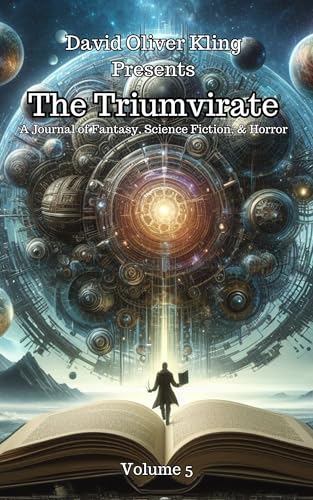
Fellow genre readers. I have a brand new story of despair and hardship set after the troubling events of the War in Iraq in the latest, book-sized edition of David Oliver Kling’s speculative fiction journal, The Triumvirate. Volume Five. The Triumvirate features tales of science fiction, fantasy, horror, even the occasional essay. It is available for your Amazon Kindle (digitally), or as a paperback in the $10.00 range. It is one part anthology-magazine, one part journal (but I consider it more a beefy digest). This is Mr. Kling’s labor of love, which I highly recommend if you are enthusiastic about old school genre. Kling started the magazine back in 1985 at the tender age of fifteen. Links and cover picture below (and in side column). This is my second appearance with The Triumvirate, and the name of my story this time around is: “Afterthe Soldiers go Home.”
THE TRIUMVIRATE Volume #5 – Journal of Fantasy, Science Fiction, and Horror
Edited and compiled by David Oliver Kling
Featuring Lawrence Dagstine story: “After the Soldiers go Home”
TABLE OF CONTENTS/STORIES & AUTHORS FEATURED:
In “Earth-697,” Mark Mackey introduces us once again to Ambrosial Decarva, the dragon slayer of Dystonia.
Lawrence Dagstine’s “After the Soldiers go Home” takes us to a post-war Iraq plagued by both disease and despair.
Nicholas Hurst’s “You Can Almost See The Shininess” provides a lighter, yet equally enticing, exploration of military life.
In “Back From the War: A 1920’s Vampire Tale,” Mark Mackey transports us to a post-Great War America where Bram Collinwood faces supernatural horrors upon returning home.
Paul O’Neill’s “Mister Sleep” brings terror to the quiet town of Balekerin, where a sleepover turns into a nightmare.
Robert Henry’s “Fall into the Sky” takes us on a mythic journey with Ragnar, a father desperate to save his son.
Larry Johnson’s “The Under People” follows Lew Brown’s unsettling encounters with mysterious workers.
In “Amen” by Ed Perratore, high school senior Walter’s Halloween prank leads to a grim fate.
Finally, in David Oliver Kling’s essay, “What Dreams May Come: A Pastoral Care Perspective,” he provides a thoughtful analysis of the 1998 film “What Dreams May Come.”
Amazon Purchase Link (or sample below):
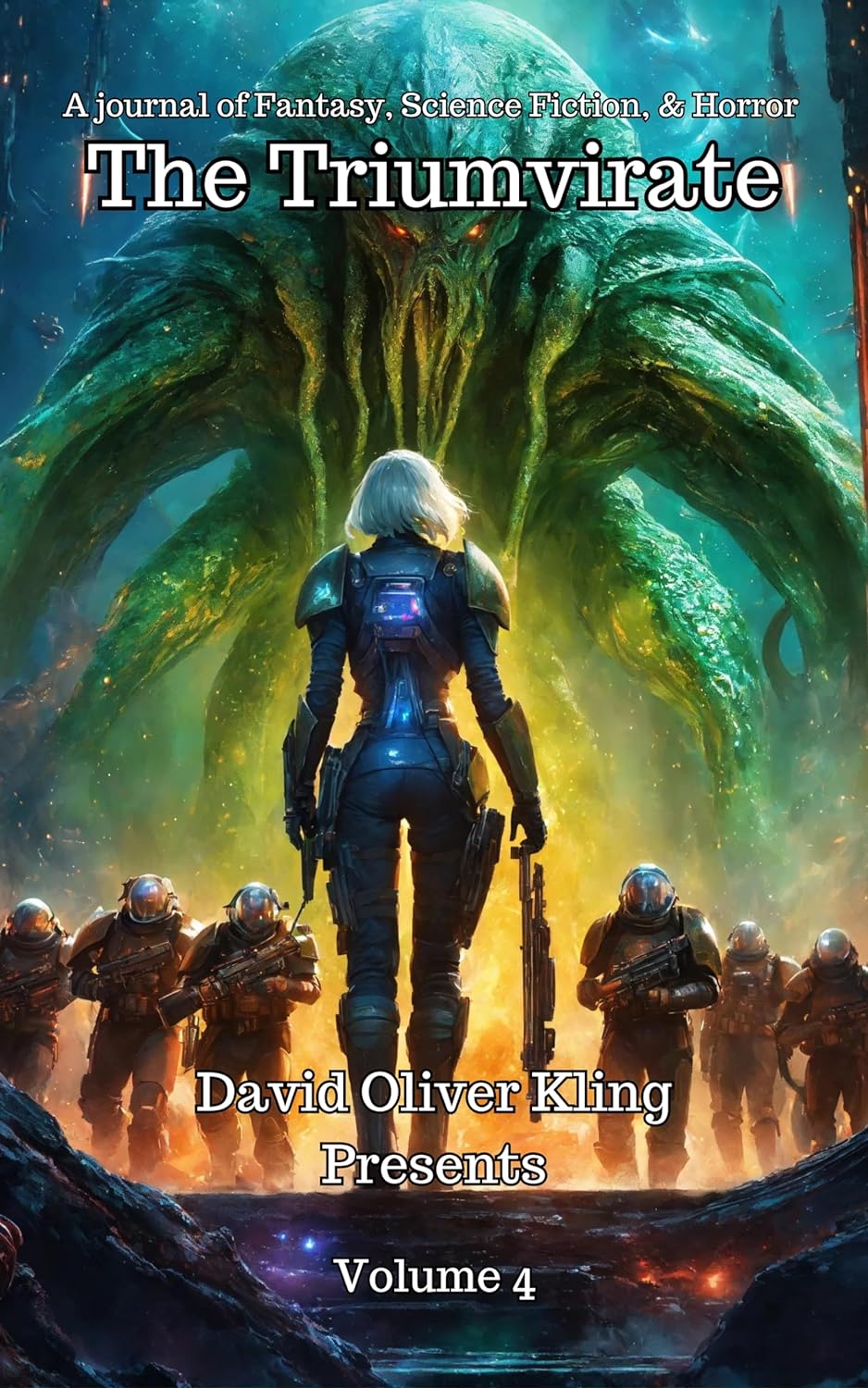
Also be sure to check out Volume #4. I’m in that edition too!
Pleased to announce that I have a Martian-themed short story in the current edition of Alien Dimensions, No. #26. “Mars Colonization, The Red Planet,“ and the 2030s and Beyond is the theme. It is all new, and it is available on Amazon Kindle and in a thick print paperback format (to my knowledge). This would be my third appearance with Alien Dimensions over the years. Last time I showed up was in the super successful No. #24. Alien Dimensions features interplanetary stories and space tales that harken back to an era when scifi was astounding and thought-provoking. My story could best be described as a 28-Days Later like tale about a contagion. But will the Martian doctors come to the rescue of the human race? Read my short story, ThePathogen in Alien Dimensions #26. Alien Dimensions could best be described as an Anthology-Magazine (the best of both worlds).
ALIEN DIMENSIONS No. #26 – Edited by Neil Hogan
Mars Colonization, Martian Theme – featuring Dagstine story The Pathogen
ALIEN DIMENSIONS HOMEPAGE (or click further below for Amazon):
Also check out Edition No. #24 (it’s big). I’ll put links and pictures off to the side, or the usual places.
Edited to add: I just wanted to give a big thank you to everybody who read and purchased the current edition of Alien Dimensions. We hit number one in New Releases for science fiction short stories.
New Entries:“Books & Anthos, Magazines, and Digital Credits.”
Wicked Shadow Press really outdid themselves this time in a two volume series of science fiction and miscellaneous speculative tales surrounding dark technology, deadly machines, artificial intelligence, and science that can enslave us or kill us. Easily one of my ten favorite anthology covers of all time. Both books in the series are edited by Parth Sarathi Chakraborty, and some of the proceeds from the sales of these books goes to help animals in Kolkata, India, where it is already getting a warm reception. My story is not about AI (which has been a heated and dystopic subject of late), but more or less a science fantasy which involves the dark tech surrounding “buildings” and “skyscrapers.” This is a tale about architecture of the future, of other worlds, buildings that graze the clouds, and the “dark architects” who control utopias and dystopias behind the scenes. Not everything is always rosy and picturesque, even in large metropolises filled with tall buildings. Read my tale, “Architects of Change” in Volume Two of Invasion. I’m in Volume Two, so don’t forget that; but I recommend both. It’s available on Amazon Kindle for only $2.99, or as a paperback on places like Lulu. All links will be below the cover pics, as usual. Cheers.
INVASION Volume 2 – THE DARK SIDE OF TECHNOLOGY
From Wicked Shadow Press
Now Available on Amazon Kindle for only $2.99
Also available in STUNNING Amazon paperback (for the shelf collector)
Featuring Dagstine story:“Architects of Change”
ALSO AVAILABLE ON LULU (and as a print paperback there as well):
Buy a Paperback copy of INVASION Vol. 01 from Lulu.com:






 Lawrence Dagstine: Author
You must be logged in to post a comment.