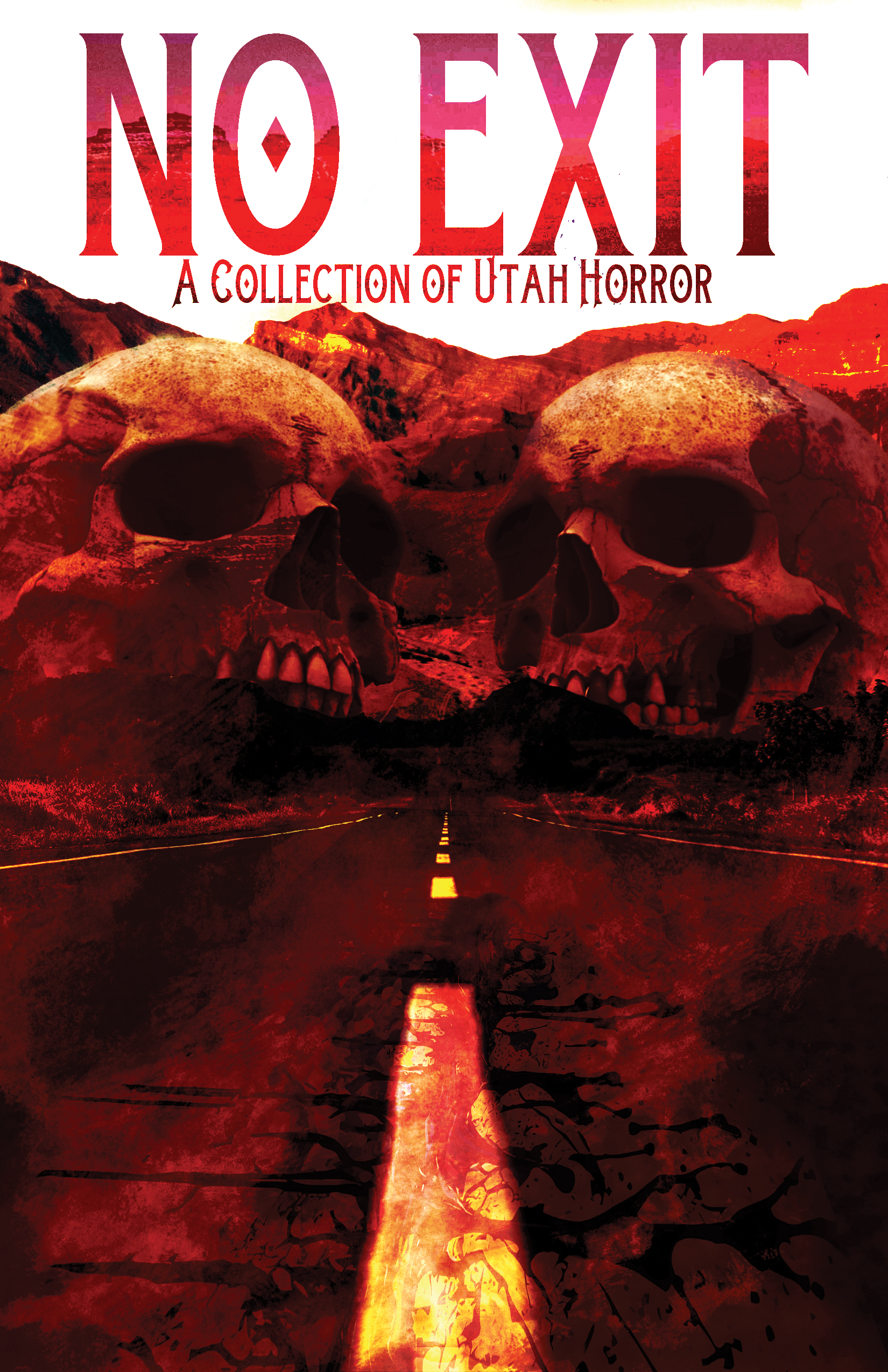
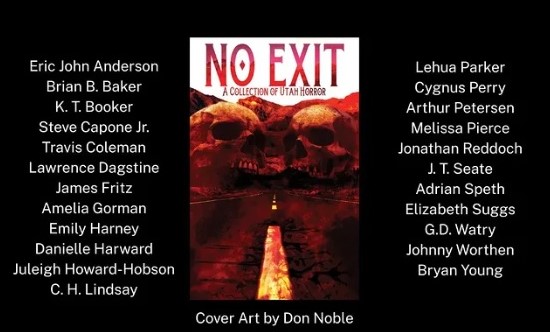
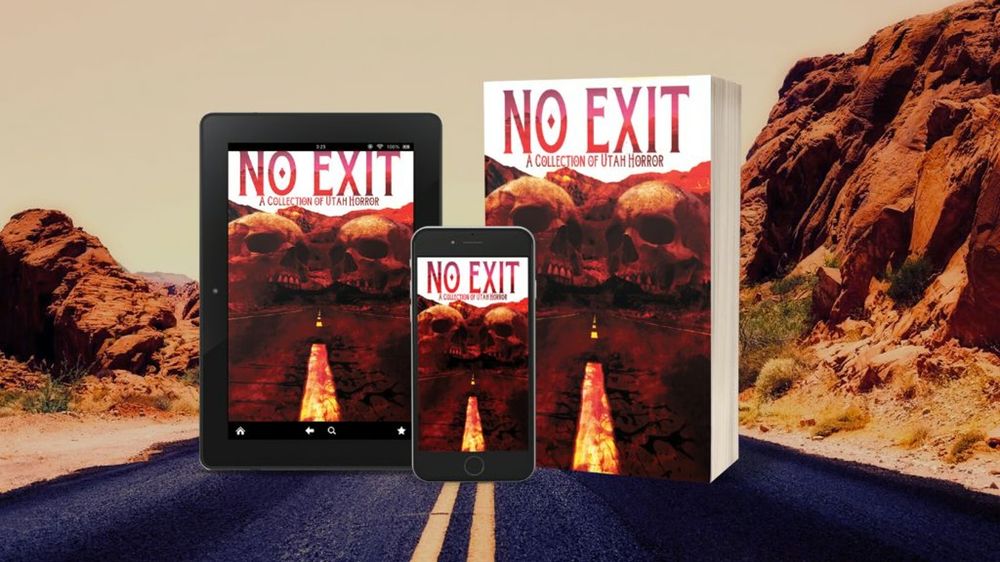
I’m thrilled to announce that I have a stunner of a horror story featured in the new regional-based anthology from Timber Ghost Press, NO EXIT – A Collection of Utah Horror. Every story in this hefty volume either takes place in Utah or is penned by Utah-based authors. The book is one of my top recommendations for 2025. Not just for the quality of the collection, but because it includes the first horror piece I’ve ever had accepted that’s written in second-person POV. I chose this narrative style deliberately, to put you—the reader—directly in the shoes of the protagonist: a cannibalistic girl who has inherited a horrific trait from her deceased father. I’d even go so far as to say this is one of the three best horror stories I’ve ever written—right up there with Thursday’s Children and The Paraplegic. The book promises to deliver endless nightmares and features a talented lineup of short story writers. Timber Ghost Press, though relatively new, is a publisher worth checking out. It’s run by the very talented C.R. Langille. The name of my creepy tale: “Inherited.” Pictures and links below.
NO EXIT – A Collection of Utah Horror
Published by Timber Ghost Press – Edited by C.R. Langille
Featuring new Dagstine story:“Inherited”
TABLE OF CONTENTS/FEATURE AUTHORS:
Timber Ghost Press Main Website – (all links, click, and be redirected):
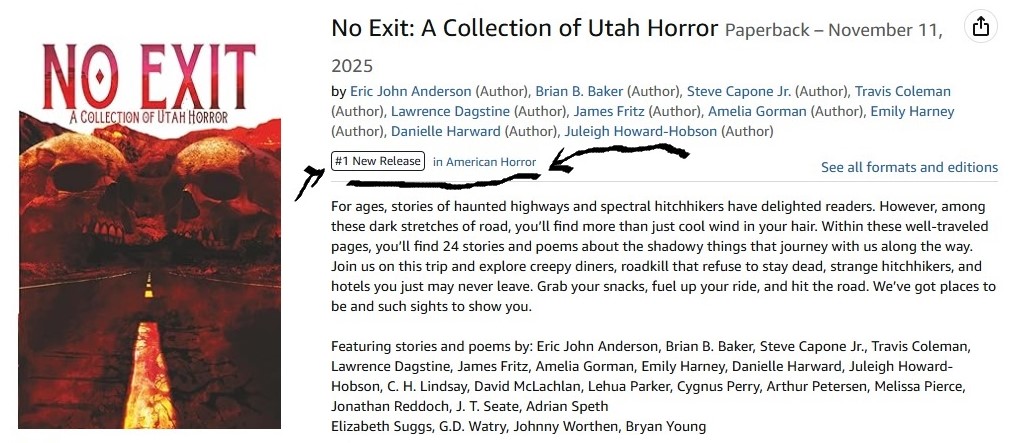
Edited to Add: I’m pleased to announce that NO EXIT (the paperback) has hit Number One in American Horror. Kudos to everybody who picked up a copy. Much love.
Other New Entries:“Books & Anthos” and “Digital Credits”
I have a novelette out in the recently released anthology from Critical Blast Publishing, Gods and Services NewLocation. I’m appearing beside 9 or 10 other authors, with stories on the subject of objects related to mythological gods or deities that you might acquire from a curiosity shop. They could be a good deity, or a bad deity. The presence of these gods could be related to statues, chandeliers, ancient artifacts, books. Hence the title and theme. Imagine walking into an antique dealer and finding an object for your home that once belonged to a god. The book is edited by R.J. Carter, and Critical Blast Publishing does a lot of these themed anthologies. They also do a lot of comics, graphic novels, and some illustrated genre fare and their products can be found at vendor tables at various conventions around the country. The name of my story is The Barn Cupid, and it’s about a possessed Cupid statue. It’s a horror-love story, obviously. It is available in paperback, on Amazon or Barnes & Nobles. I will provide all links and pics below.
GODS AND SERVICES NEW LOCATION
Published by Critical Blast Publishing – Edited by R.J. Carter
Featuring Dagstine story:“The Barn Cupid”
On Amazon (sample it, buy in print paperback):
Or buy it at Barnes & Nobles (click link, be redirected):
2024 will arguably go down as my best year in writing and submitting; 2023 wasn’t so bad either (The Nightmare Cycle was published and I got an advance for it). I wrote a record sixty-five short stories between November 2023 and December 2024—all new. During that time, I also received the most book, anthology, and magazine acceptances (some yet to be released) for a single calendar year, surpassing my previous record year of 2008. I received acceptances from a variety of markets—mainly genre, as that is my specialty—in science fiction, fantasy, horror, and even humor. These markets ranged from pro-identifying to token, including small press and micro press. I also appeared in two anthology-magazines that went to number one on Amazon; another Kindle Anthology broke the Top 100 in World Literature, and a handful of my other offerings made it into the Top 100 or Top 500 sales rank-wise. That’s never happened to me before. Additionally, I have a couple of new books out right now (see right-hand column, scroll down).
My rejection ratio was fifteen turn-downs for every acceptance, if you’re curious about the odds. Yes, where there are acceptances, there are rejections. It comes with the territory. But I’m not here to toot my horn. This was a personal goal I wanted to achieve, and I did. I wanted to see if I still possessed that 2000s-era magic.
At fifty years old, you stop measuring press levels—Pro, Semi-Pro, Hobby, Indie—and accept whatever comes your way, especially if it’s available physically (paperback or hardback), and you know how to hustle and sell it. Believe it or not, most of my readers are not from the United States. Many Americans are too dependent on technology, staring at their smartphones all day, or engaging in activities that don’t involve literature. If they do read, it’s usually the “obligatory” twelve books per year—one per month. I’m guilty of this myself. I used to read a hundred books per year, but as you get older, there are only so many hours in a day. Most of my readers hail from places like India, Japan, and, oddly enough, Belgium. Earlier this year, readers from India wrote to tell me how much they liked my horror stories. I appreciate that; I’ve never received such feedback from US readers. Obviously, I was flattered. I joined two writing groups in Manhattan, got the necessary certifications, and became a writing teacher, which is relatively easy in New York State compared to other places.
As we get older, we often become adjunct professors, tutors, instructors, substitute or assistant teachers. We take up residencies, shepherd online MFA programs, hold online and in-person workshops, and add experience to our curriculum vitae. The revenue from these workshops helps fill our fridges. We may teach English as a second language if we move overseas or teach the short story form, novel writing, story analysis, and linguistics. We show younger writers our techniques and formulas, paving the way for them and enlightening them on how we did it. We pass our knowledge to the next generation of aspiring writers. We take on protégés. Other jobs we take on include writing advertising copy, technical writing/business writing, expository essay writing, things like that.
I can’t believe I’ve been doing this for thirty years. Sometimes I wonder if I wasted my life. Should I have pursued another field? Should I have become a full-time artist and taken up comic illustration, which was my passion in the early ‘90s? Despite my love for science fiction, I would have preferred seeing the art through. I lost my love for drawing in late 1994 and turned to writing instead. Applying for art jobs thirty years ago, where prospective employers said comic art and graffiti art weren’t “real art” didn’t help. So I ended up in writing. I appeared in a couple of magazines, made some cash, and bought nice things. Picking up every genre magazine I could get a hold of in Borders and meeting Kurt Vonnegut regularly while working as a delivery boy for a pharmacy further fueled my enthusiasm.
Author Mercedes Lackey once noted that 90% of the writers in the SFWA (Science Fiction Writers Association) have had or currently hold full-time jobs. The rest have spouses who work full-time, serving as the breadwinners, covering the overhead, and providing health insurance for the family. Alternatively, the full-time writer might be retired and living on a pension or 401K. I could join the SFWA tomorrow. But at my age? For what? Bragging rights? I’m ready for the grave. This isn’t to say I won’t produce an anthology in the future. I’m full of ideas, and I won’t accept anything less than outstanding. But hey, I’m old. Many of the books with my stories are published by presses that might not exist in five or ten years. Presses come and go; the same can be said about good books. Publications go on lengthy hiatuses. Economies rise and fall. Inflation affects spending habits. People’s reading preferences change. Advertising techniques and technology evolve. Not only that, over 10,000 books are self-published per day, so there’s no such thing as professional competition anymore. It’s a too-open field. Also, generational shifts happen, and what was popular with one generation might not be with the next. How many people do you know in 2025 who have a profound love for Philip K. Dick, Isaac Asimov, and John Brunner like I do?
I’m very much a socialite. I often go into the city, visit upscale places, penthouses, private parties, and get the VIP treatment. I network and get my books into these places. You have to network in this day and age. Word of mouth is still a very powerful tool, and you want to get non-genre readers interested in reading genre. When I sit down with a glass of wine and talk to affluent or corporate types about horror, they say, “Oh, Stephen King!” And that’s it. They don’t know anybody else. They think Stephen King is the only author there is when it comes to horror. I say, “You haven’t read the work of Paul Tremblay, Stephen Graham Jones, or Josh Malerman?” They give me a daft look. Who? What? They don’t even know that Stephen King has two sons who also write (Owen and Joe). They think Stephen King never had children. But we know. Because writers read each other. We are aware of each other. And it’s kind of depressing in a way. It’s like we’re trapped inside this shrinking genre bubble, and you’re not sure if it’s going to burst or when it’s going to burst. It’s disintegrating, for sure, it’s just a matter of when. You hope it pays your utilities for as long as it can, at least until you take up a teaching position or land an agent. Only 15% of writers ever land an agent and break into the Big Five. And that number shrinks with age. Some are luckier than others; your mileage may vary. What happens for most, whether traditionally published or indie-published, is we end up at genre conventions, gaming cons, comic cons, indie bookstores, or local fairs and fests, and our literature is available at vendor tables.
Nowadays, many people publish each other in a quid pro quo fashion (tit-for-tat), which is fine, but simply reading each other’s work isn’t sustainable in the long term. It seems we’re just passing time until we reach the end. If we’ve chosen writing as our forte, we must have a lot of time to spare. Some of the biggest names, award-nominated genre writers, are suddenly submitting to semi-pro and token markets. This used to be a no-no. Yesterday’s professional paying magazines now depend on Patreons or annual crowdfunding just to survive. And then there’s Artificial Intelligence, which will inevitably replace us in the next 20 years. I’ve seen some of these young tech kids at conferences, and what they can do with Python and Stable Diffusion; they’re smart.
Publishing was a very different animal in the first ten years of the Internet. You could actually make an income from freelancing regularly, and web content was big! Webzines were especially big. They were new, they paid fair money, and there wasn’t much of an editorial filter, but you got your byline and content out to the world. A handful of these sites were built with Dreamweaver, Frontpage (Microsoft), or typical HTML coding. Some were even hosted by GeoCities. Plus, the cost of living was cheaper back then (my rent was only $650 to $750 per month during this era, utilities included). You could stay home, take care of the kids, and have paper checks coming to your mailbox. This was still before the age of PayPal, Venmo, Zelle, and other electronic payment methods. So it was paper checks. If you were a freelancer of genre fiction and creative non-fiction, and you were a quick writer and productive, you got paid $20 to $50 per piece consistently! Sometimes more, sometimes less. One on top of the other. Some of the webzines that appeared in the first ten years of the Internet were Atomjack Magazine, Whispering Spirits, Midnight Times, Dawnsky, The Random Eye, Gotta Write Network Litmag, and hundreds of others! I appeared in many of these places, scouring market sites like Ralan and Spicy Green Iguana on a daily basis. The Boomers never went near these little zines, but I did. And I got my name out there. And I was paid. And I bought clothes. And I bought food. And I paid bills. At one point, I even had a $6000 bank account put aside for my infant son—from writing. There was a time when I had 200 different stories in a folder on a Windows XP laptop, and I would submit to any paying market, even those offering $5.00 compensation. Acceptance here, acceptance there. You do the math. You might find these webzines on the Wayback Machine, but if you’ve heard of the ones I just mentioned, you’re old and gray now, just like me.
To this day, I think the periodical I was paid the most for a single story or article was in either 1999 or 2000, and this was in a queer publication called GENRE Magazine. Or just Genre. And it had nothing to do with genre. They didn’t even publish science fiction. That was just the name. It was primarily a New York-based gay lifestyle magazine with a modest circulation for its time period. It was distributed to LGBTQ-identifying establishments before LGBTQ was even a term. Before ebooks, before Amazon, when physical publications still had modest circulations. When people still relied on the Writer’s Market. I was paid $750 for two, maybe three hours worth of work. The editor said he would take care of the grammatical errors. I kept my mouth shut, let him handle it. Nowadays, twenty-five years later, that same $750 is your paycheck for a horror novel to a rising indie press.
Still, I’m thankful I didn’t become a full-timer in this day and age. I own nice things. Call me materialistic, but I enjoy my little luxuries: designer clothes, nice electronics, video games. I can buy my family birthday and Christmas presents. I can wine and dine on occasion. Some writers who went all-in don’t have that luxury. Imagine not having health insurance, unable to run to an emergency room or urgent care. A vast majority of writers don’t have insurance. Sure, some scored two or three-book deals with the big houses, only to not sell to expectations and never be heard from again. So when people ask me what advice I would give an aspiring writer in 2025, I say, “Don’t quit your day job. Do this strictly for passive income. Do this because you love it. For the sake of art. Do this because you like to tell stories. And read!”
Listen, H.P. Lovecraft died extremely poor. He couldn’t afford treatment for his small intestine cancer, compounded by his fear of doctors. So, he wrote and lived in daily pain—not a pot to piss in. Some of his finest works weren’t noticed until decades later. John Wyndham, a prominent British science fiction writer, was often overlooked in his lifetime. He didn’t receive the recognition he deserved, even as the author of “The Day of the Triffids.” It’s only now, in the 21st century, that his shorter works are being sought out and reprinted. John Brunner, author of mega-hits like “Stand on Zanzibar” and “The Crucible of Time,” feared failure. He wrote under a pen name in his later years and worked as an underpaid proofreader. But regardless of success, they were storytellers. And there’s nothing wrong with being a storyteller. If you get paid for it, that’s like the cherry on top of a hot fudge sundae.
Looking back, I’d say I’m privileged. I’m not a New York Times or USA Today Bestseller by any means. I see myself as a semi-pro of the short form, one of those one-to-three cent jobbers. Apparently, I’m a jobber who makes it into the TOP 100 often; I probably would’ve really crushed it during John W. Campbell’s era. Many writers don’t get to do this for three decades, non-stop. Today, many people self-publish books that are mediocre at best, invest in Amazon Ads, and suddenly they call themselves bestselling authors. They don’t know what it’s like to have spent time in the trenches. Otherwise, a handful of the younger kids coming up don’t know how to read, write, spell their names, or pick up a book after high school. I definitely didn’t think I’d become a teacher. Like I said, I feel privileged. I came to this earth and got to do it. And I’ll try to continue doing it for as long as I have the desire.
This is Lawrence Dagstine, prolific writer for the past thirty years.
Storyteller. Jobber. Future anthologist? I could live with that.
Edited to Add: This essay, which I write from firsthand experience, will be reprinted in a newsletter, currently under development. Stay tuned for news of that.
Are you a keeper of canines? Are you a poodle person or pitbull enthusiast? Do you carry your pooch around with you everywhere you go? Are you a dog lover at heart? Then you’re definitely going to want to check out the latest fiction anthology from Altitude Press, and Editor Nicole McInnes, entitled, To The Dogs: 31 Very Short Stories About Man’s Best Friend. Featuring thirty-one authors of flash fiction (and slightly longer) about canines. Most of the stories in this book fall in the 1000 to 2000-word range, and they are entirely devoted to everybody’s favorite pet. There’s fantasy, popular, literary, and a brand new scifi story by yours truly about dogs of the future and space travel (and one pesky cat!). Read my story set aboard a spaceship, “Every Cosmos Has A Ruling Class.” Links and details below.
TO THE DOGS: 31 VERY SHORT STORIES ABOUT MAN’S BEST FRIEND
Edited and Compiled by Nicole McInnes – Published by Altitude Press
Featuring Dagstine story:“Every Cosmos has a Ruling Class”
Author Lineup and Details (copy-pasted from Amazon)
Celebrate humanity’s canine companions with To the Dogs, a collection of 31 dog-themed stories written by authors from all over the world. Whether it’s literary fiction, speculative fiction, science fiction, mystery/suspense, spooky/paranormal, or myth/folklore/allegory you love most, you’re sure to find plenty of short tales (tails?) within this anthology to enjoy and share. Woof!
Stories by: Hidayat Adams, Chad Anctil, Marie Anderson, Dominic Andres, Diana Ashman, Phil Barnard, Juliette Beauchamp, Anthony Boulanger, R.C. Capasso, Gemma Church, Michael A. Clark, Lawrence Dagstine, Wendy Eiben, Zary Fekete, E. Florian Gludovacz, Jenna Hanan Moore, Laurie Herlich, Robert D. Hill, Valerie Hunter, Fiona M. Jones, Shashi Kadapa, Richard Lau, Angela M McCann, Harding McFadden, Bob Smith, Victor Sootho, Mariah Southworth, Jake Stein, Lisa Timpf, Sue Walsh, and John Weagly
AVAILABLE ON KINDLE OR PAPERBACK FORMAT
ALTITUDE PRESS SOCIALS/WEBSITE (for further info):
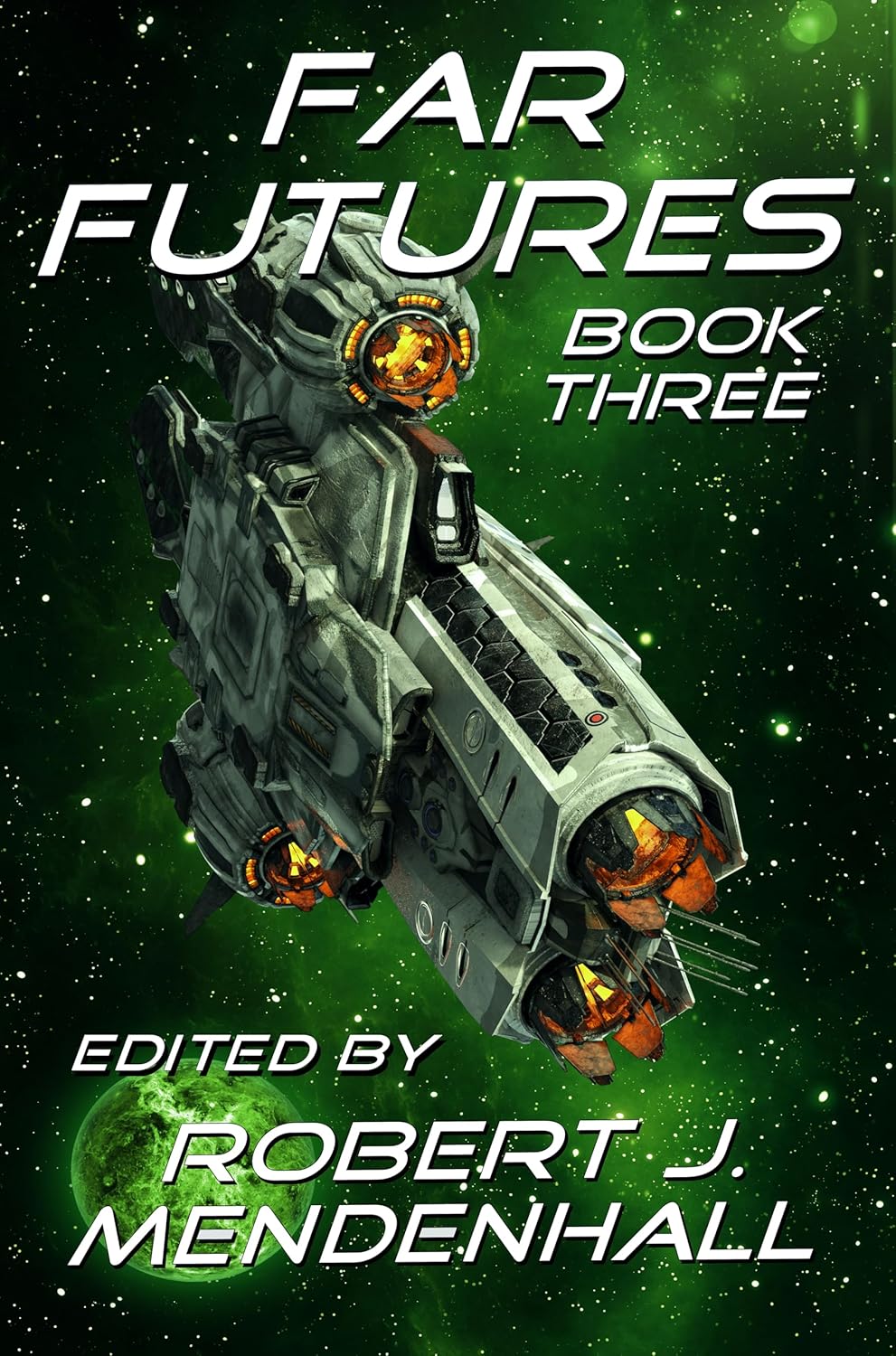
Pleased to announce I have a brand new science fiction short story in the latest anthology in the FarFutures Book Series from Blue Planet Press. Edited and compiled by Robert Mendenhall, Far Futures is an on-going series of “space stories” or “interplanetary tales” set on far off worlds, or in faraway universes. The kind of stuff that made science fiction great back in the 1960s and 70s. Only for a modern audience. I highly recommend this book, a lot of thought was put into my tale. It’s one of FOUR new tales within the science fiction genre I have coming out between Fall/Winter 2024-2025. As of October 8th it’ll be available in paperback and ebook formats on places such as Amazon, Barnes & Nobles, even Apple. I’ll put all links, pictures, details below (and off to the right-hand side). And check out my story, “Round Trip.”
FAR FUTURES BOOK THREE – Science Fiction Anthologies
Published by Blue Planet Press – Edited by Robert J. Mendenhall
Featuring brand new Dagstine story: “Round Trip”
Author Line-Up and Details (copy-pasted):
Tales of broken generation ships and malfunctioning holograms. AI enhanced humans fleeing the solar system. Alien abductees taken light-years away. A NASA spacecraft highjacked in a perilous first contact scenario. Pirates and scavengers and more. These stories are all different, yet all answer the same fundamental question “What… or who is out there?”
The latest edition in the Far Futures anthology series is now available for order. Far Futures Book Three is scheduled for an Oct. 8, 2024 release in both eBook and paperback at Amazon, Barnes & Noble, Apple Books, and more.
With stories from talented and rising authors in science fiction representing the US, Canada, UK, and Australia, including: Glynn Owen Barrass, Stephanie Bedwell-Grime, Lawrence Dagstine, Caroline Misner, Charles Nadolski, Barend Nieuwstraten III, Robin Pond, and James Pyles.
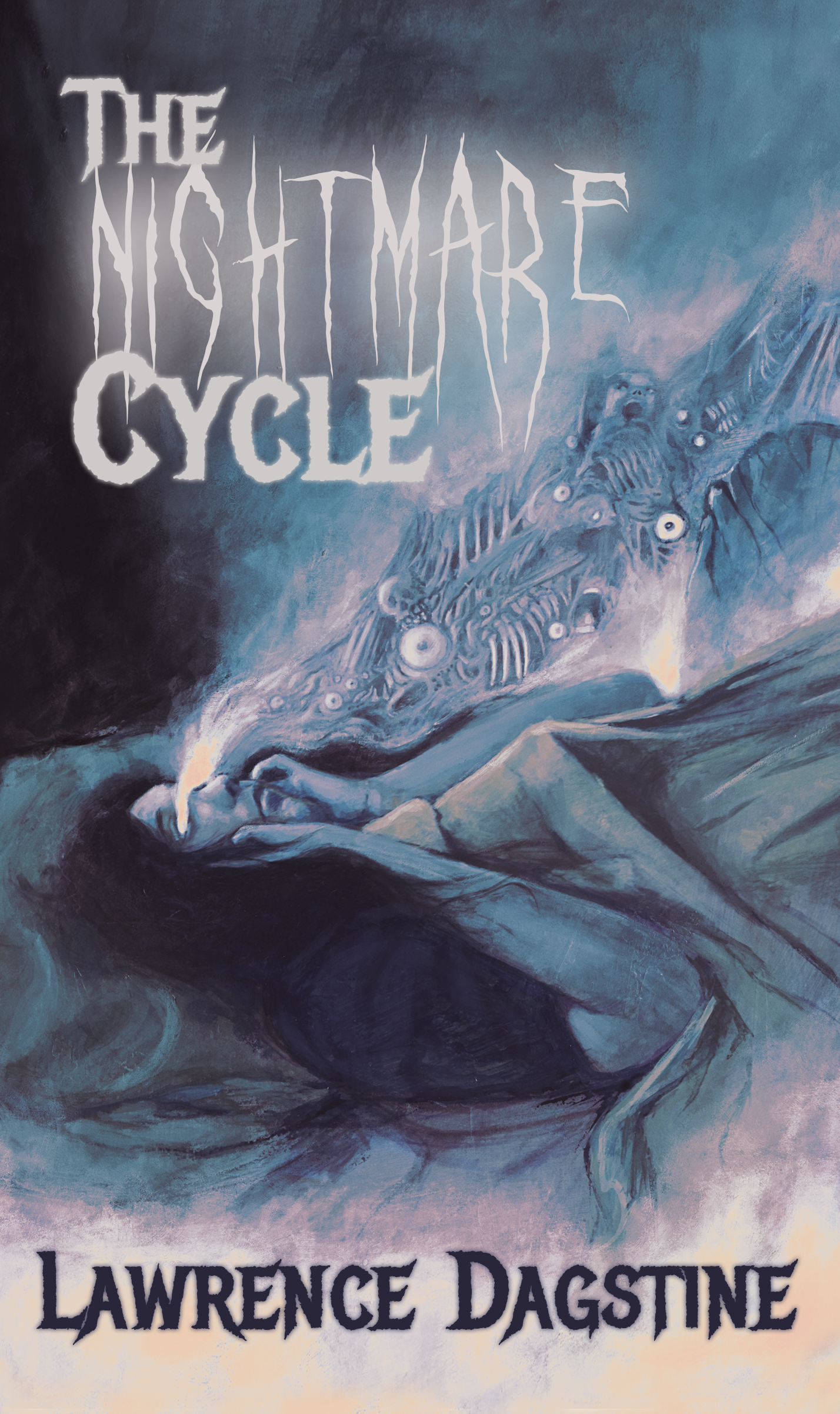
Just here today real quick to announce that my latest horror collection, The Nightmare Cycle, from Dark Owl Publishing, is available in Barnes & Nobles. Not just Amazon or horror specialty stores and conventions. You can obtain it online or through “select physical stores.” Probably the ones that have a horror section. If they don’t have it in stock, it can usually be obtained within two business hours (this can also mean one day). I’ll leave ISBN info down below, in case you want your local B&N brick and mortar to get it in for you. While I love the ease of Amazon and ereaders, personally, I prefer going and sitting with a cup of coffee or tea in a physical bookstore. Call me old-fashioned, but I will never tire of it. I’ll throw up the Amazon link as well. Cheers.



 Lawrence Dagstine: Author
You must be logged in to post a comment.