
Okay, this is going to be a long one. And I’m going to put this on my Medium and my Substack. How many of you remember that episode of The Twilight Zone with Burgess Meredith. It’s a famous episode. You know the one: “Time Enough At Last.” Such an iconic story. So this essay is mostly about finding the time to read when we get older. A lot of us don’t have that luxury, so think of this as a kind of exercise. Maybe we can do this challenge together, and it can become routine.
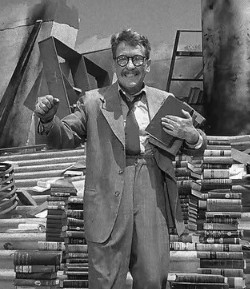
People often ask me what writing part-time is like; I used to do it full time in the 2000s. Depending on what kind of writer you are, you’re basically putting your thoughts into words and getting them down on paper. You’re living out a fictional scene in your head and trying to put that scene into words, along with the world around it. You’re doing a lot of typing, a lot of line editing, a lot of reading. Then you return a week, maybe two weeks later, to revisit what you wrote and do some more polishing. Improve what you started, improve your craft, experiment with things like structure and style. Even when you’re not writing, you’re reading.
If it’s not gate-kept, writing is a numbers game where you’re constantly creating content, trying to make it into some bigger editor’s second or third reading tier. And you do this because you have to; you don’t really see yourself not doing it. At the same time you’re investing in your portfolio—fiction or non-fiction—and trying to get a paycheck from it if you’re lucky. It could be a short story, a novel, an article, even greeting-card jingles or nonsensical filler that, surprisingly, sells. If you’re like me, you might be banging out anywhere from 40 to 65 pieces per year.
Now a voice in the back row just said, “Hey, that’s great, Larry. You write a lot of stories, produce a lot of content. You’re in so many anthologies and magazines. You submit to so many places. But how do you read all these books? How do you find the time?”
Honestly, as you get older, you don’t. I’m looking at a giant pile of books behind me as I write this. It’s a mess here. I’m old now, and I’ll never get to all of it. I know that. And the trouble is, every time I’m in Manhattan, I keep picking up books and never getting to them. Obviously, short stories and novellas are more approachable than full-length novels these days. For me, at least.
Between 1985 and 2005, I read voraciously. Sometimes two to three paperbacks per week. Before my son was born, I had bookcases upon bookcases of pulp paperbacks, old Galaxy and Analog magazines, Hard Case-style crime thrillers in the vein of James Bond, Charles L. Grant anthologies, Stephen King novels, DAW “Best Of” collections. I had a collection of 2000 books. These were mixed in with the essential satires and mainstream dramatizations of the 1960s, 70s, and 80s—Kurt Vonnegut, Joseph Heller, Mario Puzo, Ira Levin, etc—the three most important decades of literature. But then you realize you have to change diapers, make formula, sing lullabies, rock carriages, go to playgrounds and push swings. Cook meals, send kids off to school, exhausted. And you have to co-parent until that kid turns eighteen and goes off to college.
You can’t get to all those books. Maybe at night in bed, or on a commute, or on the toilet doing business (don’t laugh), you get a lengthy chapter in. Then, when they go off to higher learning and hang out with their friends, you return to what you started. But there’s still never any time. It’s always that way. So I ended up donating the vast majority of those 2000 books, throwing a few away, giving some to libraries, and selling lots on eBay.
And what if you work demanding ten-hour days in the middle of nowhere, where you have to hop on the turnpike, beat the traffic rush, and drive home? What if you want to go out, have a drink, go dancing, go to a nice restaurant, socialize? What if you have other hobbies?
For example, one of my hobbies is console gaming. PlayStation, Nintendo, and the like. I have 700 physical video games sitting on my shelves. Yes, 700 games with replay value—or still sealed. You might have more than one hobby. Some people have a few. Like gaming, I also collect action figures and cars. I’m part of a few diecast communities these days. But you have to go to stores and hunt those things down.
A year ago, I bought an iPad with my royalty money. One of those nice ones with a lot of memory. The purpose was to read books and review PDFs wherever I went. On the go. You know, other than downloading a few Apple songs, I haven’t even really used that iPad yet. I recharge it every few months so the battery doesn’t run down and bloat.
I used to watch television. For years I was a die-hard Walking Dead and LOST fan. I watched those two shows religiously, while devoting extra time to British imports like Doctor Who and Torchwood. I got rid of the Disney Channel, got rid of TV. I don’t watch television anymore. The Walking Dead ended after 11 seasons, I gave Ncuti Gatwa (the 15th Doctor) two years of my time, and I felt that was the end of my TV days. As for movies, I go to the theaters twice per year. Superhero films don’t interest me like they used to, and IMAX doesn’t really have anything either. I’m fatigued by the fandom surrounding modern cinema. And there’s just no time; although I am looking forward to the Super Mario Galaxy movie.
Also, as you get older you get less sleep and you’re prone to afternoon naps. There’s the grocery shopping, the laundry, the quick cleaning of the kitchen countertops and bathroom. As you age, you forget stuff. Your brain shrinks. Your eyesight goes on you, and you have to read passages more than once to comprehend them. And you have to take care of your body—gym, yoga, outdoor fitness—because you’re aging and your body can break down. More time away from books.
Then there’s social media—talk about time-consuming—a rabbit hole that can steal your life away. These days I use one or two pieces of social media. I have a TikTok. I don’t even use it. I use BlueSky. And you know what? With only one or two platforms, I get more work read and more exposure publicly. When I had ten pieces of social media back in the 20-teens, I was read and noticed less. Sometimes less is more.
After everything you’ve just read comes the fact that you have to be a picky reader. There are over one billion books worldwide. Think about that number. There are over one billion authors—dead authors, living authors, traditionally published authors, small press authors, children’s authors, fiction writers, non-fiction writers, textbook writers, anthology writers, self-help writers, self-published writers. There’s new books, used books, ebooks, audiobooks, web novels. You will never get to all the books you want to read, no matter how hard you try. You have no choice but to pick and choose, and you have to do it wisely.
So I decided to sit down this winter and choose five books—just five—that I know I’ll actually get to. Books that interest me, that have been tapping me on the shoulder for a while now. The plan is to spend January, February, and March reading these particular titles. And once I’m done telling you what I picked and why, I want you to choose your five, too. We’re doing this together.
These five books are our January, February, March. They can’t be just any books. Life is short, time is precious. They have to resonate. If your schedule is packed, let that be a recurring theme. Five is an easy, honest number to work with. Then when the weather is cold outside next year at this time, you can do it again with another five books.
Number 1: “Pinball” by Jerzy Kosinski
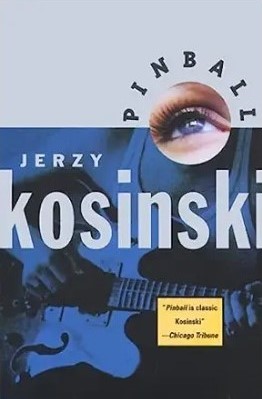
I picked this book not just because I’m familiar with Kosinski’s work, but because the premise hooked me right away. It’s an alternative rock-and-roll murder mystery, with a main protagonist sculpted after one of the Beatles. To my surprise, when Kosinski was alive and living in New York, he was actually close friends with George Harrison, and this book is dedicated to that friendship. Only here, the story turns on a female stalker with a past who shadows the protagonist everywhere he goes. So I’m definitely looking forward to this one this winter. Other Kosinski books I’ve read include The Painted Bird and The Hermit of 69th Street. Hermit was “meh”—your mileage may vary—but The Painted Bird is concentration-camp fiction at its finest, drawn from Kosinski’s real life as a Polish refugee who, as a young boy, witnessed unimaginable atrocities during World War II.
Number 2: “Welcome to the Monkey House” by Kurt Vonnegut
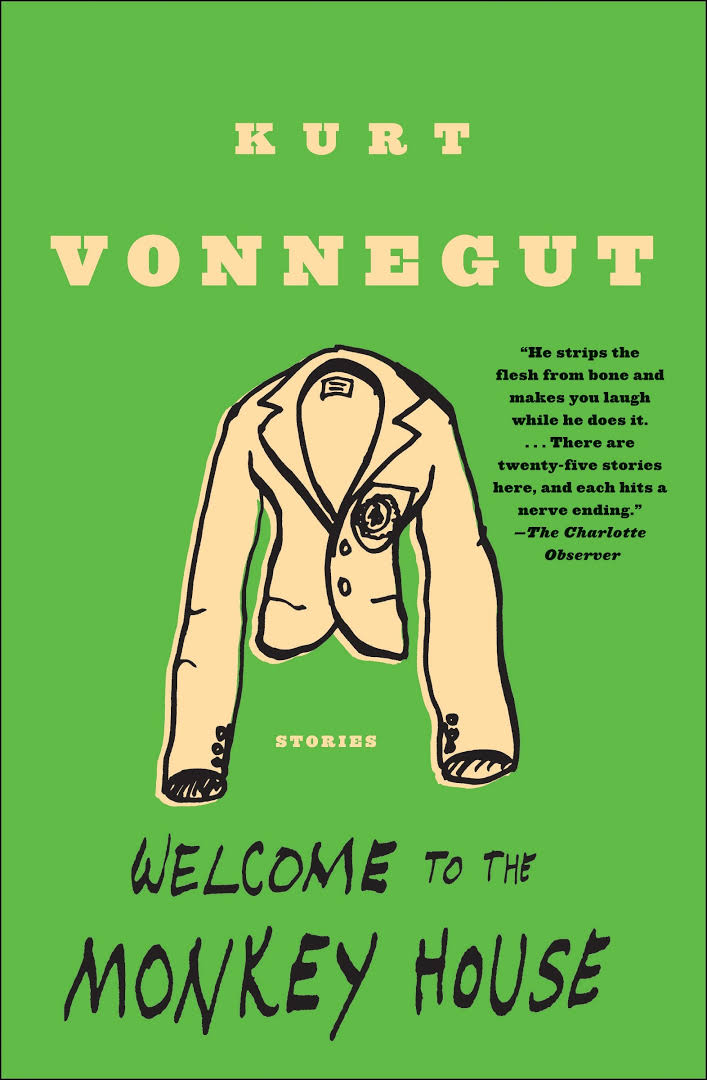
I used to know Kurt Vonnegut back in the ’90s. We lived near each other, and I’d deliver his prescriptions; he had a house account at the pharmacy where I worked. I was going to school at night then (for writing, obviously), and he’d toss me these little bits of advice, kind of like a humorous mentor who wandered in and out of my day. I remember sitting in the second row at his Timequake reading and premiere in an area of Manhattan known as Turtle Bay around ’98. He signed my copies of Slaughterhouse-Five, Breakfast of Champions, and The Sirens of Titan—three of my all-time favorites—and I tore through his paperback of essays and reviews, Wampeters, Foma, and Granfalloons. But I never really sat down with his science fiction short stories. This collection covers the pieces he wrote in the 1960s. Yes, Vonnegut started out as a speculative fiction writer; a lot of people don’t know that. And it’s one of those books I want to finally get around to reading this winter.
Number 3: “Later” by Stephen King
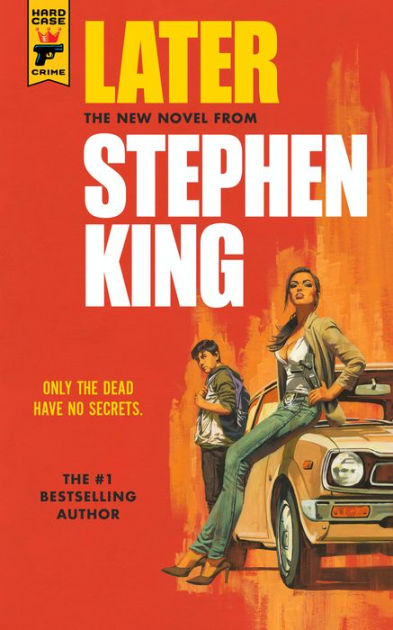
I usually devour anything and everything Stephen King. The last thing I read by him was Doctor Sleep. I know, that was a long time ago; remember what I said about co-parenting above. But this one—this book—I’ve been sitting on for well over two years now. It’s got one of those gritty Hard Case Crime covers that just punches you in the gut. I grabbed it at Strand Bookstore on the cheap. I heard they were turning it into a miniseries with Lucy Liu, though for all I know it already came out and I’m late to the party. From what I understand, it’s a supernatural coming-of-age thriller with shades of The Shining and The Sixth Sense. It’s got horror, it’s got true crime, and one of the main protagonists is a single mother struggling in New York City. My hometown. So yeah, this one is right up my alley. Now I just need to stop procrastinating and finally give it the time it deserves.
Number 4: “Comedy Writing Secrets” by Mark Shatz (with Mel Helitzer)
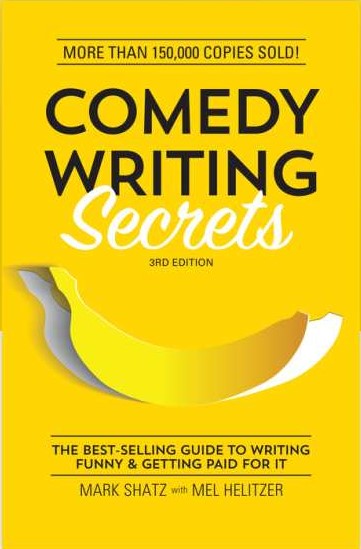
Yes, this one’s a “how-to,” an instructional book I picked up recently. Something that might tighten or sharpen a few corners of my writing. Why wouldn’t I want to improve myself? And don’t get me wrong, I know how to write humor somewhat effectively (see my short story “How Jones Goes”). I’ve been paid and published for humor before. I know how to slip it into my speculative fiction when the moment’s right; horror, not so much. But humor is a field that pays well, and I want to write comedy better. Why wouldn’t I want to write anything better? An editor recommended this book—and another, actually—so I went to Barnes & Noble in Union Square and grabbed this one. It’s sold more than 150,000 copies, so on that I’ll give it a try. I want to write more humor, more satire, in the years ahead, and if this can help me get there, then it’s worth spending part of my winter reading it.
Number 5: “Dagger of the Mind” by Bob Shaw
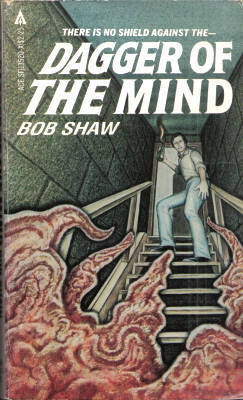
The book above is the version I have: a first-edition ACE paperback from 1979. Vintage, extremely rare. And remember what I said earlier about the 1970s being some of the best years for literature. This copy is a tough find, and I was lucky enough to snag it for only three bucks. It’s in fine condition; no complaints. Bob Shaw was an Irish writer, by way of Belfast, and from the late ’60s through the late ’70s he turned out some of the best short fiction around. He was primarily a speculative fiction guy, a real linguist on the page, and he wrote his fair share of hard SF for publishers like DAW and Berkley. In Dagger of the Mind, the protagonist suffers from Grand Mal seizures, and it forces him to question whether he’s slipping into hallucination, tapping into telepathy, or brushing up against something paranormal leaking in from another world or universe. Now this is the kind of speculative fiction I live for. You know I want to carve out some actual leisure time and sink into this one
Those were my five picks for Winter 2026, and as you can tell, they’re pretty eclectic. I don’t box myself into just science fiction or horror. Now it’s your turn. What were your five choices? Which authors or genres pulled you in? Remember, you can do this. Five is such an easy, honest goal. So stay warm, settle in with a book, or maybe five, and let’s make this a tradition we come back to next winter.
Happy New Year,
Lawrence Dagstine
Other New Entries/Newsletter Updates: You can find the same piece reprinted here (https://lawrencedagstinewrites.substack.com/), and I also invite you to join my Substack. I don’t write exclusively about writing and freelancing. I write about growing up in New York, my life, and life in general. Over time, I’ll be testing new features Substack has implemented, including live video, and in the future the platform will also host paying anthology calls for literary work.
 Lawrence Dagstine: Author
You must be logged in to post a comment.